A technical breakdown of the architecture, components, and operational parameters for a dual-direction quarry cutting machine.
TL;DR: Engineering Principles
Core Principle: This sandstone cutting machine Performs two perpendicular cuts simultaneously using an integrated dual-saw head, guaranteeing right-angle consistency.
Key Architecture: A rigid, track-based mobility system ensures a perfectly straight cutting path, minimizing vibration and maximizing precision.
Operational Control: A centralized hydraulic and control system allows the operator to fine-tune speed, depth, and pressure in real-time to match stone properties.
For engineers and maintenance teams, quarrying success hinges on predictable geometry and repeatable precision. The DINOSAW SSQJ-1400, a specialized quarry cutting machine, delivers this by employing a dual-direction cutting system with synchronized vertical and horizontal saws. This architecture is the key to carving out dimensionally accurate blocks directly from the quarry face.
This technical guide breaks down the machine's core principles, system architecture, component specifications, and operational parameters for this sandstone cutting machine.
How is the System Architected for Precision?
The machine's architecture is a harmony of mechanical robustness and automated control, built around three core subsystems that work together to deliver precision.
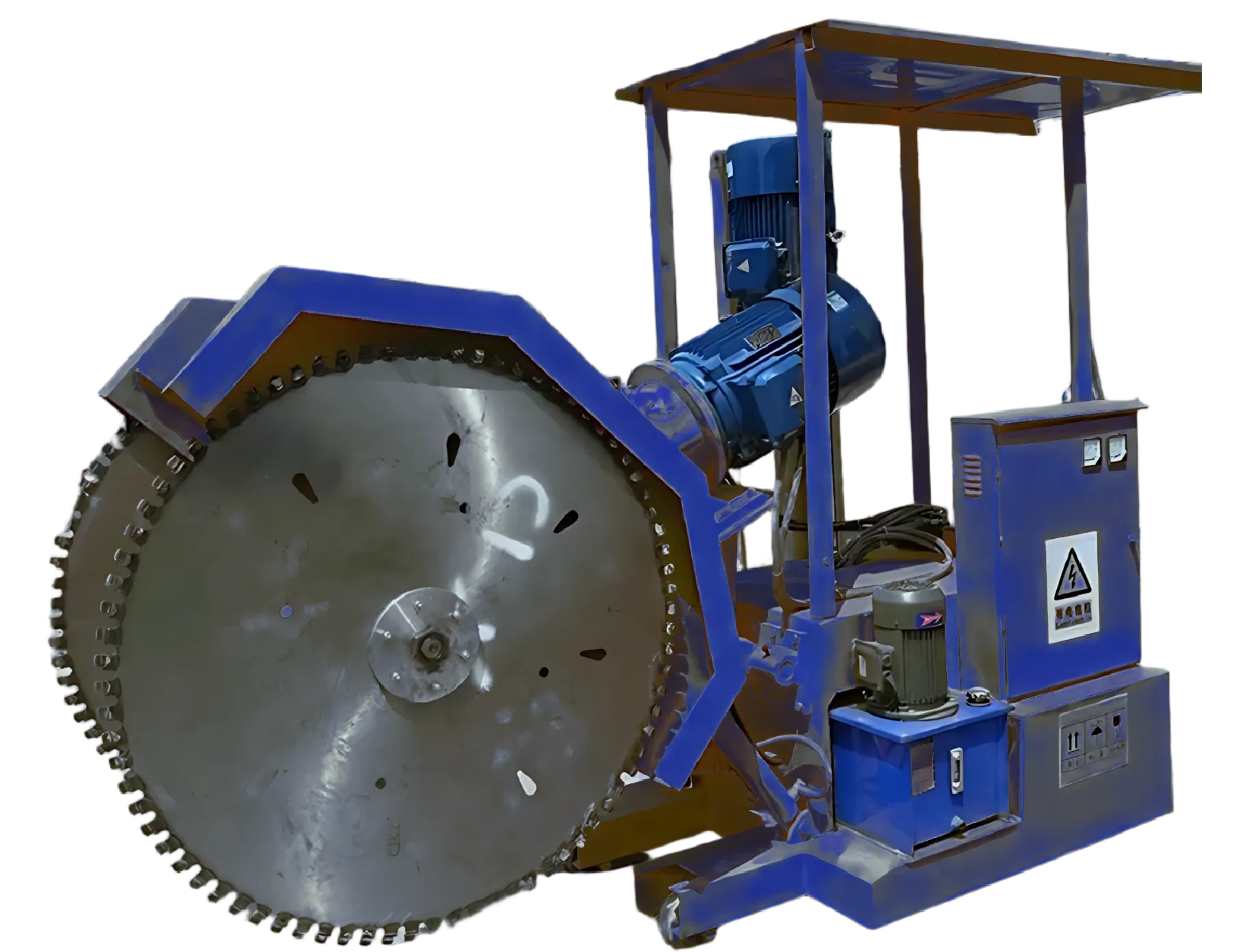
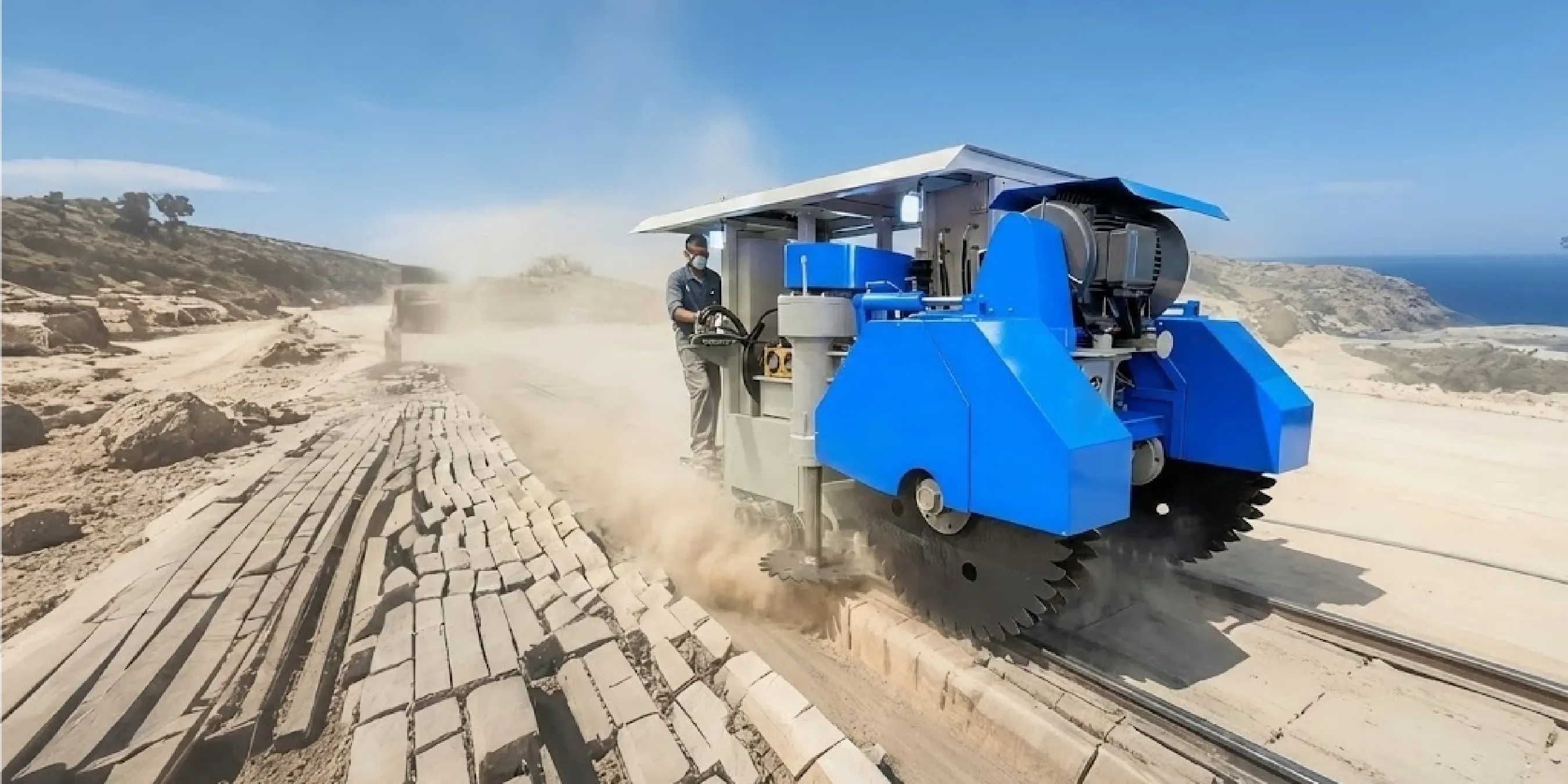
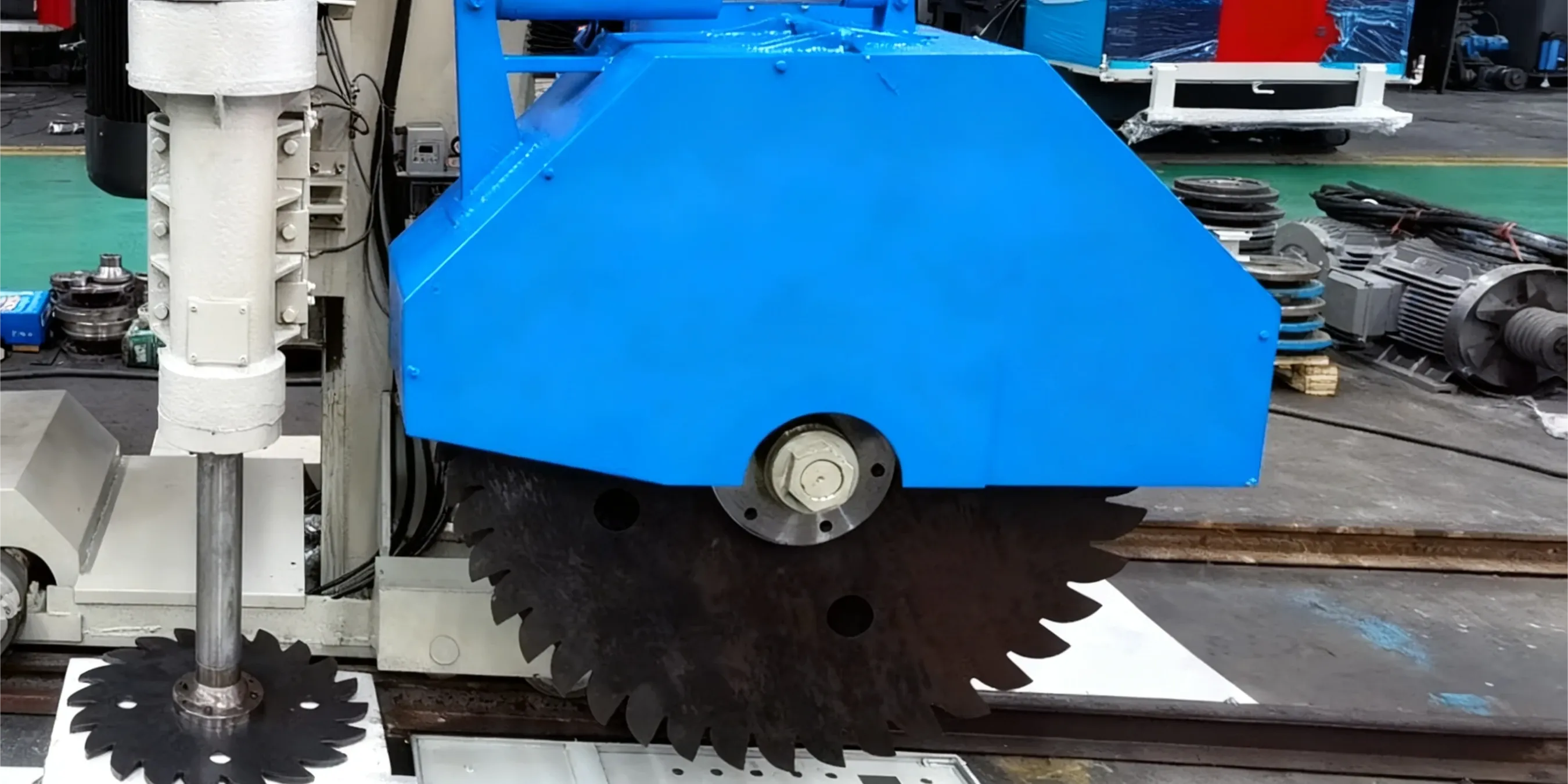
Integrated Dual-Saw Cutting Head: This is the heart of the system. It features a large vertical saw and a smaller horizontal saw mounted on a single, rigid frame. This integrated design is crucial for maintaining a perfect 90-degree angle between cuts, guaranteeing the geometric integrity of the extracted blocks.
Track-Based Mobility System: The entire 6000 kg chassis moves along a rail system. This track-based mobility ensures a perfectly straight cutting path, eliminating deviations. The stability provided by the rails is fundamental to achieving minimal vibration and precision cutting.
Hydraulic & Control System: Housed in the operator cabin, this system manages cutting depth, blade pressure, and travel speed. This centralized control allows the operator to fine-tune parameters in real-time to match the stone's properties.
What are the Key Technical Parameters?
The machine's capabilities are defined by its engineering specifications. All data is manufacturer-reported.
Parameter
Specification
Engineering Significance
Vertical Saw Blade Diameter
1330 mm
Determines the maximum vertical cut height.
Horizontal Saw Blade Diameter
600 mm
Sets the maximum horizontal cutting depth from the face.
Maximum Cutting Depth
500 mm
Defines the thickest block that can be extracted in a single pass.
Travel Speed
10–45 m/min
Allows adjustment for different material hardness and conditions.
Vertical/Horizontal Motor Power
75 kW / 45 kW
Provides ample torque for cutting medium-hard stones without stalling.
Max. Cylinder Lift Stroke
700 mm
Governs the vertical adjustment range of the cutting head.
Total Power / Machine Weight
150 kW / 6000 kg
Indicates required power supply and contributes to cutting stability.
How Do You Mitigate Common Mechanical Failures?
Proactive maintenance prevents downtime. Here are three common issues and their prevention strategies.
Issue: Excessive VibrationSymptom: Shaking during cuts, poor surface finish.
Cause: Unstable track foundation or unbalanced blades.
Prevention: Perform daily track inspections and ensure rail bolts are torqued. Follow blade balancing procedures from the user manual.
Issue: Premature Blade WearSymptom: Rapid dulling of segments, decreased cutting speed.
Cause: Incorrect speed for the material, inadequate dust removal.
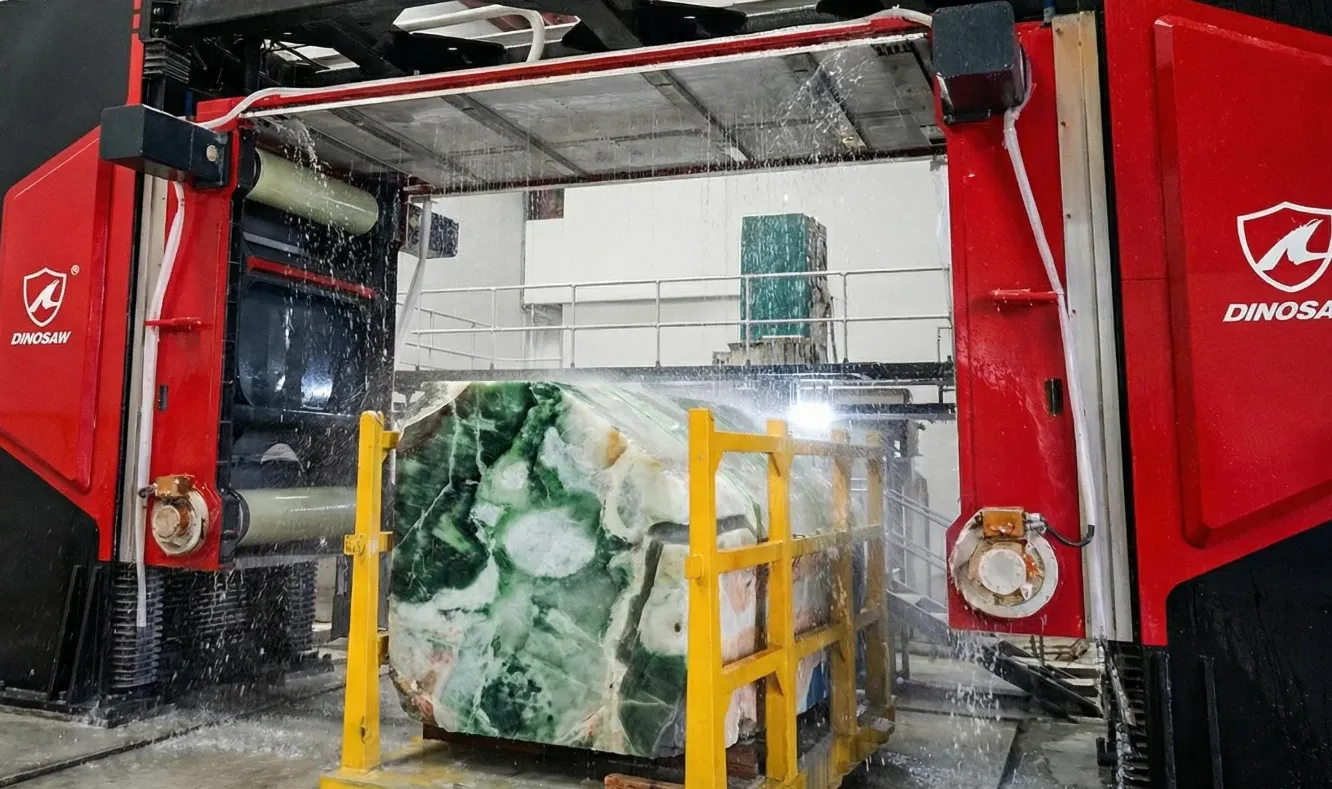
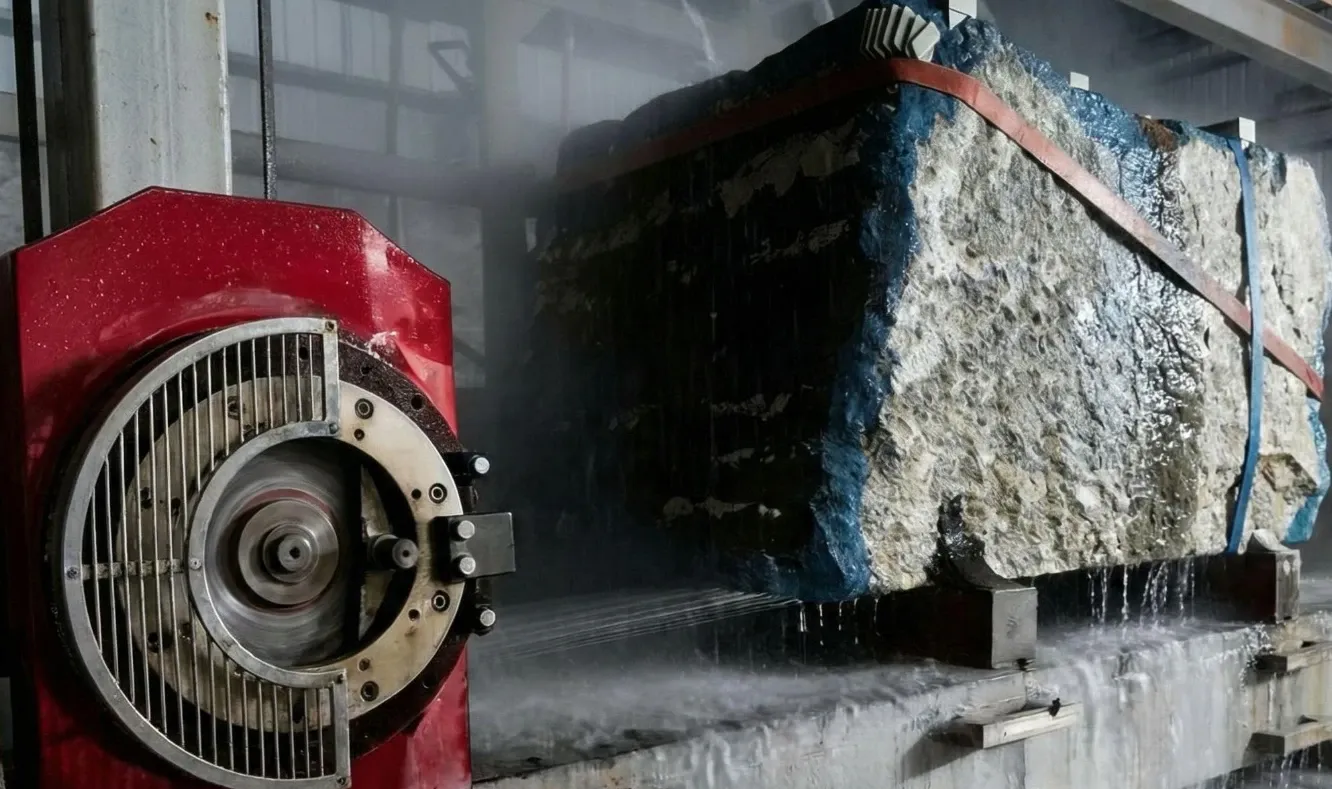
Prevention: Match cutting parameters to material hardness. According to NIOSH work practices, using water spray not only controls dust but also cools blades, extending life.
Issue: Cut MisalignmentSymptom: Cuts are not perfectly vertical or horizontal.
Cause: Misaligned cutting head or rail displacement.
Prevention: Implement a weekly calibration check with a framing square. Regularly inspect the frame for any loose connections.
What Are Good Parameter Starting Points?
Optimal parameters depend on site conditions. Use these manufacturer-reported ranges as starting points and adjust based on cut quality and motor load.
Dense Sandstone: Start at 25-35 m/min. Monitor motor amperage; if it spikes, reduce speed.
Softer Limestone: Begin at a lower speed, around 15-25 m/min, to prevent chipping and ensure clean edges.
Abrasive Laterite: Use a moderate speed (20-25 m/min) with careful monitoring of blade temperature and wear. Water suppression is highly recommended.
Frequently Asked Questions (FAQ)
What is the technical definition of a dual-direction quarry saw?
It is a track-mounted industrial cutting system with an integrated head featuring both vertical and horizontal blades.
Context : Its core principle is performing two perpendicular cuts in a single pass, ensuring the extraction of precise, right-angled blocks.
Boundaries: This architecture is optimized for block extraction and is not designed for slabbing or free-form cutting.
What are the earliest warning signs of mechanical failure?
The primary warning signs are increased vibration, a drop in cutting speed, or any deviation from a straight cut.
Context & Parameters: Vibration often points to track or wheel issues. A speed drop can indicate a dull blade. Cut deviation suggests a loss of head alignment.
Boundaries: These symptoms should not be ignored, as they can lead to more severe damage to the motors, frame, or blades.
Next Steps: Immediately pause operation and perform a diagnostic check using the O&M manual.
How is dust managed from a technical perspective?
The primary technical control for dust is a water suppression system.
Context & Parameters: Nozzles spray water at the point of cutting, capturing airborne particles. This is a best practice for controlling respirable crystalline silica.
Boundaries: This system is essential for compliance with safety regulations like those from OSHA and the HSE.
Next Steps: Ensure the water supply is consistent and nozzles are cleaned daily as part of the start-up procedure.
Is dual-direction cutting better than a single-blade quarry cutter?
Yes, from an engineering standpoint, it is significantly better for block extraction.
Context & Parameters: Dual-direction cutting completes a corner in a single pass, guaranteeing right-angle consistency and halving the cycle time compared to a two-pass machine.
Boundaries: The initial investment may be higher, but the throughput and quality improvements lead to a lower cost per block.
Next Steps: Analyze your production targets to quantify the value of improved cycle time and geometric repeatability.




 English
 中文
中文 Italian
 Türkçe
 Português
 Deutsch
 العربية
 Tiếng Việt
 Français
 Русский






 Nov 19, 20255 MIN READ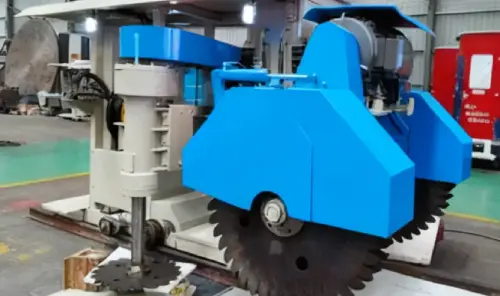
 Español