CNC Multi-Wire Saw Maintenance & Operation Best Practices
lizzy·Nov 27, 2025·7 MIN READ
lizzy·Nov 27, 2025·7 MIN READ
Your complete O&M guide for CNC multi-wire saws. Get SOPs, troubleshooting for top 10 issues, maintenance schedules, and safety compliance tips to maximize uptime.
TL;DR: Your Guide to Peak Performance
Daily Checks:Before starting the wire saw machine , always verify safety systems (E-stops, guards), cooling water flow, and wire condition. A 5-minute check prevents hours of downtime.
Top Issues & Fixes:Most problems like wire breakage or thickness variation stem from incorrect tension, cooling loss, or worn consumables. This guide provides a step-by-step troubleshooting path.
Maintenance Rhythm:Follow a strict daily, weekly, and monthly maintenance schedule for lubrication, cleaning, and sensor checks to ensure machine longevity and precision.
Safety & Compliance:Proper management of stone powder wastewater and strict adherence to PPE compliance for noise and dust are non-negotiable for a safe and legal operation.
For machine operators and maintenance managers, a CNC multi-wire saw is a precision instrument. Its consistent performance directly impacts your facility's profitability. Adhering to standardized operating procedures (SOPs) and a proactive preventive maintenance schedule is the key to maximizing uptime, minimizing operational costs, and ensuring every slab meets the highest quality standards. This guide provides an actionable framework for achieving just that.
Standard Operating Procedures (SOPs): A Daily Checklist
Integrate these checklists into your daily workflow to ensure consistent and safe operation.
Start-Up Checklist:Verify all E-stops are functional and guards are in place. Check the wire storage and guide rollers for visible wear or debris. Ensure the cooling system and stone powder wastewater drainage are clear. Confirm the block is securely clamped and that all operators have the required PPE.
Changeover & Tension Calibration:When changing wires, follow a clean, systematic process. Set the baseline tension in a mid-to-high range (e.g., 100–200 N for marble) and allow the closed-loop servo system to stabilize it. Verify both individual wire tension and the consistency across the entire set.
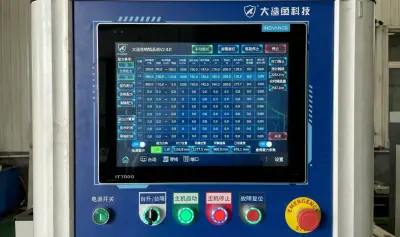
Parameter Calibration:For new materials, start with a mid-range wire speed and a conservative feed rate in the lower half of the 0–200 mm/h range. Perform a brief test cut, then incrementally adjust based on the surface quality and wire load feedback from the PLC. Always save validated settings as a new recipe.
Lubrication & Consumables:Adhere to the lubrication schedule for all guide rollers and bearings. Monitor diamond wire lifespan and schedule replacements proactively. Regularly inspect cooling water nozzles for blockages to ensure a stable water film.
Safety Checks:Conduct daily visual inspections of the electrical cabinet, safety interlocks, and guards. Perform regular checks for electrical grounding and potential water leakage near electrical components.
Troubleshooting a Multi‑Wire Saw: Top 10 Issues
Use this structured guide to quickly diagnose and resolve common operational problems.
Symptom
Likely Cause
Solution & Prevention
Wire Breakage
Excessive tension, cooling loss, worn wire, or sudden material density change.
Reduce feed rate for inconsistent materials. Ensure constant cooling water flow. Replace wires based on the recommended service life. Trust the machine's adaptive tension control.
Wire Drift
Uneven tension across wires, worn guide rollers, or improper block clamping.
Perform a full tension calibration. Inspect and replace worn rollers. Verify the block is securely fixtured and cannot shift during the cut.
Thickness Variation
Machine vibration, inconsistent tension, or loose block.
Check foundation stability and roller alignment. Ensure the servo tensioning system is active and calibrated. Double-check all clamping mechanisms.
Edge Chipping
Excessive wire speed or feed rate, insufficient cooling at entry/exit points.
Reduce wire speed and feed rate as the wires enter and exit the block. Ensure cooling nozzles provide full coverage across the stone's edges.
Surface Scratches
Contaminants in cooling water, worn diamond beads on the wire, or abrasive slurry buildup.
Check and clean the cooling water filtration system. Replace worn wires. Ensure the slurry removal system is functioning efficiently.
Cooling Loss
Clogged nozzles, low water pressure, or filtration system failure.
Implement a daily nozzle check. Monitor water pressure gauges. Schedule regular cleaning of the water recycling and filtration system.
Unusual Noise
Worn bearings in guide rollers, loose mechanical components, or wire vibration.
Isolate the noise source. Check bearings for play and lubricate or replace as needed. Tighten all accessible bolts. Verify wire tension is stable.
Vibration Rise
Imbalanced rollers, loose foundation bolts, or large, uneven wire tension.
Inspect rollers for damage or slurry buildup. Check machine leveling and foundation integrity. Re-run tension calibration.
Roller Wear
Normal service life, abrasive slurry, or improper wire alignment.
Follow the recommended replacement schedule in the User Manual. Ensure slurry removal is effective. Check wire alignment during changeovers.
Recipe Mismatch
Operator error, incorrect recipe loaded from PLC.
Implement a two-person verification process for loading cutting recipes. Use clear and descriptive naming conventions for all saved PLC recipes.
Preventive Maintenance for CNC Diamond Thin Multi‑Wire Saw
Daily:Perform a tension sensor self-check. Visually confirm a stable water film from all cooling nozzles. Test all E-stops and safety guards. Visually inspect the active section of diamond wires for wear.
Weekly:Clean guide rollers and check for proper alignment. Open the electrical cabinet and inspect for dust buildup and loose connections. Review PLC data from the past week's batches for anomalies.
Monthly:Lubricate all specified bearings and moving parts. Check the cooling system's flow rate and clean or replace filters. Take an inventory of wire storage to plan future purchases. Record noise and dust level measurements for compliance logs.
Quarterly:Evaluate wear on critical components like guide rollers and schedule replacements. Test PLC network communication and data logging functions. Conduct a refresher training session for operators on SOPs and safety protocols.
Field Tips for Operators
"You can often identify developing tension issues by sound before the sensors flag an alert. A consistent, low hum is normal. A high-pitched whining or rhythmic 'thrumming' can indicate uneven tension or a future wire breakage risk."
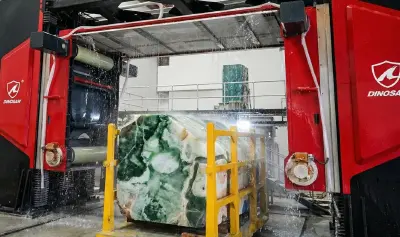
"The angle of your cooling water nozzles is just as important as the flow rate. Aim for an angle that creates a continuous film of water just ahead of the wire's entry point into the stone. This prevents dry cutting and drastically reduces wire wear."
Safety & Compliance Operations
Dust and Wastewater Management:The cutting process generates crystalline silica dust, a known respiratory hazard. Ensure your slurry and stone powder wastewater collection systems are fully operational. Process cooling water through a recycling system to minimize environmental impact and comply with local regulations.
Noise Exposure:While the multi-wire saw operates at a relatively low 60–80 dB (manufacturer-reported), all personnel in the immediate area must wear appropriate hearing protection to comply with occupational health standards for an 8-hour shift.
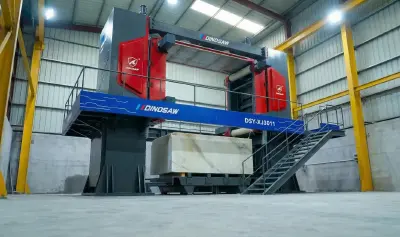
Electrical & Mechanical Safety:Implement a strict Lockout-Tagout (LOTO) procedure for all maintenance tasks. Use certified and inspected lifting gear for block loading. Regularly inspect all mechanical and electrical safety guards and interlocks. For full details, review the Multi-Wire Saw specs.
Your Partner in Reliable Operation
A CNC multi-wire saw is a powerful asset, and its reliability is a shared responsibility. By following these operational and maintenance guidelines, you empower your team to maintain peak performance. When slabs are finished, they move to a Stone polishing line to complete the process. For more detailed procedures, advanced troubleshooting, and spare parts, always refer to your machine’s User Manual or contact our dedicated technical support team.
FAQ: Multi‑Wire Saw Maintenance & Operation
How do I calibrate tension for marble vs. onyx?
Calibrating tension correctly for different materials is crucial for preventing fractures and ensuring a perfect cut.
Context:Marble is generally softer, so a baseline tension in the 100-200 N range is a good starting point. Onyx is more brittle and crystalline, so it may require a slightly higher and more stable tension to prevent vibration.
Boundary:These are starting points. The machine's closed-loop servo system will make micro-adjustments. The operator's job is to set a correct baseline, not to manually manage fluctuations.
Next Step:Always start with the material manufacturer's recommendation if available. Perform a small test cut and let the machine's adaptive system stabilize before beginning the full cutting cycle.
Why do wires drift and how do I correct it?
Wire drift leads to inaccurate cuts and can damage the block, but it is almost always preventable.
Context:Drift is typically caused by an imbalance. The most common culprits are uneven tension across the wire set, grooves worn into the guide rollers, or the stone block shifting slightly during the cut.
Boundary:The CNC system cannot compensate for a poorly secured block or severely worn mechanical parts. These physical issues must be addressed first.
Next Step:Pause the operation. Check that the block is securely clamped. Inspect guide rollers for wear. Re-run the full tension calibration process to ensure uniformity across all wires.
What’s the safest way to change wires mid-shift?
Safety is paramount during any maintenance, especially a wire change.
Context:The safest method involves a full machine stop using established Lockout-Tagout (LOTO) procedures. This ensures no electrical or mechanical systems can be accidentally activated while the operator is working.
Boundary:There are no shortcuts. Bypassing LOTO or attempting to change a wire while other parts of the machine are energized is a serious safety violation.
Next Step:Follow the detailed wire change SOP in your machine’s User Manual. Always use two people for the task if possible and wear appropriate PPE, including cut-resistant gloves.
How do we keep the cooling water film stable?
A stable, unbroken film of cooling water is the key to preventing wire breakage and ensuring a high-quality surface finish.
Context:Stability comes from three factors: sufficient water pressure, clean and correctly angled nozzles, and a properly functioning filtration system that removes abrasive slurry.
Boundary:Simply increasing water pressure is not enough. If nozzles are clogged or misaligned, the water will not form the necessary protective film where the wire meets the stone.
Next Step:Incorporate a nozzle check into your daily start-up routine. Clean the water filtration system weekly. If you notice dry spots, immediately pause the cut and address the nozzle alignment.
What maintenance reduces thickness variation?
Achieving the specified ±0.2mm thickness tolerance requires a focus on machine stability and consistency.
Context:The most effective maintenance actions are: regularly checking guide rollers for wear and alignment, ensuring the machine frame is level and foundation bolts are tight, and performing weekly tension sensor checks.
Boundary:Maintenance can ensure the machine is capable of precision. However, it cannot compensate for a poor quality, internally fractured block or incorrect cutting parameters (e.g., feed rate too high).
Next Step:Create a maintenance log focused on these stability-related components. If variation persists after maintenance, review your PLC cutting recipe and block quality. Find more in our FAQs.
How to set a new recipe and avoid mismatch?
A systematic approach to recipe management prevents costly errors and ensures repeatability.
Context:When cutting a new material, start with the baseline parameters in this guide. Perform a test cut, make small, incremental changes to one parameter at a time, and observe the results.
Boundary:Never overwrite a known, good recipe. Always save a new, optimized parameter set as a new recipe with a clear, descriptive name (e.g., "Carrara_Marble_5mm_FineFinish").
Next Step:Implement a protocol where the shift supervisor or lead operator must verify that the correct PLC recipe is loaded before starting a cut on a new block. This simple check can prevent entire blocks from being processed incorrectly.





 中文
中文 Italian
 Türkçe
 Português
 Español
 Deutsch
 العربية
 Tiếng Việt
 Français
 Русский






 Nov 27, 20257 MIN READ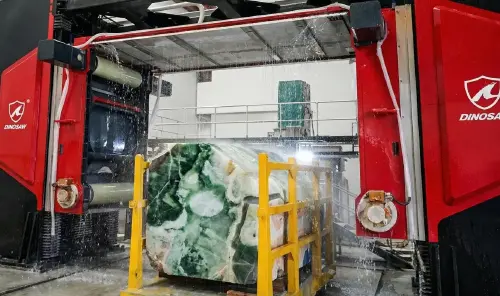
 English