Executive Guide to Investing in a CNC Multi-Wire Saw
lizzy·Nov 27, 2025·6 MIN READ
lizzy·Nov 27, 2025·6 MIN READ
A manager’s guide to evaluating CNC multi-wire saws. Covers requirement checklists, pilot plans, decision gates, and post-sales support to ensure a successful investment.
TL;DR: Your 30-Second Executive Overview
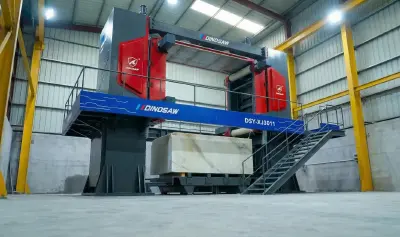
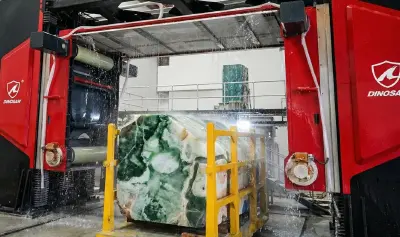
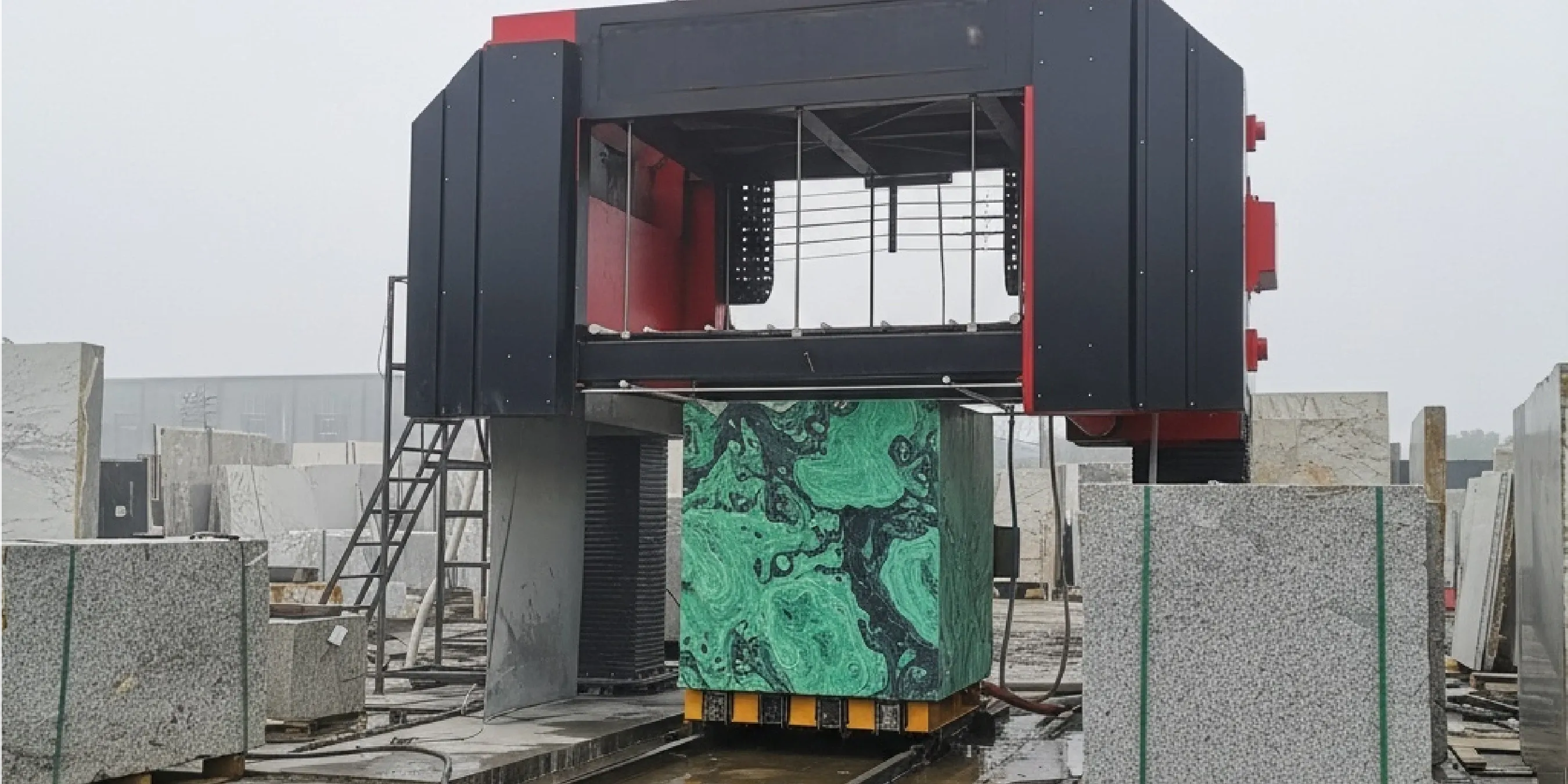
What It Is:A CNC multi-wire saw is a high-precision, automated machine that cuts stone blocks into multiple slabs simultaneously, dramatically increasing material yield and reducing waste.
Why Invest:It directly boosts profitability by maximizing slab output (10–30% yield gain) from high-value materials and lowers long-term costs by reducing secondary polishing and labor.
Who It's For:Ideal for fabricators focused on premium materials (marble, onyx), thin slab applications, and high-efficiency, automated production. It is less suited for businesses where minimizing initial capital expenditure is the sole priority.
Next Step:Use the requirements checklist in this guide to define your needs, then scope a pilot project to quantify the ROI for your specific operation.
Why choose a multi-wire saw over upgrading our existing gang saws?
This is a strategic decision about long-term profitability versus short-term cost savings.
Context:A CNC multi-wire saw delivers a quantifiable competitive advantage through superior material yield (10–30% gain), higher precision (±0.2mm), and automation, directly impacting your bottom line on every high-value block.
Boundary:If your business model is exclusively focused on processing low-cost materials where yield is not a primary profit driver and initial capital is the main constraint, upgrading a gang saw might be a viable short-term option.
Next Step:Calculate the TCO, factoring in the cost of wasted material and secondary polishing with your gang saws. Compare this against the projected ROI from the increased yield of a multi-wire saw.
How can we integrate this machine into our existing production line?
Integration is designed to be seamless, both physically and digitally, to create a cohesive workflow.
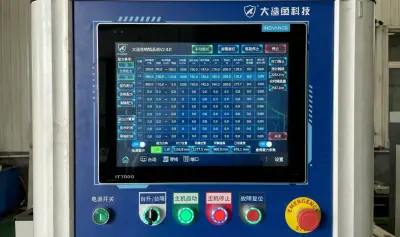
Context:The machine connects to your central PLC/ERP systems (supporting protocols like OPC UA/Profinet where applicable) for recipe management and data logging. Physically, it fits into a workflow between block preparation and a Stone polishing line.
Boundary:Full digital integration requires your factory to have the necessary network infrastructure. The machine provides the data endpoint; your system needs to be ready to utilize it.
Next Step:Schedule a technical call between your automation engineers and our team to discuss communication protocols and data mapping before purchase.
Defining Your Needs: A Requirements Checklist for a CNC Multi-Wire Saw
Materials & Geometry:What primary materials will you cut (marble, travertine, onyx, luxury stone)? What is your target thickness range (e.g., 3-12mm)?
Precision & Quality:What is the required thickness tolerance (e.g., ±0.2mm)? What is the target surface finish to minimize downstream polishing?
Throughput & Automation:What is your required output per shift or week? What level of automation and data integration (PLC, OPC UA, Profinet) is needed?
Facility & Utilities:What is the available floor space and ceiling height for installation and crane access? Do you have sufficient electrical supply and a water treatment system for cooling and slurry management?
Safety & Compliance:What are your internal and local requirements for noise, dust (silica), and wastewater management?
How to Evaluate and Implement: A 5-Step Pilot Plan
Define the Scenario:Select a representative project, such as cutting a high-value onyx block into 6mm slabs for a specific client order.
Collect Baseline Data:Measure the yield, processing time, and polishing costs for the same task using your current method (e.g., gang saw).
Set Success Thresholds:Establish clear, measurable acceptance criteria. For example: achieve a 15% increase in slab yield, maintain a surface quality of Ra ≈ 2.0, and operate below 80 dB (manufacturer-reported).
Execute & Monitor:Run the pilot project on the CNC multi-wire saw, with our technical team providing support. Log all performance data.
Review & Decide:Compare the pilot results against your baseline data and success thresholds to make a data-driven investment decision.
Navigating the Decision Gates for a CNC Multi-Wire Saw
Decision Gate
Key Checklist Items
Primary Stakeholder
Technical Validation
Machine meets requirements checklist; pilot plan results are positive; integration plan is clear.
Engineering / Operations Manager
Commercial Review
TCO and ROI models are validated; quote is finalized; post-sales SLA is agreed upon.
Procurement / Finance Manager
Legal & Compliance
Contract terms are reviewed; warranty is confirmed; machine meets all safety/environmental certifications (CE/ISO).
Legal Counsel / Compliance Officer
Executive Sign-Off
Final business case presented, confirming strategic alignment and financial viability.
CEO / COO / Board
Contact & Support: From Pre-Sales to After-Sales
A successful investment extends beyond the machine itself. We provide a full lifecycle of support, including installation, commissioning, and comprehensive operator training. Our technical teams assist with integrating batch data into your PLC and establishing maintenance schedules. With a clear post-sales Service Level Agreement (SLA), you have guaranteed access to spare parts, technical support, and troubleshooting resources detailed in the User Manualand our online FAQs.
Distilled Insights & Future Roadmap
Investing in a CNC multi-wire saw is more than a machine purchase; it's a strategic move towards a more profitable, efficient, and sustainable production model. This technology positions your business to capitalize on the growing architectural demand for lightweight, high-precision thin stone slabs. As material costs rise and the market demands higher quality, the ability to maximize yield and automate production becomes a critical competitive differentiator.
Take the next step in transforming your production capabilities. Review the detailed Multi-Wire Saw specs and contact us to begin your evaluation.
Your Next Step: A Complete Resource Hub
Making a major capital investment requires thorough research. Use our complete blog series to guide your decision.
What’s the expected ROI window for premium marble blocks?
The Return on Investment for a multi-wire saw is fastest when processing high-value materials where every saved millimeter counts.
Context:For businesses processing premium marble or exotic stone, the 10-30% increase in slab yield can often lead to an ROI period of 18-36 months. The value of the additional slabs produced directly offsets the initial investment.
Boundary:This projection assumes consistent, high-volume production. For lower-volume operations or those processing less expensive materials, the ROI window will be longer, and the investment justification should also include factors like improved quality and reduced labor.
Next Step:Provide us with your average block cost, production volume, and finished slab price. We can collaborate to build a detailed ROI model tailored to your specific financial metrics.
How do we scope a pilot without halting production?
A well-designed pilot project should provide clear data without disrupting your core business operations.
Context:The pilot doesn't need to involve your main production line. We can conduct tests on representative material blocks at one of our facilities, or you can allocate a single, non-critical block from your inventory for the trial.
Boundary:The key is to use material that is truly representative of what you process daily. Using a perfect, flawless block for a pilot will not yield realistic data if your typical inventory has more variation.
Next Step:Work with our team to define the pilot scope. We will help you select the right material and establish success metrics that will provide a meaningful, data-backed basis for your decision.
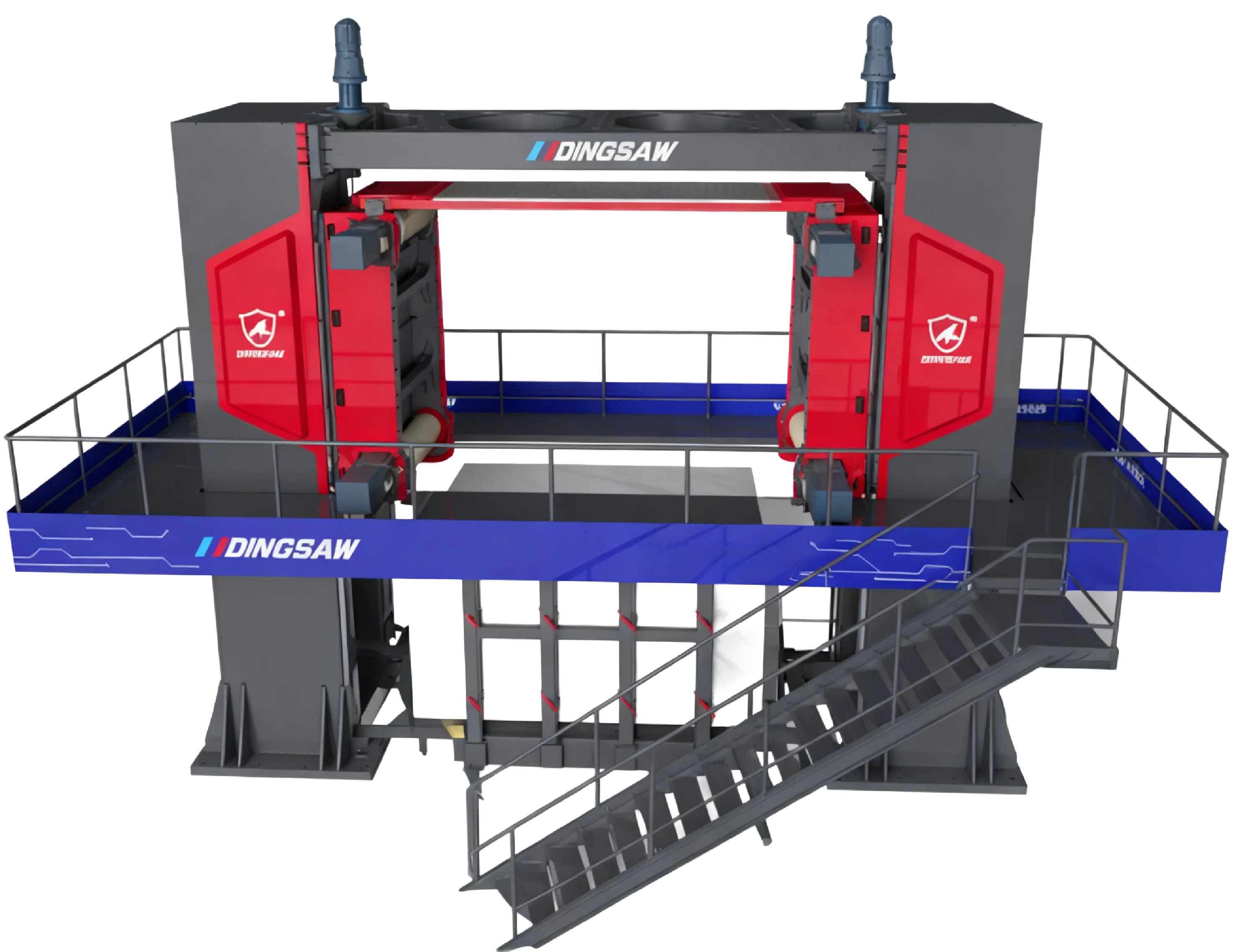
Which configuration (JS vs XY) fits our site?
The choice between the Up Lifting (JS) and Downward Pressing (XY) models depends on your priorities: ultimate precision versus initial cost.
Context:The Up Lifting (JS) model offers superior stability and precision, making it the ideal choice for high-value thin slab cutting. The Downward Pressing (XY) model provides a lower-cost entry point for general-purpose slab production.
Boundary:Site considerations also play a role. The JS model's design may have different foundation and overhead clearance requirements compared to the XY model.
Next Step:Provide our engineers with your facility layout and primary production goals. We will provide a recommendation and detailed schematics for both options to facilitate your planning.
What post-sales SLA do we get?
Our Service Level Agreement (SLA) is designed to maximize your machine's uptime and provide peace of mind.
Context:A standard post-sales SLA includes guaranteed response times for technical support inquiries, prioritized shipping for critical spare parts, and access to our certified field technicians for on-site service.
Boundary:The SLA covers manufacturer-related issues. It does not cover downtime resulting from operator error, failure to follow maintenance schedules, or issues with third-party utilities like power or water supply.
Next Step:Review the tiered SLA options with our sales team. We can customize a package that aligns with your operational needs and risk tolerance.
What risks to watch in executive sign-off?
Securing executive approval requires a clear, concise business case that addresses potential concerns head-on.
Context:Executives will focus on financial justification (ROI, TCO), strategic alignment (how it improves competitive advantage), and risk mitigation (implementation plan, supplier reliability, post-sales support).
Boundary:Avoid getting bogged down in overly technical details. The presentation should be high-level, focusing on business outcomes rather than machine specifications.
Next Step:Use the framework from the "Decision Gates" section to structure your final proposal. We can provide supporting data and case studies to strengthen your business case.





 中文
中文 Italian
 Türkçe
 Português
 Español
 Deutsch
 العربية
 Tiếng Việt
 Français
 Русский






 Nov 27, 20256 MIN READ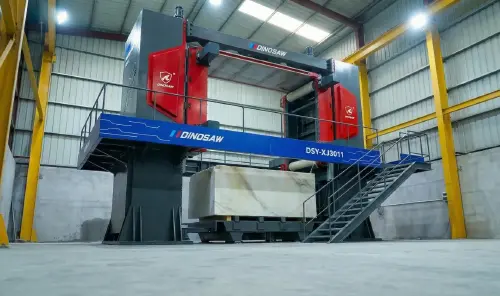
 English