TL;DR:Key Takeaways
Versatile Material Processing: The gantry cutting machine handles a wide range of stones, from hard granite for tombstones to softer limestone for kerb stones, enabling you to serve diverse markets.
Automated Precision: PLC automation ensures consistent slab thickness and dimensional accuracy, reducing material waste by up to 15% and minimizing costly manual errors.
Efficient Block Slabbing:The gantry cutter is conventionally a single-blade machine for precise block slabbing. For true multi-blade simultaneous slab production, consider the Gantry Stone Cutting Machine. Actionable Next Step: Assess your primary materials and required block dimensions to determine the right machine model for your production needs.
What Can a Gantry Stone Cutter Do for Your Business?
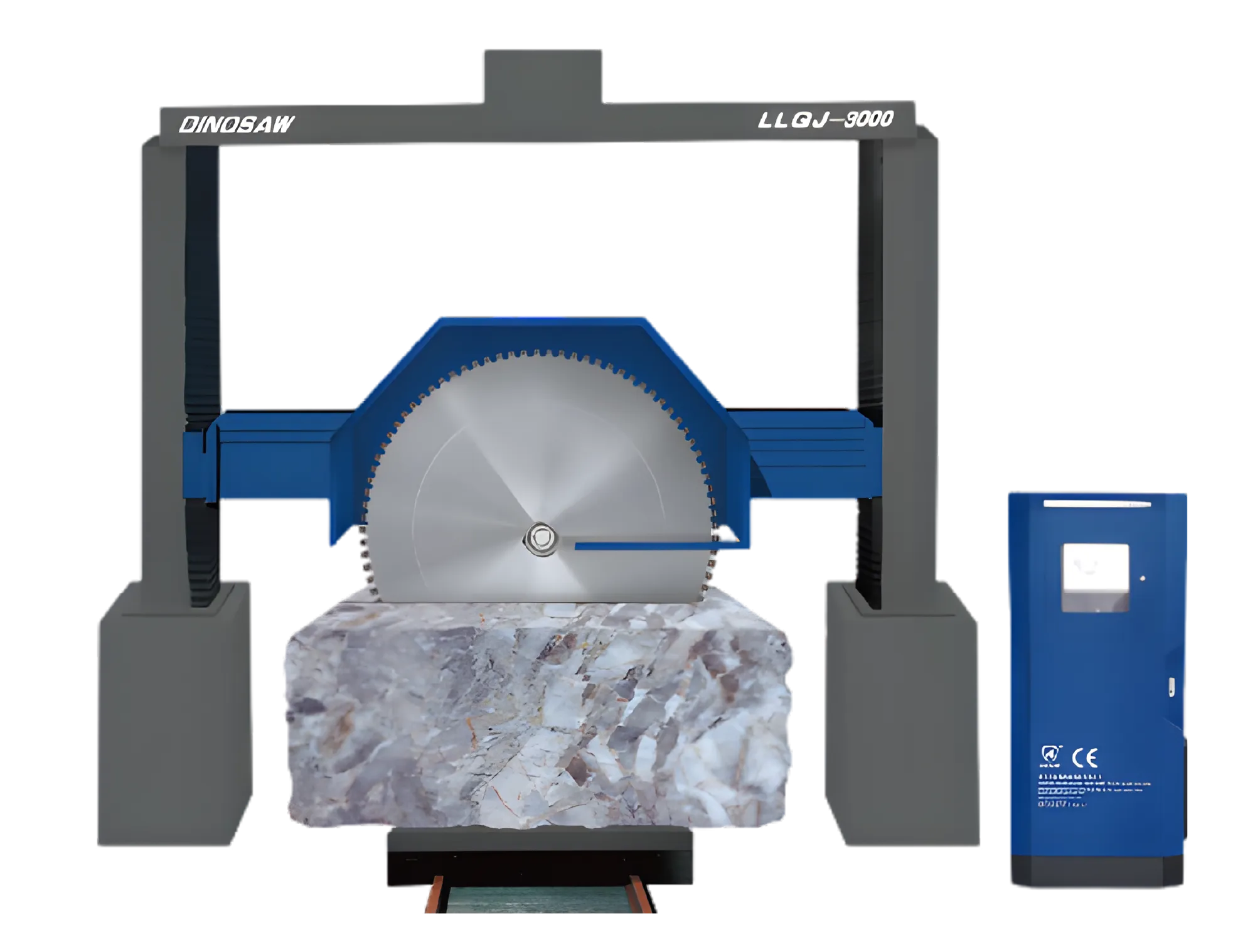
From a business owner’s perspective, the gantry stone cutting machine is a powerful tool for diversification and efficiency. Instead of being limited to specific types of stone or project sizes, you can confidently bid on a wider range of jobs. Imagine efficiently processing large granite blocks into precisely dimensioned tombstone blanks for the memorial industry, or mass-producing standardized kerb stones for a large municipal contract. The machine's PLC-controlled automation allows you to do just that, ensuring each cut is accurate and repeatable.
This level of control and versatility means you can streamline your production workflow. You can take raw, uneven stone blocks and transform them into valuable, ready-to-finish products with minimal operator intervention. This reduces labor costs, minimizes human error, and ensures the slab thickness is consistent every time, which is a critical quality factor for clients in construction and memorial arts.
What Materials Are Compatible with a Gantry Stone Block Cutter?
The true strength of a gantry cutting machine lies in its adaptability. Its robust design and powerful motor can handle a wide spectrum of natural stones, each with unique properties. This versatility allows you to cater to different industries, from construction and landscaping to monument production.
Granite: A top choice for tombstones and high-end countertops, granite is known for its durability. According to industry resources, it scores between 6 and 7 on the Mohs hardness scale (source: Wikipedia), requiring a machine with a rigid structure and powerful motor to cut cleanly without causing micro-fractures. Marble: Valued for its elegant veining, marble is used in monuments and luxury architectural elements. It's softer than granite, but its delicate structure requires a stable, vibration-dampened cutting process to prevent chipping and preserve its aesthetic quality.
Limestone & Bluestone: Commonly used for kerb stones, paving, and architectural details, these sedimentary rocks are relatively soft and easy to cut. A gantry machine excels at mass-producing standardized dimensions required for large-scale construction and infrastructure projects.
Sandstone: Often used for standard slabs and cladding, sandstone's consistency makes it ideal for high-volume production. The machine's automated controls ensure every slab meets exact dimensional specifications.
Travertine & Quartzite: Travertine's porous nature and quartzite's crystalline structure present unique cutting challenges. The machine's adjustable parameters, such as feed rate and water cooling flow, are crucial for processing these materials without causing damage.
Understanding the Processing Boundaries for the Gantry Block Cutting Saw
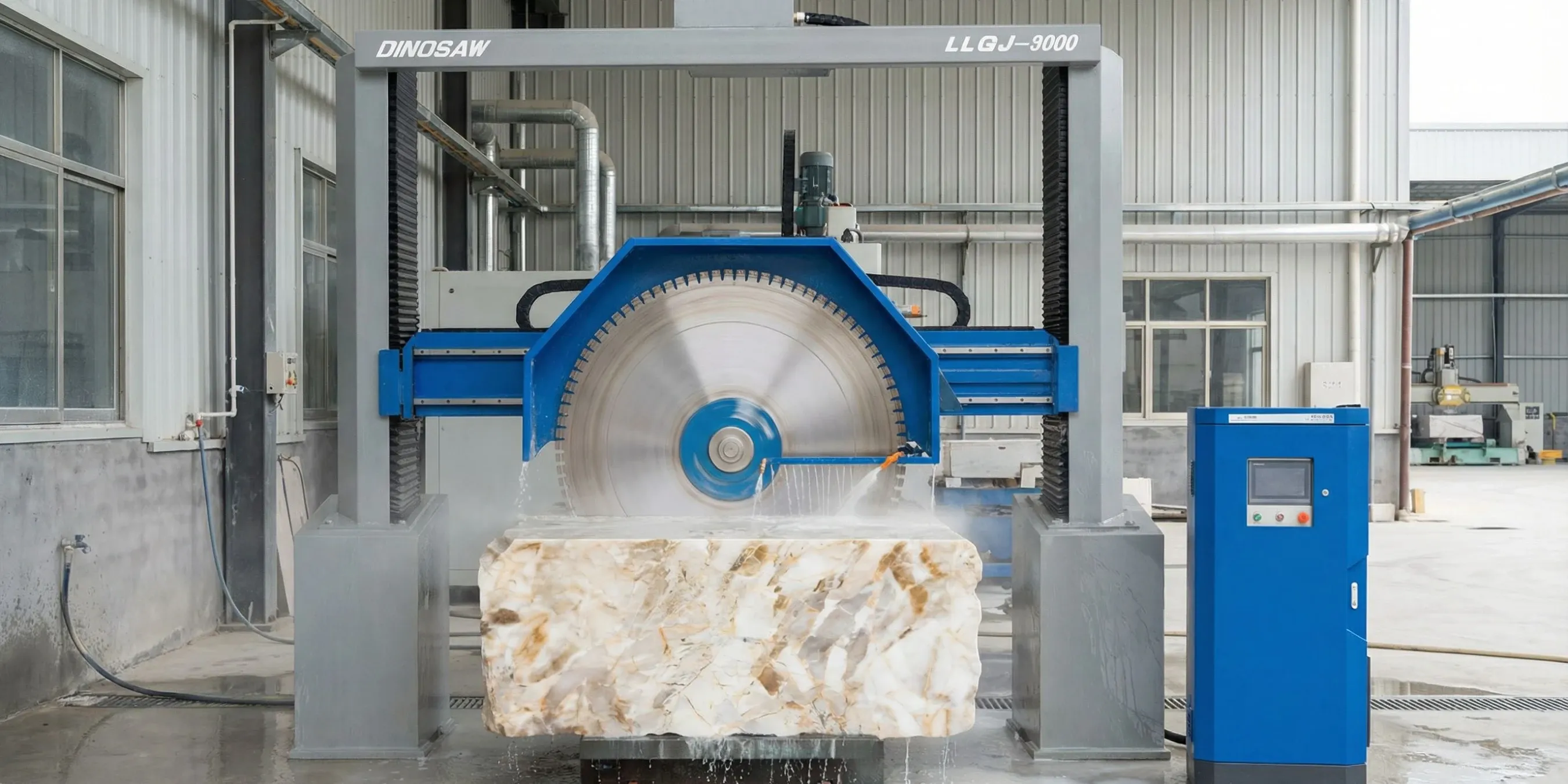
While versatile, every machine has its limits. Understanding the operational boundaries of the gantry stone cutting machine is crucial for matching the right model to your workload. The primary constraint is the maximum cutting size, which varies by model:
LLQJ-2200: This model is ideal for small to medium-sized blocks, offering a maximum cutting height of 950 mm (approx. 37.4 inches). It's a great entry point for shops focusing on standard slabs or smaller memorial stones.
LLQJ-2500: Offering a balanced capacity, this model increases the maximum cutting height to 1100 mm (approx. 43.3 inches), making it suitable for larger architectural elements and thicker monument blocks.
LLQJ-3000: The largest in the series, this machine accommodates massive blocks with a maximum cutting height of 1350 mm (approx. 53.1 inches). It is designed for quarries and large-scale fabricators handling oversized blocks for major construction or monument projects.
Beyond size, material hardness is another boundary. While the machine is engineered for hard stones like granite, extremely abrasive or dense materials may require specialized diamond blades and slower feed rates to ensure optimal performance and longevity of the consumables. It is not recommended for materials outside the natural stone category without prior consultation.
How Do You Process Stone with the PLC-Controlled Gantry Saw?
Efficiently operating the gantry stone cutter hinges on four key elements. Mastering these will allow you to maximize throughput while maintaining high-quality results.
Preset Parameters with the PLC System: The brain of the operation is the Programmable Logic Controller (PLC). Before starting a job, you input the desired slab thickness, the number of cuts, and the total block height. The system then automates the cutting process, ensuring each slab is uniform without manual measurement.
Select the Right Diamond Blades: Your choice of diamond blade is critical. The blade's segment composition must match the stone's hardness and abrasiveness. A blade designed for granite will perform differently on marble. Using the correct blade ensures a clean cut, minimizes chipping, and extends the life of your tooling.
Ensure Adequate Water Cooling: Water is essential. It serves two purposes: cooling the blade to prevent overheating and warping, and suppressing hazardous crystalline silica dust. A consistent flow of water directed at the cutting point is non-negotiable for both cut quality and operator safety.
Set Optimal Feed Rates: The feed rate—the speed at which the blade moves through the stone—must be adjusted based on the material. Cutting hard granite too quickly can cause excessive blade wear, while cutting soft limestone too slowly is inefficient. The machine's frequency converter allows for precise speed control to find the perfect balance.
Single-Blade Gantry Cutter vs. Traditional Methods
Investing in a gantry stone cutting machine provides clear, measurable advantages over manual or semi-automated methods. Here’s how it compares in common production scenarios:
Scenario 1: High-Volume Slab Production
Traditional Method: Using a single-blade saw requires an operator to manually reset the machine after each cut. This process is slow, labor-intensive, and prone to thickness variations, leading to high rejection rates and material waste.
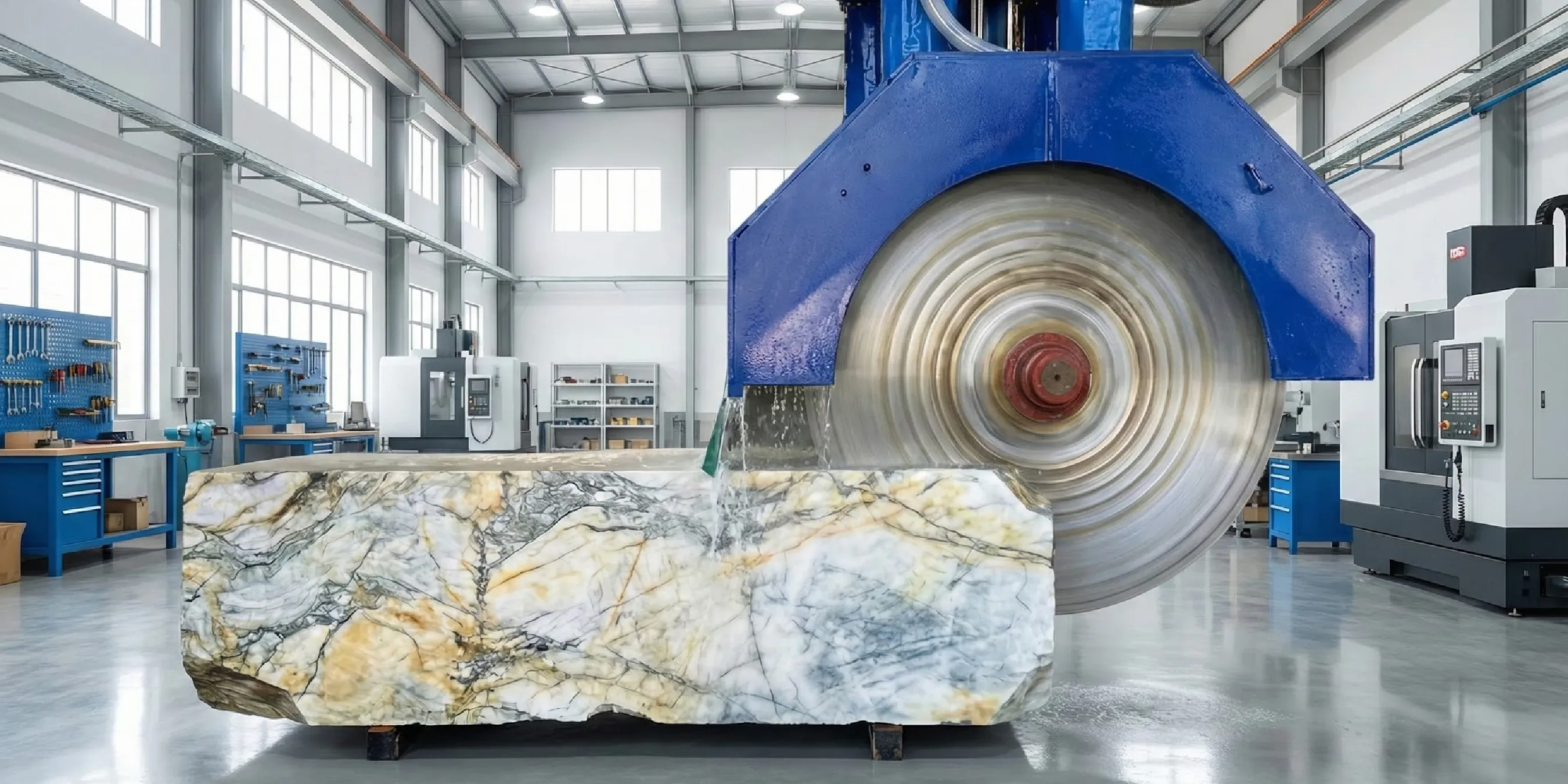
Gantry Machine Advantage:The gantry cutter’s single-blade operation, automated by the PLC, ensures every slab has the exact same thickness (e.g., 20 mm +/- 0.5 mm), eliminating dimensional errors. For true high-throughput, a dedicated
Stone Block Blade Cutting Machine can cut an entire block in a single pass, making it the right fit for operations needing to move from block to finished product quickly, like a Stone Slab Continuous Polishing Line.
Scenario 2: Precision Monument Cutting
Traditional Method: Manually cutting granite blocks for tombstones risks costly mistakes. A slight miscalculation can ruin a valuable piece of stone, and achieving perfectly perpendicular cuts consistently is challenging.
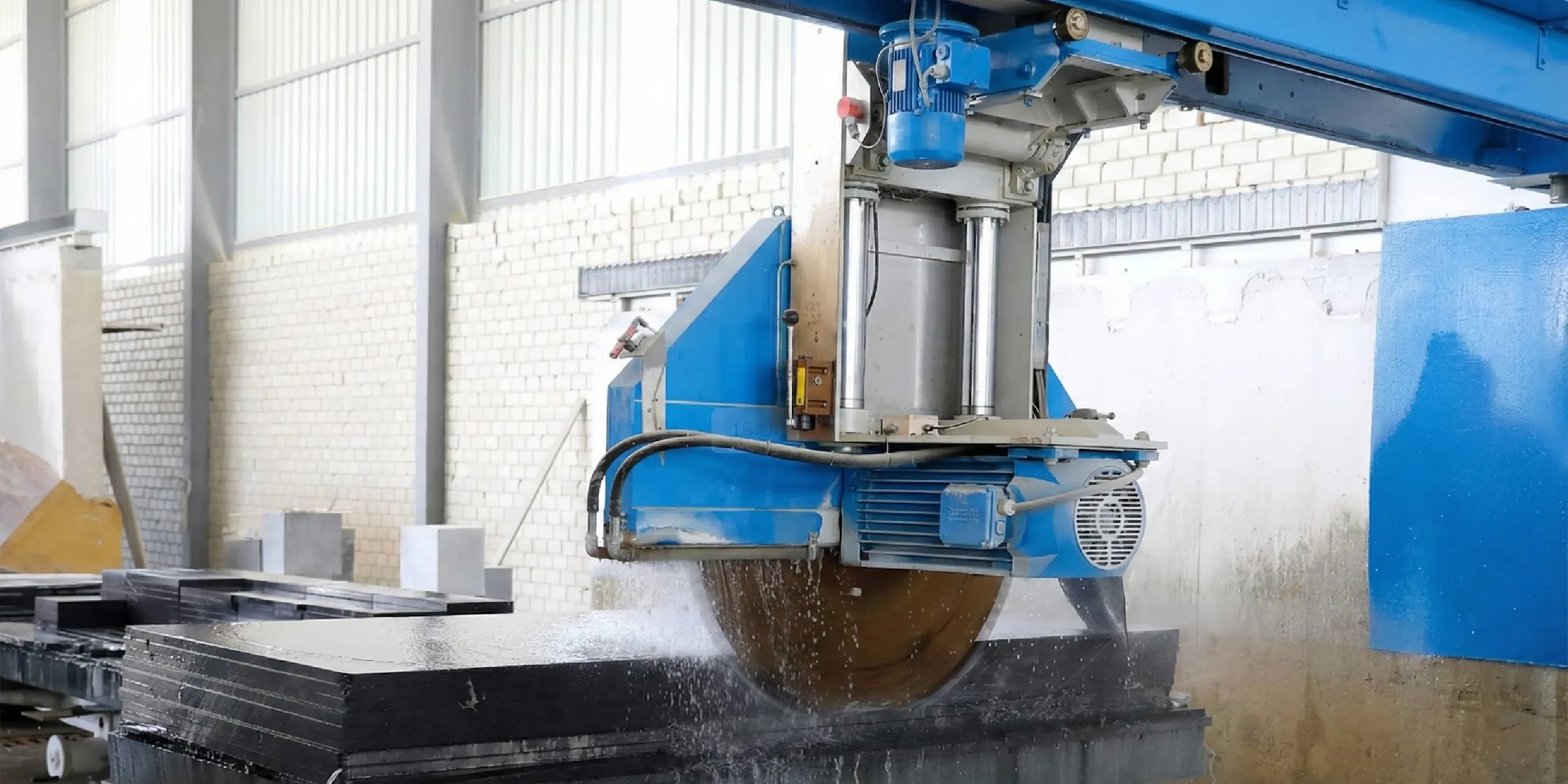
Gantry Machine Advantage: The heavy-duty steel frame and V-shaped crossbeam provide exceptional stability, minimizing vibrations and ensuring perfectly straight cuts. This precision is vital for creating monument blanks that require minimal finishing before being sent for detailed work on a
CNC Stone Engraving Machine. The result is less waste, higher quality, and faster turnaround times.
Mini Case Studies with the Gantry Slab Cutter: From Challenge to ROI
Case Study 1: Memorial Stone Manufacturer
Initial Situation: A family-owned monument business was struggling to meet rising demand. Their manual cutting process was slow, resulted in approximately 20% material waste due to inconsistencies, and required highly skilled operators who were becoming difficult to find.
Action: They invested in an LLQJ-2500 gantry cutting machine. They trained two existing employees to operate the PLC system, allowing them to preset cutting parameters for their most common tombstone dimensions.
Quantified Result: Within six months, their production output increased by 40%. Material waste was reduced to under 5% thanks to the machine's precision. Labor costs per unit dropped by 30%, and they were able to reassign their skilled craftsman to higher-value engraving and finishing work.
Replication Conditions: This success can be replicated by any business processing standard-sized blocks (up to 1100 mm high) and looking to automate the initial block-squaring and slabbing process.
Case Study 2: Standard Slab Wholesaler
Initial Situation: A stone wholesaler supplied 2 cm and 3 cm sandstone slabs to construction companies. Their existing equipment produced slabs with inconsistent thickness, leading to frequent client complaints and installation difficulties on-site.
Action: They installed an LLQJ-3000 with a multi-blade setup specifically for high-volume slab production. The PLC was programmed for their two primary thickness specifications, allowing for continuous, automated operation.
Quantified Result: The company now produces over 500 standardized slabs per day with a thickness tolerance of less than ±0.5 mm. Client complaints dropped to zero, and they secured a 25% larger contract with a major developer due to their reputation for quality and reliability.
Replication Conditions: Ideal for wholesalers or quarries focused on mass production of standardized slabs. Requires sufficient yard space for block staging and slab removal.
Case Study 3: Architectural Panel Supplier
Initial Situation: A supplier of high-end architectural limestone panels was forced to turn down large projects because their CNC Bridge Saw was being tied up with basic block slabbing, a task it was not designed for. This created a significant bottleneck in their production workflow. Action: They integrated an LLQJ-2200 gantry cutter as the first step in their production line. The gantry machine is now dedicated to cutting raw limestone blocks into manageable, consistently thick slabs.
Quantified Result: This freed up their CNC bridge saw for its intended purpose: precision cutting of complex shapes. The production bottleneck was eliminated, overall project lead times were reduced by an average of 5-7 days, and they were able to take on two major facade projects they previously would have declined.
Replication Conditions: This two-stage workflow is highly effective for fabricators specializing in custom, high-value architectural work. It requires integrating the gantry machine into a larger, multi-equipment production line.
Risks and Prerequisites for Operating a Gantry Stone Cutter
To ensure safe and efficient operation, several prerequisites must be met. A stable and sufficient supply of both electricity and water is non-negotiable. The high-power motor requires a reliable electrical connection, while the water cooling system is vital for blade performance and dust control. According to the U.S. Occupational Safety and Health Administration (OSHA), exposure to respirable crystalline silica is a serious health hazard in the stone industry
(
OSHA Silica Overview), and wet cutting methods are a primary control measure.
Beyond utilities, a proactive maintenance culture is essential. This includes daily checks of the saw blades for wear or damage, regular lubrication of moving parts, and periodic inspection of the machine's safety interlocks. According to guidance from the CDC/NIOSH, safe work practices are fundamental to preventing injuries and illnesses (
CDC/NIOSH Safe Work Practices). Finally, ensure all operators receive comprehensive training not only on how to run the machine but also on its safety features and emergency stop procedures. An untrained operator is a risk to themselves and the equipment.
Summary: A Versatile Asset for Growth
The gantry stone block cutting machine is more than just a piece of equipment; it's a strategic asset for any stone fabrication business. Its ability to handle diverse materials with automated precision allows you to improve efficiency, reduce waste, and expand your market reach. Whether you are producing tombstones, standard slabs, or architectural panels, this machine provides the reliability and performance needed to grow your business. By understanding its capabilities and operating it correctly, you can turn raw stone blocks into profitable products more effectively than ever before.
Frequently Asked Questions
How many slabs can a gantry machine cut at once?
Gantry machines are typically single-blade machines designed for versatile and precise block slabbing. They do not cut multiple slabs simultaneously.
Context:The gantry cutter's strength lies in its flexibility to handle various block sizes and stone types with high precision using a single blade. For simultaneous cutting, a different machine is required.
Risk:Confusing a gantry cutter with a multi-blade machine can lead to incorrect expectations about throughput. The gantry cutter offers precision and versatility, not mass simultaneous cutting.
Do I need to change blades for cutting different types of stone?
Yes, it is highly recommended to use different blades for different stone types to ensure optimal performance and avoid damaging the material.
Context: Different stones have varying levels of hardness and abrasiveness. A blade's diamond concentration and bond are optimized for specific materials, such as hard granite versus softer sandstone.
Risk: Using the wrong blade can lead to poor cut quality, premature tool wear, and even fractures in the stone, which increases operational costs and material waste.
Next Step: As part of your operational planning after purchasing, create an inventory of material-specific blades. Consult with your blade supplier to match the correct blade to each type of stone you process.
Is this gantry block cutter suitable for a small workshop?
Absolutely. The gantry cutter offers a powerful but compact solution, making it an excellent choice for smaller workshops looking to automate their block cutting process.
Context: A key advantage is that it does not require a special concrete foundation for installation. This significantly reduces setup complexity and cost, which is a critical consideration during your initial assessment.
Risk: Even for a small workshop, you must ensure you have adequate space not only for the machine's footprint but also for safely loading and unloading large stone blocks.
Next Step: Review the specifications for the LLQJ-2200 model and measure your available workspace. Plan the logistics for material flow before making a final investment decision.
What is the typical learning curve for an operator?
For an operator with some experience in stone machinery, the learning curve is relatively short, typically just a few days with hands-on training.
Context: The machine features a user-friendly PLC interface where basic operation involves inputting numerical values for thickness and cut dimensions. We provide comprehensive training during installation.
Risk: Inadequate training can lead to operational errors, reduced efficiency, and potential safety hazards. Proficiency requires understanding both the machine's operation and its safety procedures.
Next Step: When considering implementation and staffing post-purchase, identify key personnel for training and ensure they attend the full installation and commissioning process.
How does the machine handle imperfections in a stone block?
The machine cuts in a straight, programmed line and does not automatically detect imperfections. The operator is responsible for inspecting the raw block before cutting.
Context: Human expertise remains vital in assessing raw material. An experienced operator will examine the block for visible cracks or fissures and plan the cuts to maximize yield around flawed sections.
Risk: Cutting through a significant, undetected flaw can damage the blade, waste a large section of valuable material, or result in an unstable final product.
Next Step: Implement a standard procedure for all operators to thoroughly inspect and mark up raw blocks before they are placed on the machine for cutting.
What's the advantage of a hydraulic lifting system?
The hydraulic lifting system provides exceptionally smooth, vibration-dampened vertical movement, which is superior to mechanical systems for ensuring cut quality.
Context: This stability is crucial when making precise cuts in brittle materials like marble or granite, as it minimizes blade deflection and reduces the risk of micro-fractures in the stone.
Risk: A less stable mechanical system can introduce vibrations that lead to an uneven finish, requiring more time and labor in subsequent polishing stages.
Next Step: When evaluating different machine types, consider the hydraulic system a key technical feature for achieving superior surface quality and reducing downstream finishing costs.
Can I cut curved shapes with this machine?
No, the gantry stone cutting machine is designed exclusively for making straight, linear cuts to process blocks into slabs or smaller rectangular pieces.
Context: For cutting curves, contours, or other complex shapes, a different type of machine is required, such as a CNC Bridge Saw or a CNC wire saw. Risk: Attempting to misuse the gantry cutter for non-linear cuts will not work and could potentially damage the machine's guide rails or drive system.
Next Step: Clearly define your production needs. If your business requires cutting complex shapes, you must invest in the appropriate equipment in addition to a gantry cutter for primary slabbing.
How much maintenance does the machine require after purchase?
The machine requires straightforward preventative maintenance, which is detailed in the user manual and is crucial for long-term reliability.
Context: Maintenance involves a simple routine of daily, weekly, and monthly tasks. This includes cleaning slurry, checking blade condition, inspecting hydraulic fluid levels, and lubricating moving parts.
Risk: Neglecting preventative maintenance can lead to unexpected downtime, costly repairs, and a reduction in the machine's operational lifespan and cutting accuracy.
Next Step: Upon purchasing the machine, establish a formal maintenance schedule based on the user manual. Assign clear responsibilities to your operating team to ensure all tasks are completed consistently.





 中文
中文 Italian
 Türkçe
 Português
 Español
 Deutsch
 العربية
 Tiếng Việt
 Français
 Русский






 Nov 29, 20257 MIN READ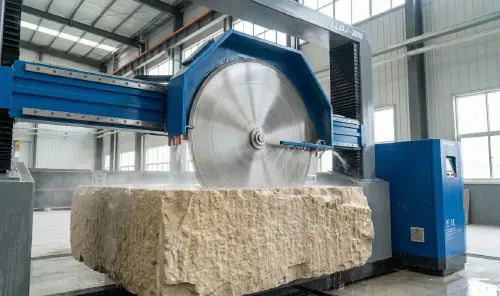
 English