Can Manual Industrial Stone Cutting Machine Handle Your Job?
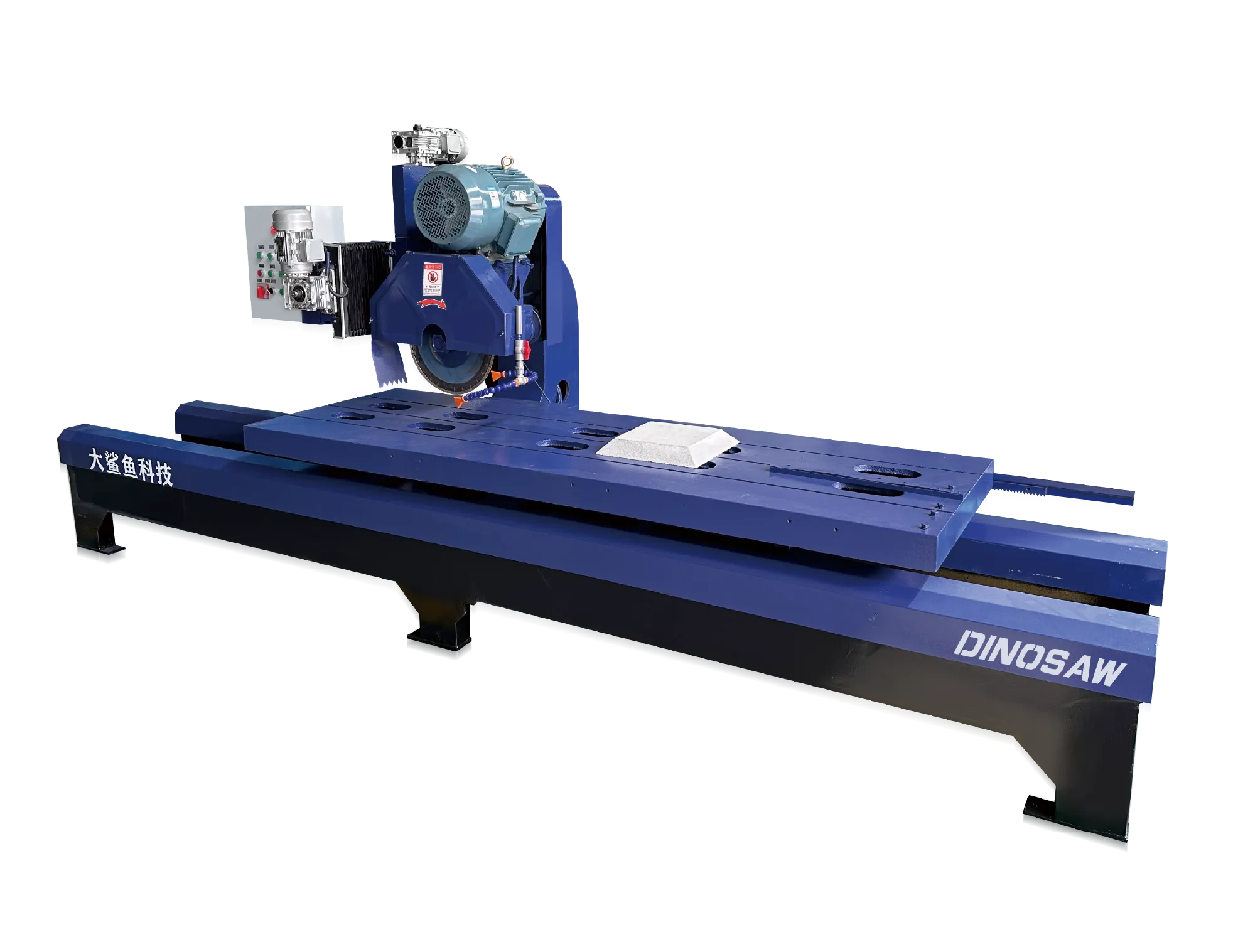
When your workshop's bread and butter are standard straight cuts and clean 45° chamfers, a manual industrial stone cutting machine is often the smartest investment. It excels in applications where speed, cost-effectiveness, and simplicity are paramount. But can it handle your specific materials and deliver the quality your clients expect? The short answer is yes—for a wide range of common stone fabrication tasks.
This machine is engineered to process granite, marble, quartz, and other natural and engineered stones with high precision. For a typical job, like creating a marble countertop edge, you would start by securely positioning the slab on the worktable. For a clean cut, a starting blade speed with a moderate RPM appropriate to the material is recommended, paired with a consistent water flow of 2–3 m³/h to suppress dust and cool the blade. Before making the final cut, a test on a scrap piece is crucial to confirm the angle and finish.
What Can Manual Industrial Stone Cutting Machine Achieve?
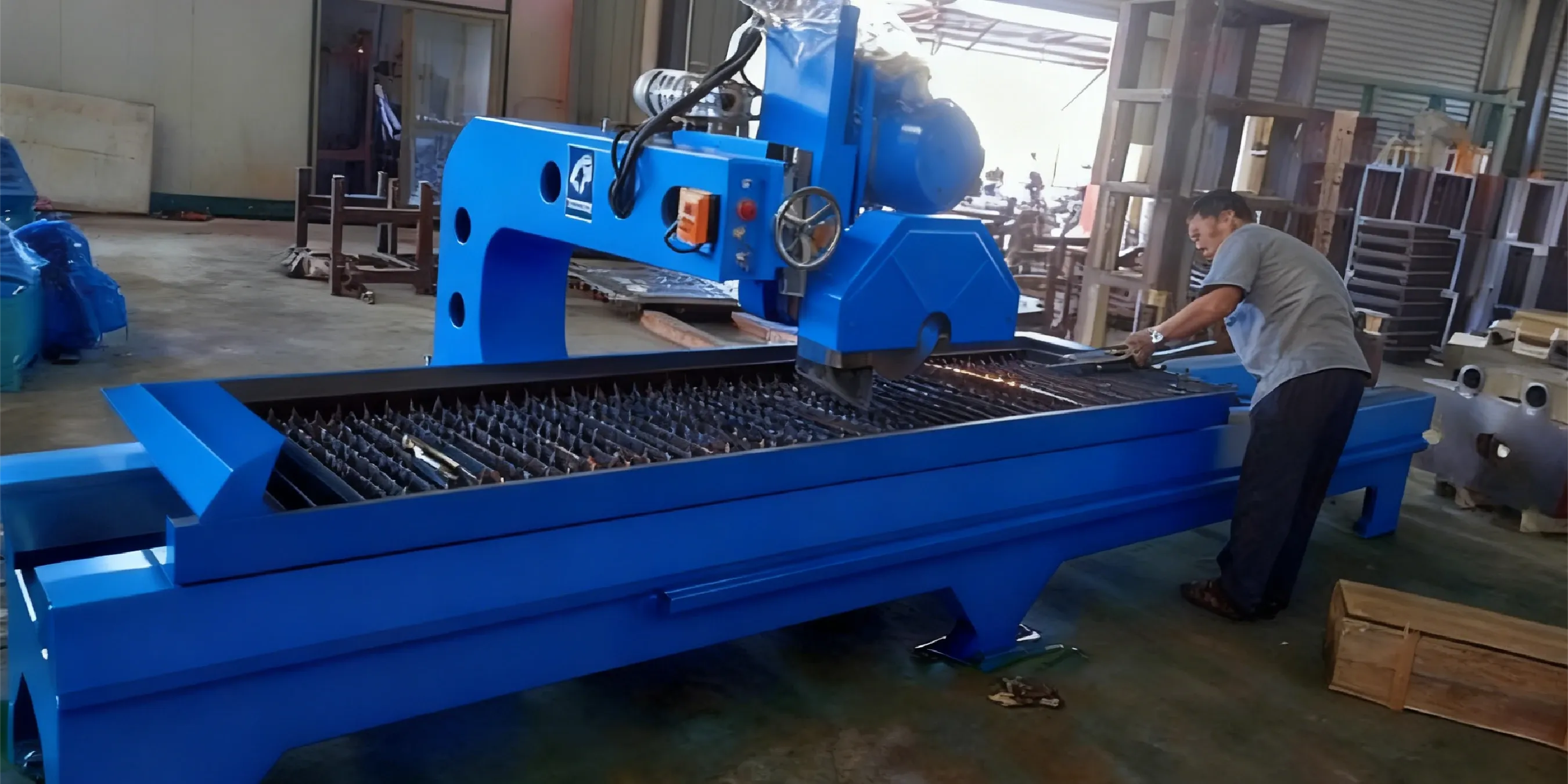
A manual stone cutting machine is a versatile workhorse. Its robust construction, featuring a heavy-duty cast iron frame, provides the stability needed for flawless results across various applications. Here’s a look at what you can produce:
Precise Granite Edge Cutting: Achieve perfectly straight and clean edges on granite slabs, essential for high-end kitchen countertops and architectural elements.
Marble Countertop Chamfering: Create elegant 45-degree bevels on marble countertops and vanities, delivering a premium look with minimal chipping.
Custom Quartz Cabinet Panels: The machine’s accuracy is perfect for quartz cabinet panel fabrication, ensuring panels meet exact dimensions for a seamless fit.
Uniform Curb Stones: Efficiently produce granite curb stones with consistent chamfering, ideal for landscaping and municipal projects requiring durability and aesthetic appeal.
Perfectly-Sized Splash Guards: Cut thin backsplashes from granite or quartz with precision, ensuring a tight seal against walls and countertops to prevent water damage.
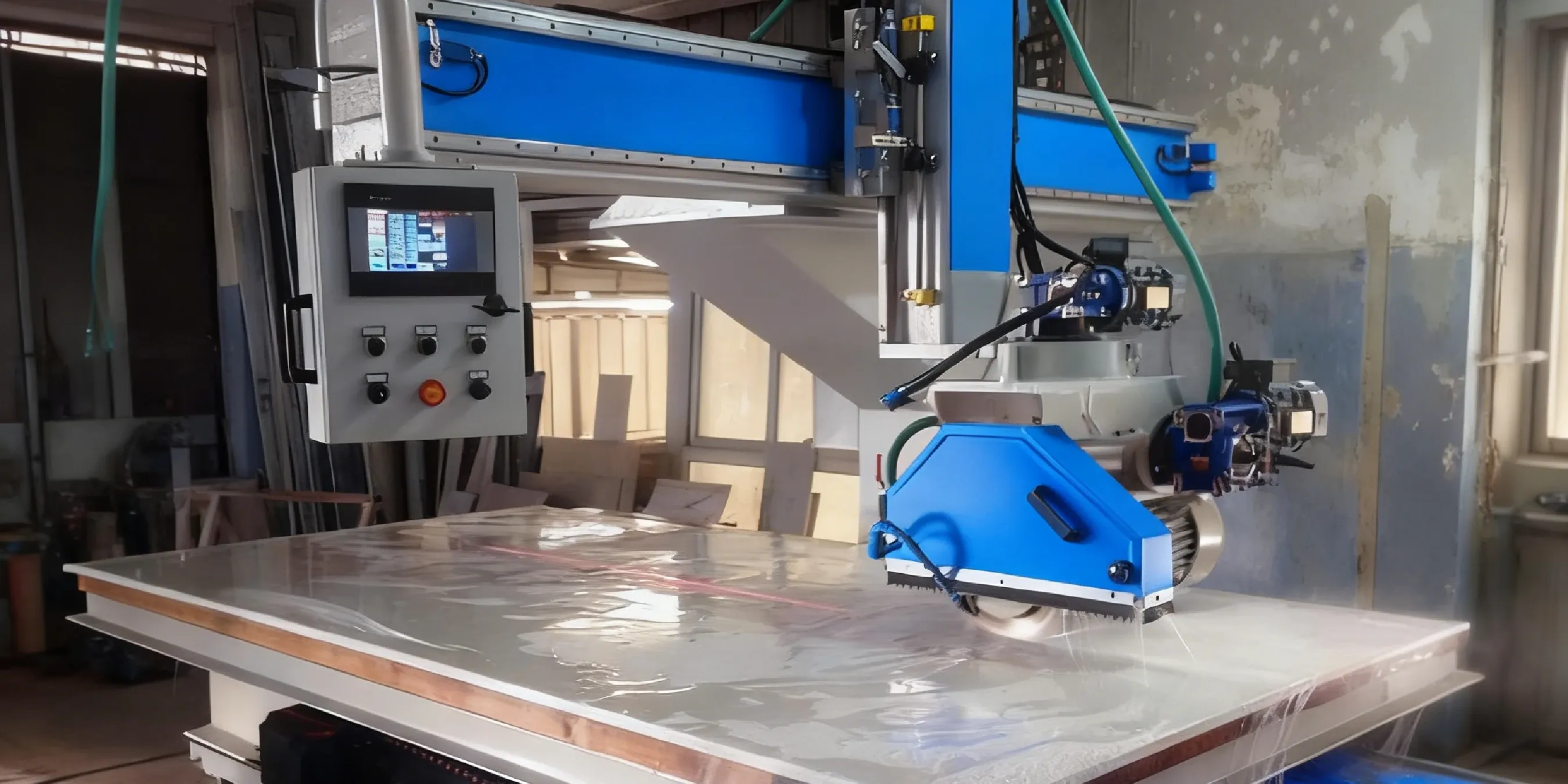
Manual Stone Cutting Machine vs. Automatic Bridge Saw (CNC/PLC)
Choosing the right equipment depends entirely on your operational needs. While automated systems like CNC/PLC-controlled bridge saws offer unparalleled capabilities for complex designs and high volume, a manual cutter holds distinct advantages in specific scenarios.
For small-batch production, one-off custom jobs, or standard operations like straight edge cutting and 45° chamfering, a manual machine is significantly more cost-effective and faster to deploy. There is no programming time, and an experienced operator can often complete these simple tasks more quickly than setting up a CNC program. This makes the
Manual Industrial Stone Cutting Machine the economical choice for workshops focused on core fabrication services.
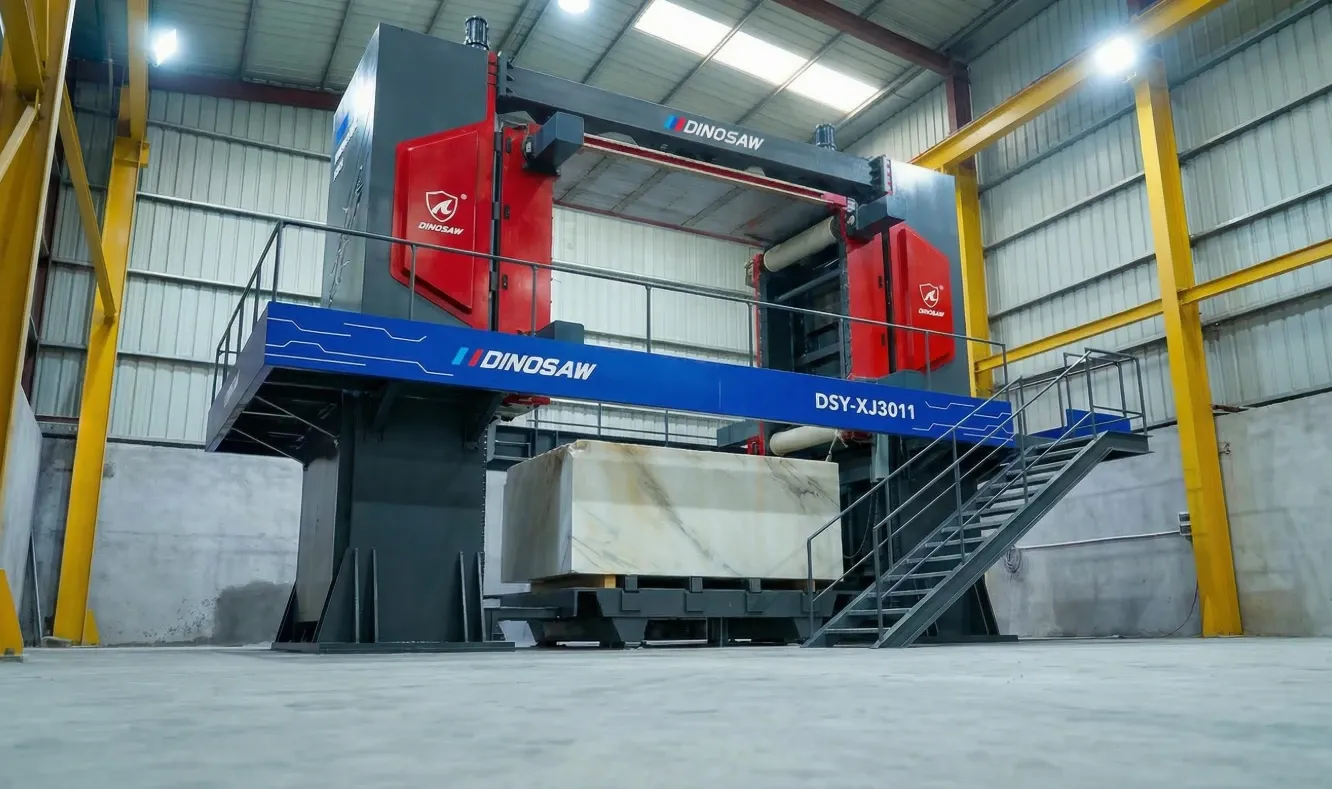
However, it’s crucial to recognize its limitations. A manual machine is not designed for cutting complex curves, intricate inlays, or free-form shapes. These tasks require the multi-axis precision of an automatic bridge saw or a waterjet. For cutting very thick blocks or creating large-radius curves, a
Wire Saw Machine is the specialized tool for the job.
From Theory to Practice: Three Mini Case Studies
Seeing is believing. Here’s how the DINOSAW SYQJ-600 solves real-world fabrication challenges.
Quartz Cabinet Panels
Initial Problem: A fabricator experienced edge chipping and a size error of ±2mm on quartz panels, leading to waste.
Action: They reduced the cutting speed and utilized the machine's oil-lubricated guide rails to ensure smooth, steady movement.
Result: Edge chipping was reduced by approximately 30%, and dimensional accuracy improved significantly.
Replication Conditions: Use a sharp blade designed for engineered stone, maintain a slow and consistent feed rate, and ensure guide rails are clean and lubricated.
Marble Countertop Edges
Initial Problem: Chamfered edges on marble countertops showed minor chipping and an inconsistent finish.
Action: The operator switched to a fine-tooth diamond blade and performed a precise 45° angle calibration using a digital protractor.
Result: The new blade produced a much cleaner cut, and the precise angle resulted in a consistently high-quality finish, enhancing the final product's value.
Replication Conditions: Select blade grit based on marble density, calibrate angle before each batch, and use ample water flow.
Granite Curb Stones
Initial Problem: A contractor faced inconsistencies in angle and length across a large batch of granite curb stones.
Action: The team implemented a system of secure clamps to prevent workpiece movement and used a simple jig for consistent position measurement.
Result: Batch consistency improved dramatically, meeting project specifications and reducing rework.
Replication Conditions: Use robust clamping for heavy stone, create measurement guides for repetitive cuts, and perform spot checks every 10-15 pieces.
Risks and Prerequisites: Safety & Compliance First
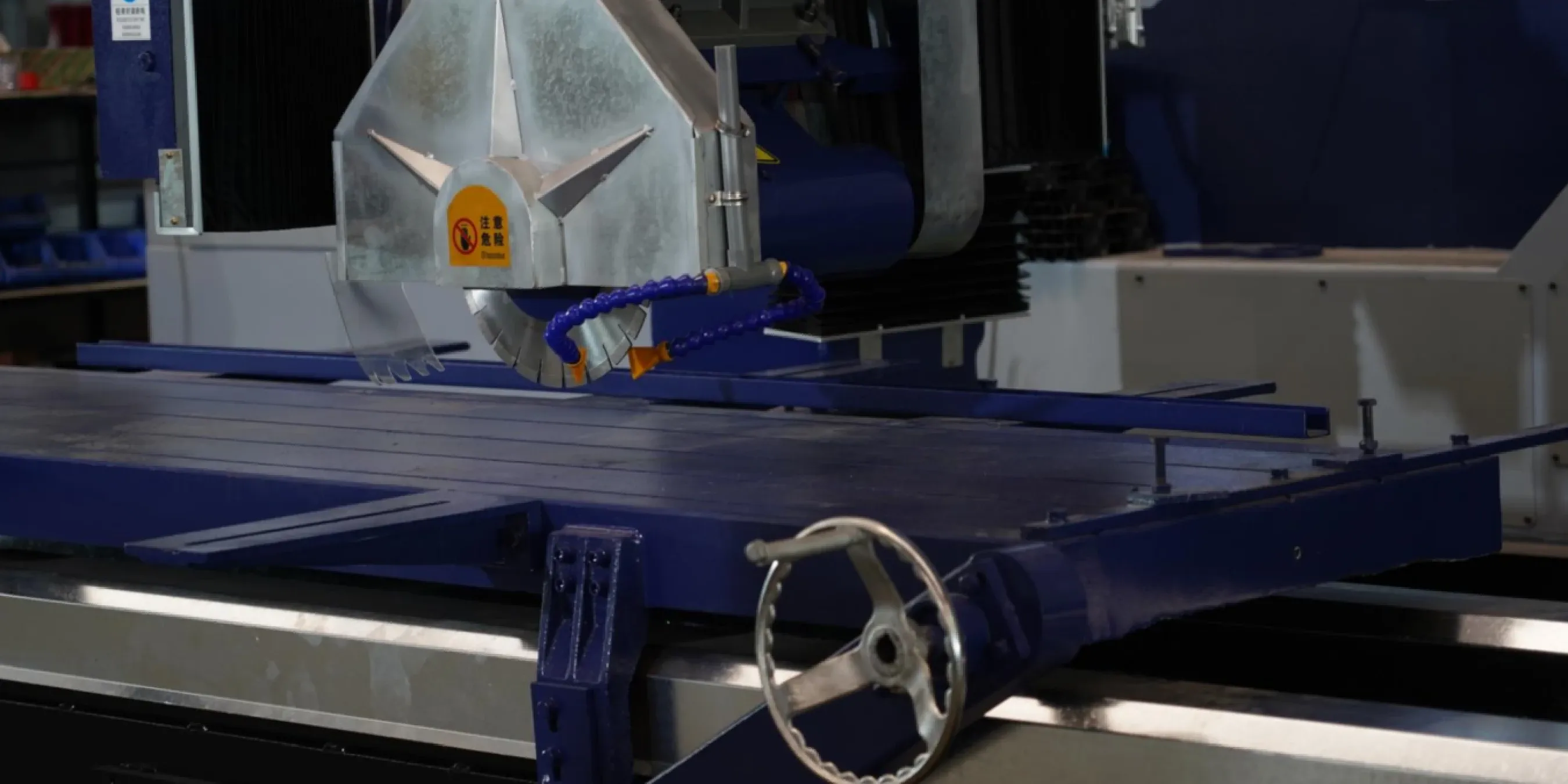
Operating any stone cutting machine carries inherent risks. Adhering to safety protocols is non-negotiable to protect your team and ensure compliance. The powerful 7.5-18.5 kW motor (manufacturer-reported) and industrial three-phase power, which is configurable per region, demand respect.
The primary hazard in stone cutting is the generation of respirable crystalline silica dust, a known carcinogen. According to
OSHA 29 CFR 1926.1153, employers are required to limit worker exposure. The machine’s integrated water cooling system (2–3 m³/h) is the first line of defense, effectively suppressing dust at the source. However, operators must always wear appropriate Personal Protective Equipment (PPE), including an N95 respirator, safety glasses, and hearing protection. The
NIOSH recommended exposure limit (REL) for respirable crystalline silica is 0.05 mg/m³, reinforcing the need for these controls.
Furthermore, all equipment from DINOSAW is manufactured in compliance with international standards, including processes certified under
ISO 9001:2015 for quality management systems, ensuring reliability and traceability. Always ensure that the machine's dust-proof covers are in place and that the electrical systems are installed by a qualified professional.
Frequently Asked Questions (FAQ)
What materials can the Manual Industrial Stone Cutting Machine cut?
Processes granite, marble, quartz, slate, and more when blade and feed match material hardness.
What is the maximum cutting size?
Up to 3000×1200×180 mm on SYQJ-600ZB; worktable 3000×800 mm.
When should I choose this manual cutter over an automatic bridge saw?
Manual wins for straight cuts and 45° chamfers in small batches; an automatic saw wins for complex curves or high-volume automation.
Manual Wins On:Lower cost/TCO; fast setup for one-off jobs; operational flexibility.
Automatic Saw Wins On:Complex geometry; high repeatability at volume; automated nesting to optimize material.
Boundary:If more than half your work involves intricate shapes, automation is the better path.
How can I avoid edge chipping when cutting slate?
Fine-grit blade + slow feed + perfect leveling + secure clamping minimize chipping.
What bevel accuracy can I expect for 45° cuts?
Typical bevel consistency is within ±0.5° after the machine is properly calibrated.
Context:The rigid cast-iron frame and secure tilting head lock minimize deviation during cuts. Accuracy is dependent on a precise initial calibration using a digital protractor.
Benefits:This level of accuracy ensures consistent, high-quality mitered edges for seamless joins in countertops and architectural elements, reducing rework.
What are the power requirements?
Industrial three-phase power, configurable per region and customer requirements (e.g., 380V/440V), with a dedicated circuit is required.
Typical Path:Install by qualified electrician; verify breakers/grounding; inspect cables/terminals routinely.
Boundary:Match motor power (7.5–18.5 kW) and local codes before commissioning. Your workshop's power infrastructure must support the required voltage, which is customizable.
How often does the machine need maintenance?
It follows a tiered schedule: daily checks, weekly lubrication, monthly inspections, and annual professional service.
Typical Path:
Daily: check water and dust-proof covers.
Weekly: clean/lubricate oil-immersed rails; remove debris.
Monthly: inspect blade/belts/electrics; schedule yearly service.
What PPE is required to operate this machine safely?
Gloves, safety glasses, hearing protection, N95 respirator, and steel-toed boots are mandatory.




 中文
中文 Italian
 Türkçe
 Português
 Español
 Deutsch
 العربية
 Tiếng Việt
 Français
 Русский






 Nov 5, 20255 MIN READ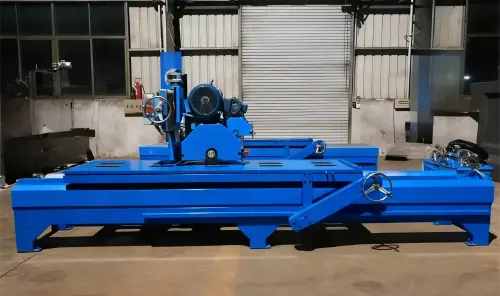
 English