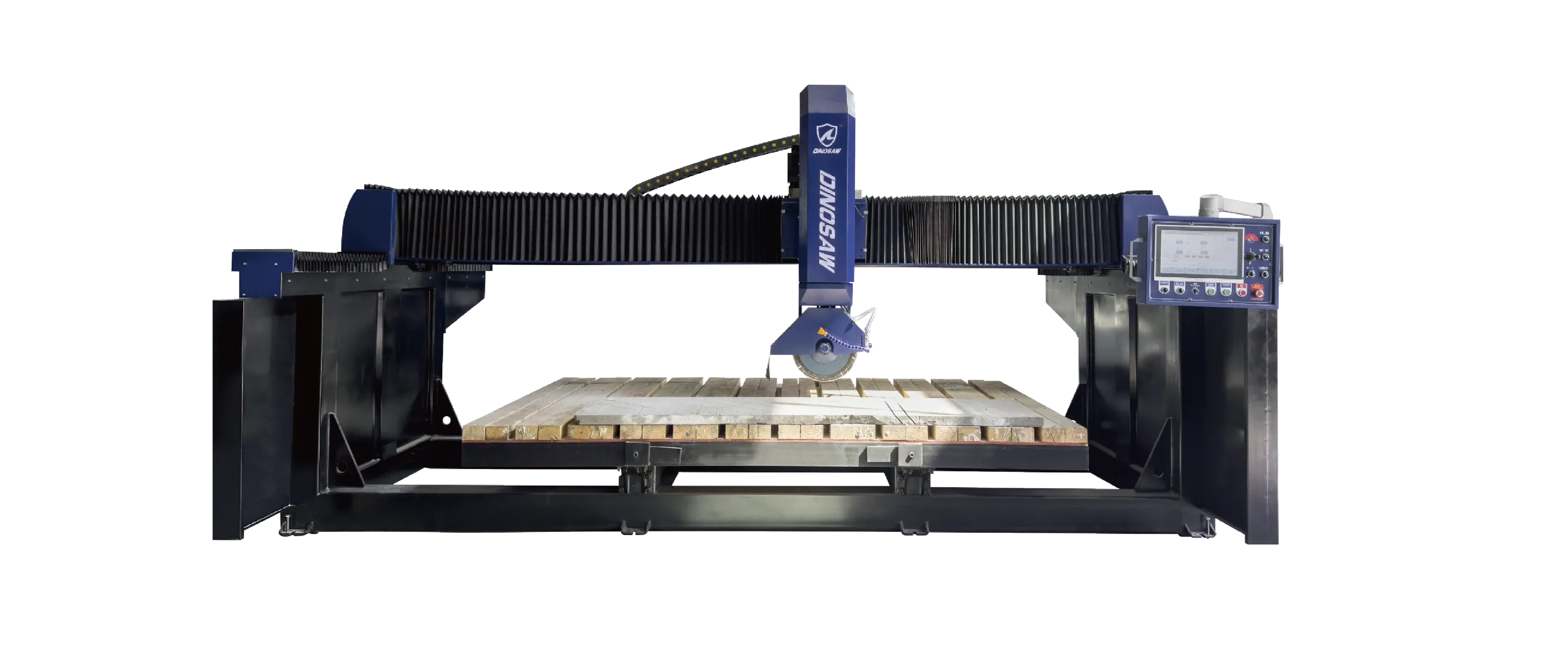
A bridge saw’s value is defined by its ability to handle a wide range of materials. This machine is engineered for versatility, giving operators the confidence to work with both traditional and emerging stone products without hesitation.
How Does It Handle Natural Stone Like Granite?
For high-value natural stones, precision is paramount. A monoblock bridge saw provides the stability needed to make clean, chip-free cuts in hard materials like granite and delicate ones like marble.
The CNC control ensures that complex edge profiles and tight-fitting joints are executed flawlessly, minimizing waste of expensive materials. Its ability to handle large slabs makes it perfect for creating seamless kitchen islands and cu
stom granite projects.Example: Fabricating a seamless 3-meter granite island with a single, continuous cut.
Example: Batch cutting 50 marble vanity tops for a hotel project with ±0.5mm consistency.
How Does It Cut Engineered Stone and Quartz?
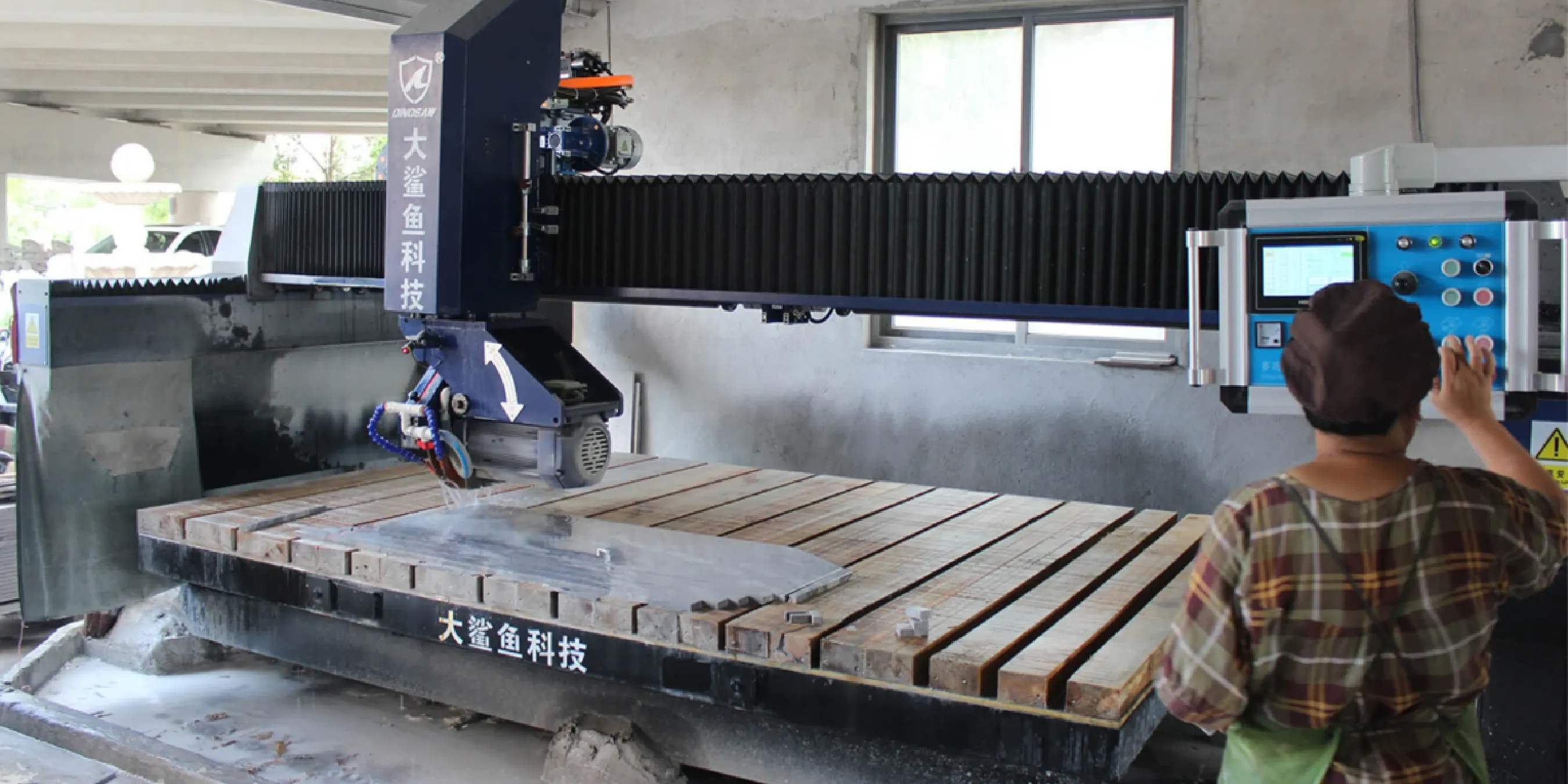
Engineered materials like quartz and sintered stones (e.g., Dekton, Neolith) are exceptionally hard and dense, posing a challenge for lesser saws. A robust bridge saw with a powerful motor and variable speed control is essential to prevent chipping and ensure a clean finish.
As noted in fabrication manuals, using a water-cooled stone saw is critical to prevent thermal shock. The YTQJ-600's rigid monoblock frame minimizes vibration, a key factor in achieving smooth cuts on these unforgiving materials. The tilting head capability is perfect for creating the mitered edges popular in modern quartz countertop designs.
Example: Creating a waterfall countertop edge with a perfect 45-degree miter cut on a 20mm quartz slab.
Example: Cutting a large-format sintered stone panel for exterior cladding without causing micro-fractures.
What Is the Process for Porcelain Slab Cutting?
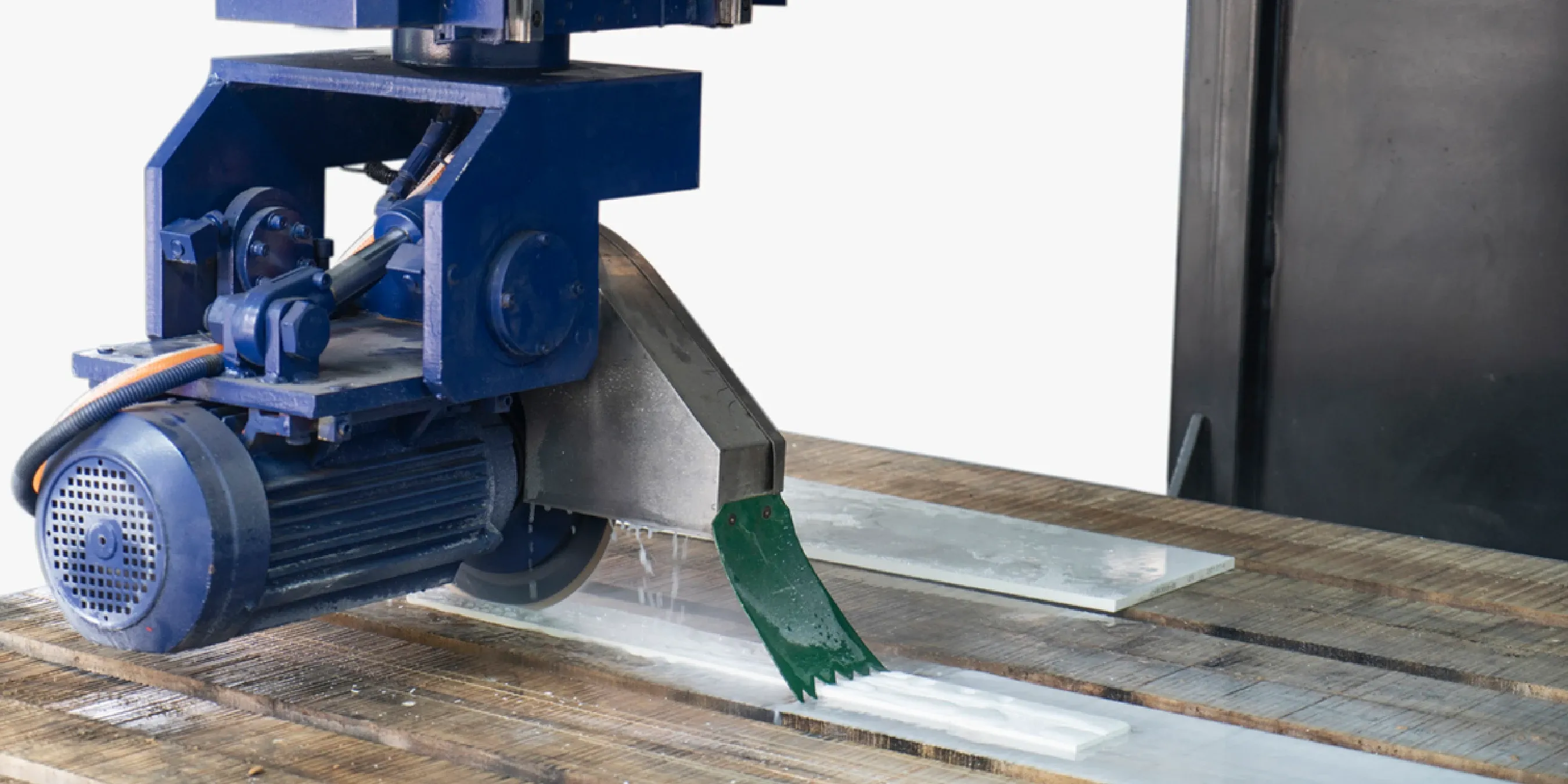
The trend towards large-format porcelain slabs for wall cladding and flooring demands a machine with a large worktable and precise control. These materials are thin and brittle, making them highly susceptible to cracking during fabrication.
A bridge saw with a smooth, controlled cutting motion and ample water for cooling ensures that these large panels can be cut to size accurately without damage, ready for installation in high-end commercial and residential projects.
What Kind of Jobs Can You Perform?
Task: Fabricate Countertops. Program straight cuts, sink cutouts, and faucet holes using the CNC system. The rotating worktable allows for multiple cuts without moving the slab, drastically improving efficiency.
Task: Create Mitered Edges. Utilize the 0-45° blade tilting capability to create perfect, clean miter joints for waterfall edges and thick-profile countertops. The CNC control ensures the angle is consistent along the entire length of the cut.
Task: Cut Custom Shapes. Combine the rotating worktable with the CNC programming to cut arcs, curves, and other non-linear shapes for custom tabletops, reception desks, or landscape features.
3 Mini-Cases: How a CNC Bridge Saw Delivers ROI
Case 1: The High-Volume Countertop Fabricator
Problem: A mid-sized workshop using a manual saw, struggling with production bottlenecks and inconsistent quality on mitered edges.
Solution: Upgraded to a YTQJ-600 monoblock bridge saw to automate cutting processes.
Result: Reduced average production time per kitchen by 40% and eliminated rework on mitered joints, significantly boosting throughput.
Case 2: The Monument & Memorial Manufacturer
Problem: Outsourcing complex angled and curved cuts for custom headstones, leading to high costs and long lead times.
Solution: Implemented a CNC saw with a tilting head to bring intricate cutting capabilities in-house.
Result: Captured higher-margin business by producing complex designs internally and reduced project lead times by over 50%.
Case 3: The Commercial Architectural Contractor
Problem: Cutting architectural stone cladding on-site with manual tools, resulting in slow progress, safety risks, and high labor costs.
Solution: Pre-fabricated all panels to precise specifications in a controlled workshop environment using a CNC bridge saw.
Result: Accelerated project completion by an estimated 30%, improved installation quality, and reduced on-site labor costs.
What Are the Prerequisites for Installation and Safety?
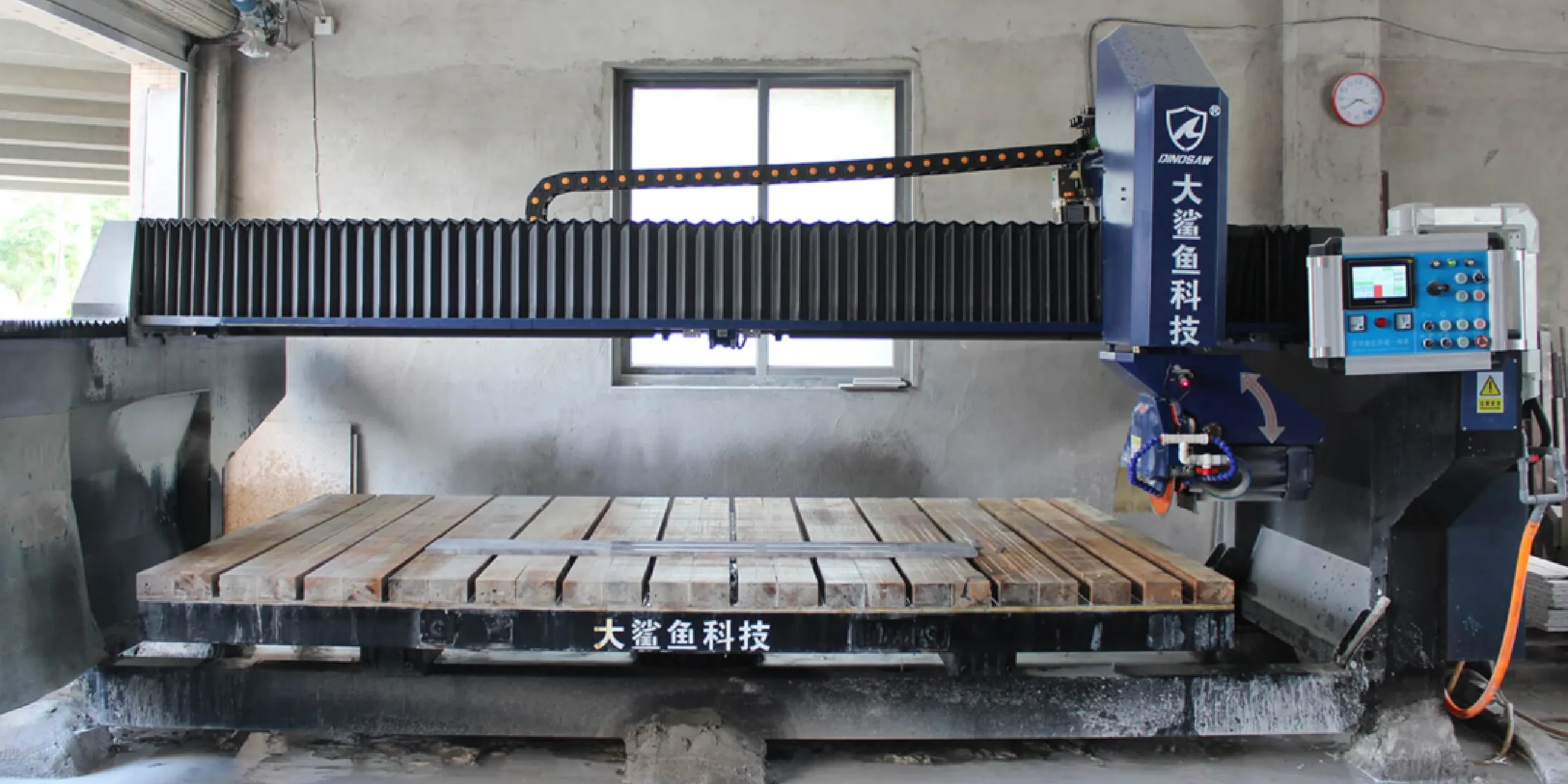
While powerful, a bridge saw is not a standalone tool; it requires the correct environment and trained operators. A solid, level concrete floor is mandatory for stability, along with an adequate power supply (typically 3-phase, requiring around 60-80 Amps) and a reliable water source for blade cooling.
Operator training on CNC programming and machine safety is not just recommended—it's essential for both performance and compliance. According
to SafeAtWorkCA, tasks like cutting stone can expose workers to fatal silica-related diseases, making adherence to wet-cutting and dust control protocols mandatory.
Conclusion: Why Is It a Versatile Workhorse?
A monoblock bridge saw is far more than a simple cutting tool. It serves as a versatile fabrication center that enables workshops to produce a wide range of high-value products with both speed and precision.
From standard kitchen countertops to complex architectural elements, it provides the capability to meet modern design demands and scale production efficiently. To see a variety of countertop cutting solutions in action, or to explore the technical details of the
YTQJ-600 CNC stone cutter, you can dive deeper into the machinery that drives the industry.
Frequently Asked Questions (FAQ) about this Granite Cutting Machine
What is a monoblock bridge saw used for?
It is a self-contained stone cutting machine used to precisely cut slabs like granite, marble, and quartz for countertops.
Context:The bridge and supports are built into a single, rigid frame, which holds the cutting blade.
Benefits:This design eliminates the need for separate concrete foundation walls, making it easier and faster to install than traditional gantry saws.
Next Step:Evaluate your workshop's floor space and power supply to confirm compatibility with a monoblock footprint.
How accurate is the cutting precision on a marble bridge saw?
A high-quality monoblock bridge saw can achieve a manufacturer-reported cutting accuracy of ±0.5mm.
Context:This high precision results from the rigid monoblock frame minimizing vibration, combined with a closed-loop CNC system.
Benefits:Servo motors and encoders constantly correct the blade's position, which is crucial for delicate materials like marble and ensures tight-fitting joints.
Next Step:Request sample cuts or a live demonstration from the supplier to verify the claimed precision on your specific materials.
Can this CNC stone cutting machine cut curves?
Yes, a CNC monoblock bridge saw is designed to cut curves, arcs, and other non-linear shapes.
Context:The CNC system coordinates the movement of the X-axis (bridge), Y-axis (head), and C-axis (worktable rotation) simultaneously.
Benefits:This enables the creation of custom tabletops, reception desks, and other complex designs automatically from a digital file.
Next Step:Prepare a DXF file of a curved design and ask the supplier how to program and execute the cut on the machine's HMI.
Do I need a special foundation for installing this countertop fabrication machine?
No, a key advantage of the monoblock design is that it does not require a special foundation.
Context:The entire machine is a self-contained unit and can be installed on any solid, level concrete floor that supports its weight.
Benefits:This saves significant time and money by avoiding the costly construction of permanent concrete walls, and allows for future relocation.
Next Step:Verify your workshop's concrete floor thickness and levelness against the machine's installation requirements found in the technical manual.
What advanced cutting options are available?
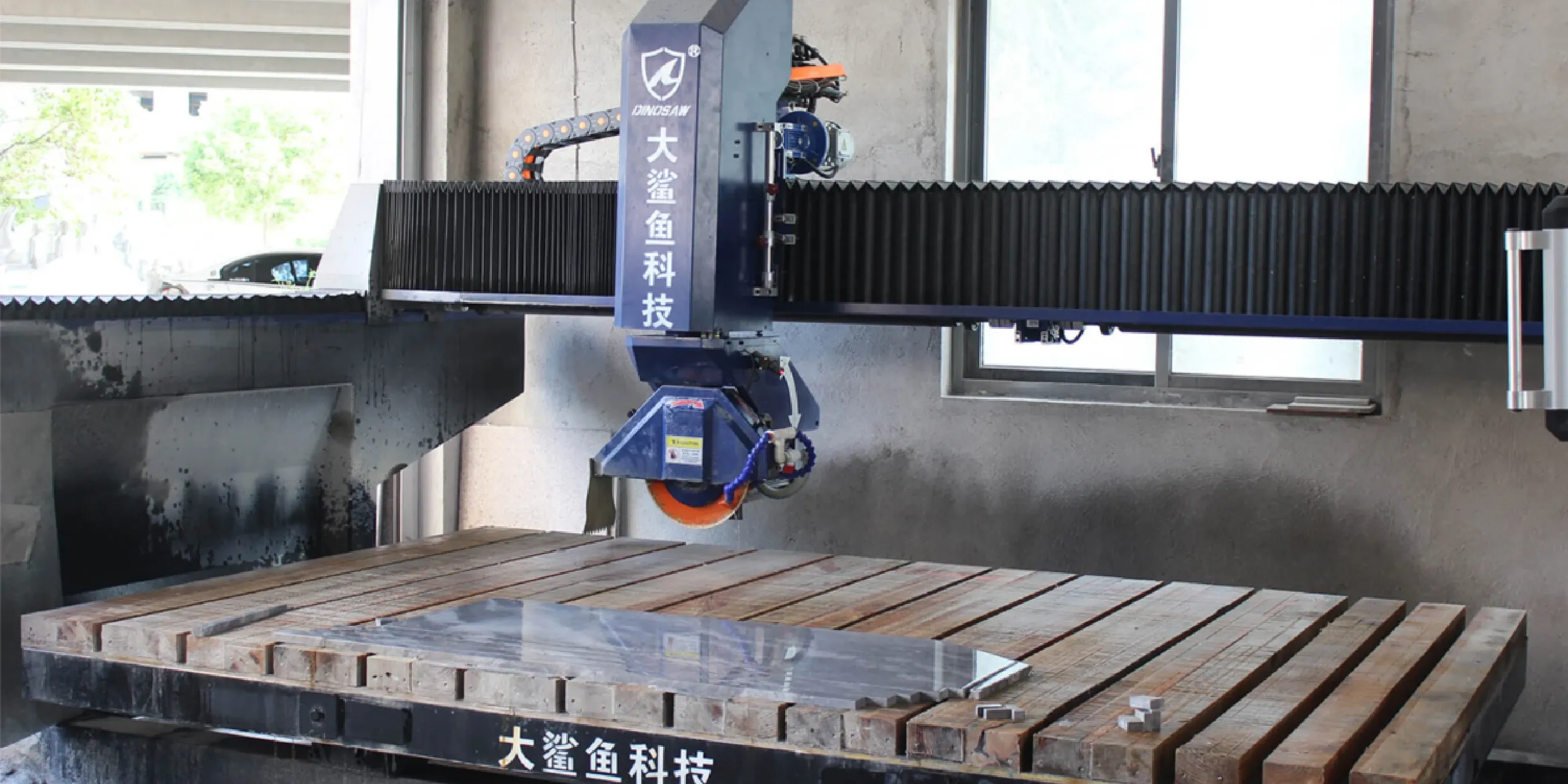
Advanced options like a tilting head for miter cuts and a rotating worktable add significant versatility.
Context:A basic machine moves in 3 axes (X, Y, Z). Advanced configurations add an A-axis for tilting the blade (miter cuts) and a C-axis for rotating the worktable.
Benefits:This enables complex operations like 45-degree miter cutting for waterfall edges and shaping curved pieces without needing to manually move the slab.
Next Step:Review your typical job requirements to determine if miter cuts and complex shapes are a significant part of your business, justifying the investment in these options.
Can I use this bridge saw for Dekton or Neolith cutting?
Yes, a well-built monoblock bridge saw is ideal for cutting sintered stone and ultra-compact surfaces.
Context:Success requires a rigid frame to prevent vibration, a powerful motor with variable speed, and a high-volume water cooling system.
Benefits:The machine's stable structure and precise control minimize the risk of chipping or cracking these hard, brittle materials.
Next Step:Ensure you use a diamond blade specifically designed for sintered stone and consult the manufacturer's recommended cutting parameters (speed and RPM).
How much does a monoblock bridge saw price?
The price can vary widely from $20,000 to over $100,000 depending on brand, configuration, and features.
Context:A new monoblock saw from a reputable manufacturer is a mid-range investment, balancing capability and cost.
Benefits:It offers a faster ROI due to lower installation costs compared to gantry systems, which require expensive foundations.
Next Step:Contact the sales team directly to get a specific quote for the YTQJ-600 based on your configuration needs.
What are the space requirements for a monoblock bridge saw for sale?
The machine itself has a footprint of approximately 5.8m x 3.8m, but a larger operational area is required.
Context:You must account for clearance around the machine for loading/unloading slabs, operator access, and maintenance.
Benefits:Planning for adequate space ensures a safe and efficient workflow, preventing accidents and making maintenance tasks easier to perform.
Next Step:Plan for a safe operational area of around 8m x 6m and consult the machine's technical specification sheet for exact dimensions and required clearances.




 中文
中文 Italian
 Türkçe
 Português
 Español
 Deutsch
 العربية
 Tiếng Việt
 Français
 Русский






 Oct 20, 20256 MIN READ
 What Materials Can This Bridge Saw Cut?
 English