Use this quick decision tree to see which machine type aligns with your production needs.
If you primarily produce flat slabs (e.g., floor tiles, wall panels) → Your best choice is an automated line polisher for maximum throughput.
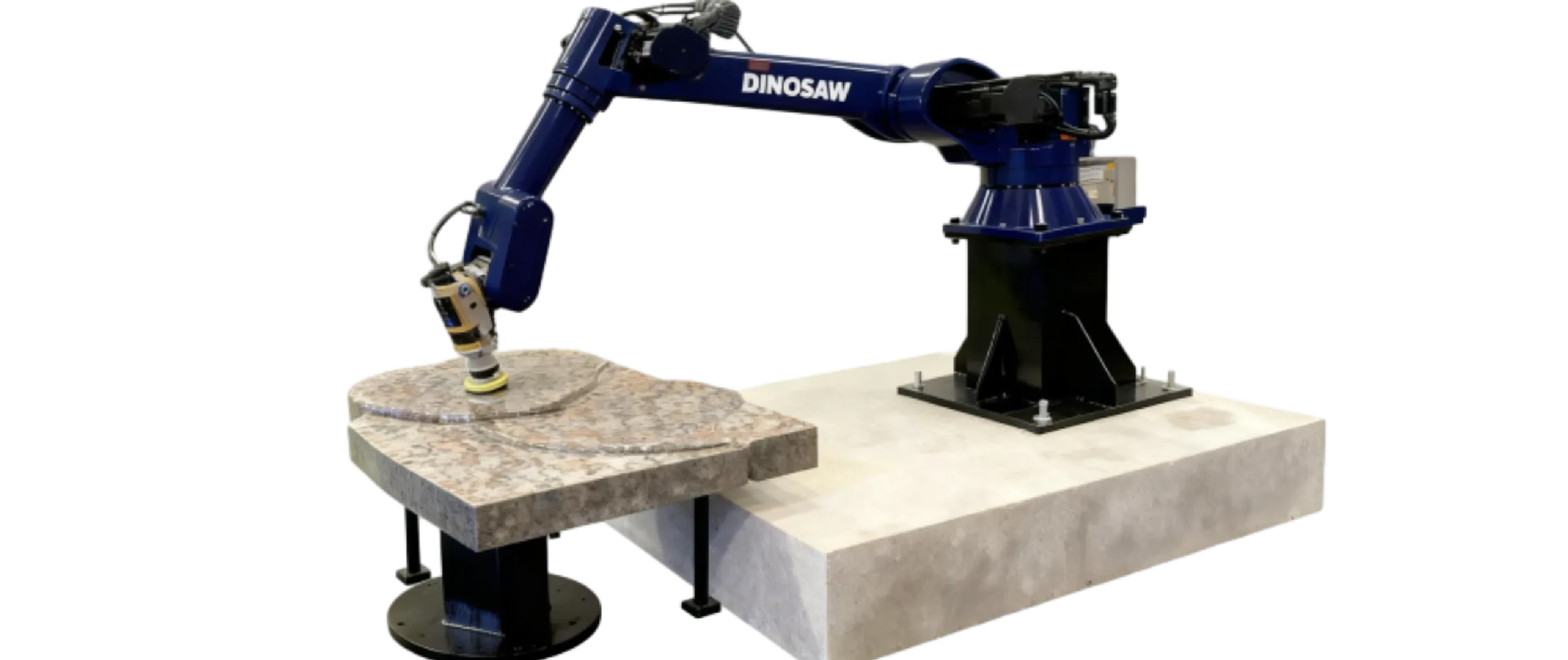
If you fabricate countertops with sink cut-outs and complex edges → A stone edge polishing robot is superior for its ability to handle both flat surfaces and 3D contours in one setup.
If you create 3D artistic pieces (statues, monuments, custom furniture) → A 6-axis stone polishing robot is essential. No other machine offers the required dexterity.
If your factory space is limited → A single-head polisher or manual grinder has the smallest footprint, but at a high cost to labor and consistency.
If your power supply is not three-phase industrial → You cannot operate a robotic grinding and polishing system or a large CNC line. This infrastructure must be in place first.
If your budget is the primary constraint → Manual polishing has the lowest initial cost but the highest long-term labor cost and quality risk. An entry-level CNC is the next step up.
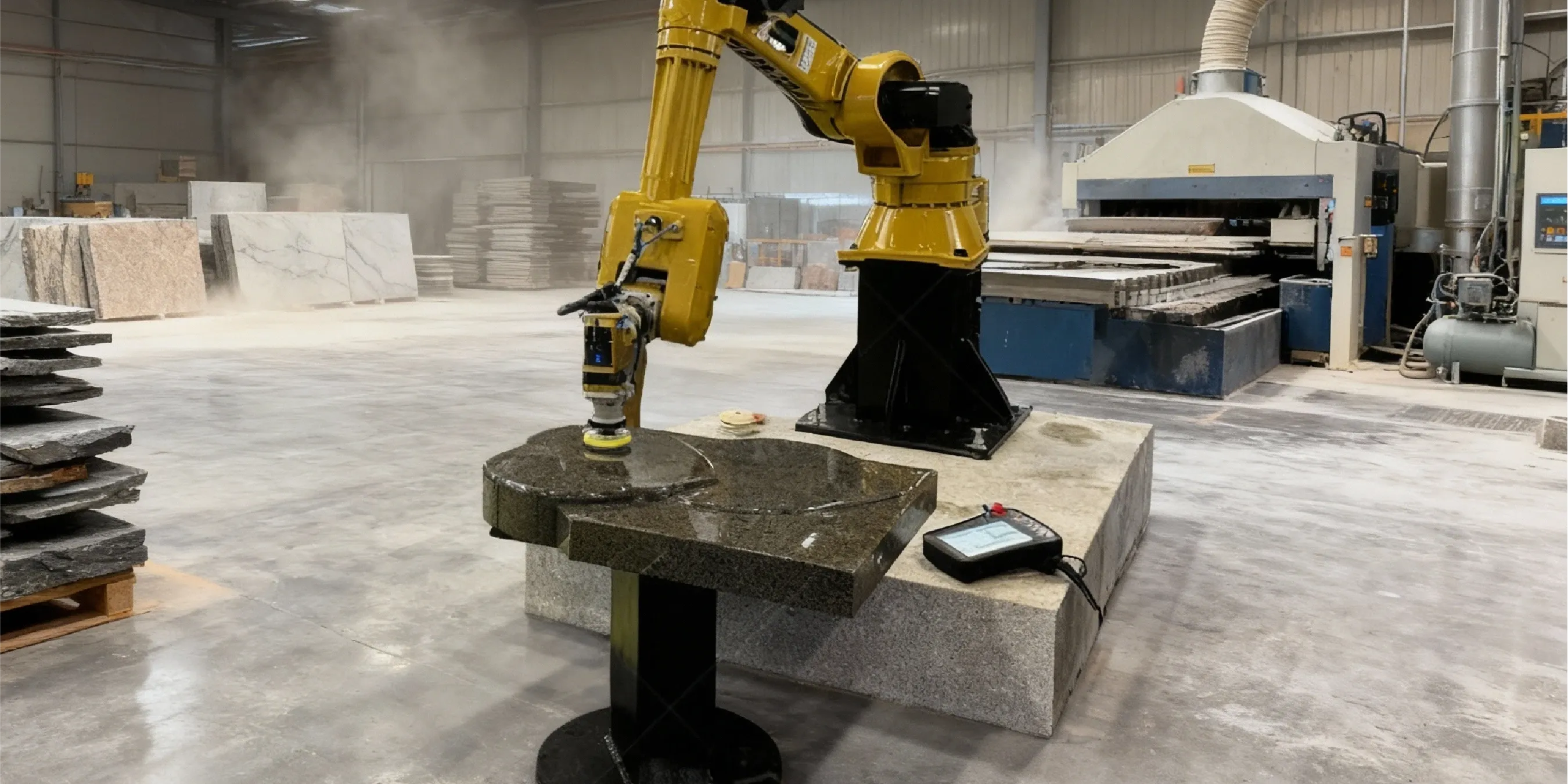 Head-to-Head: Robotic Arm vs. Alternative Polishers
Let’s break down the practical differences between a robot polishing machine and other common equipment in a stone factory.
vs. CNC Bridge Polisher / Automated Line
A CNC polisher is a productivity powerhouse for flat work. Its strength is moving quickly in straight lines. However, its rigidity is also its weakness. For anything beyond a simple edge profile, it lacks the Flexibility of a 6-axis robot. A robot can polish the inside of a sink bowl, a twisted sculpture, and a flat surface in the same cycle. In terms of Cycle Time, the CNC line is faster for a simple, large flat slab. But for a complex countertop, the robot is faster because it completes the entire piece—including edges and cutouts—in a single, automated handling. The Footprint of a full polishing line is enormous, whereas a robotic cell is more compact, though it requires vertical clearance and a dedicated safety enclosure.
vs. Single-Head Grinder
A single-head grinder is a step up from manual work but is still heavily operator-dependent. A robot offers unparalleled Flexibility and precision for complex shapes that a single-head machine cannot consistently follow. The robot's Learning Curve is software-based (train once, repeat forever), whereas a single-head machine relies on constant operator skill. While the Initial Investment for a single-head machine is much lower, the robot wins on Maintenance and Consumables in the long run by optimizing pad life and pressure, reducing waste. For stone workshop automation, a robot is a strategic leap, while a single-head machine is an incremental improvement.
vs. Manual Polishing
Manual polishing offers the ultimate Flexibility for one-off artistic pieces but suffers from inconsistency, safety risks (dust, repetitive strain), and high labor costs. A granite polishing robot provides perfect repeatability, which is critical for stone polishing quality control. The robot's initial cost is high, but the robotic polishing ROI is realized through higher throughput, near-zero rework, and lights-out operation. Regarding Compliance, an enclosed, wet-polishing robotic cell is far superior for controlling silica dust and meeting OSHA robotics safety standards.
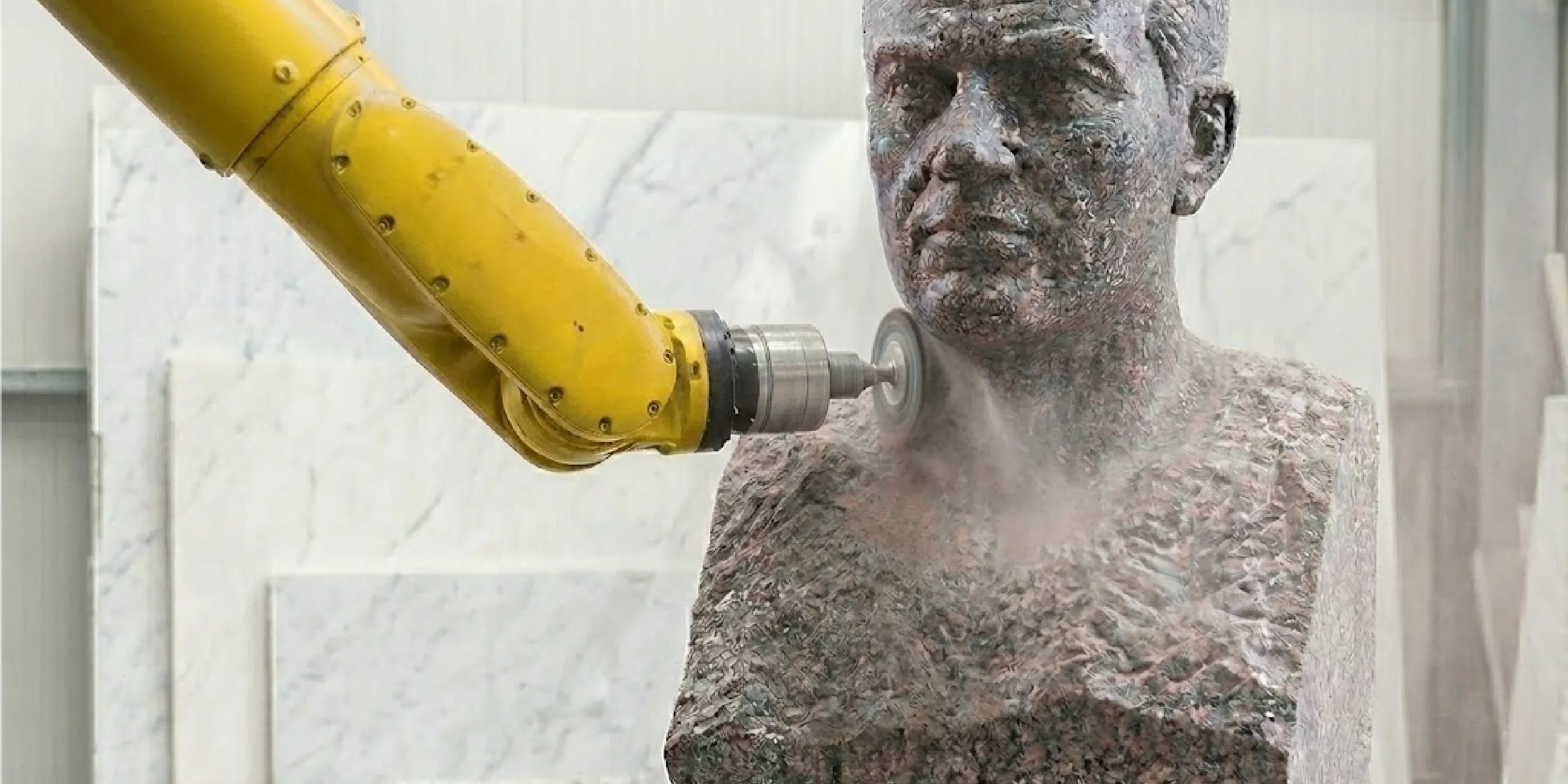 Usage Thresholds & Programming Requirements
A critical factor often overlooked is the programming skill required. The best machine depends heavily on your production style: high-mix vs. high-volume.
Robotic Arm: Best for Repetitive Automation
If you produce the same complex part for a long period, a robot is perfect. It can be integrated into a production line , and after the initial program is set, it can run automatically with minimal oversight. However, if you frequently switch between different workpieces, the robot becomes a bottleneck. Each new part requires reprogramming, which is a significant barrier if you don't have a skilled programmer on staff.
CNC Polisher: Superior for High-Mix Production
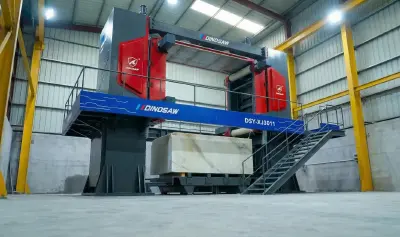
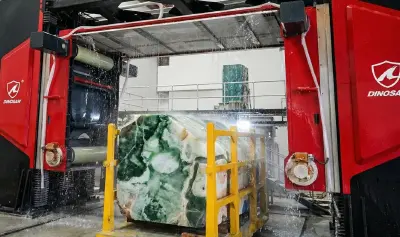
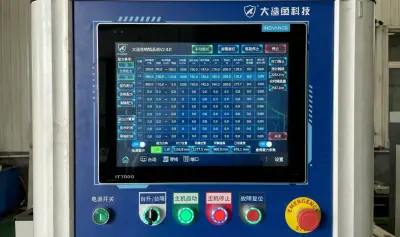
For factories that handle a wide variety of jobs, a CNC polisher is often more efficient. Modern CNC machines, particularly from manufacturers like DINOSAW, feature highly automated and intelligent operating systems. According to the manufacturer, these systems are designed to allow operators with zero experience to get up to speed quickly, supported by complete online tutorials and on-site training from engineers. This drastically lowers the usage threshold for flexible, multi-workpiece production.
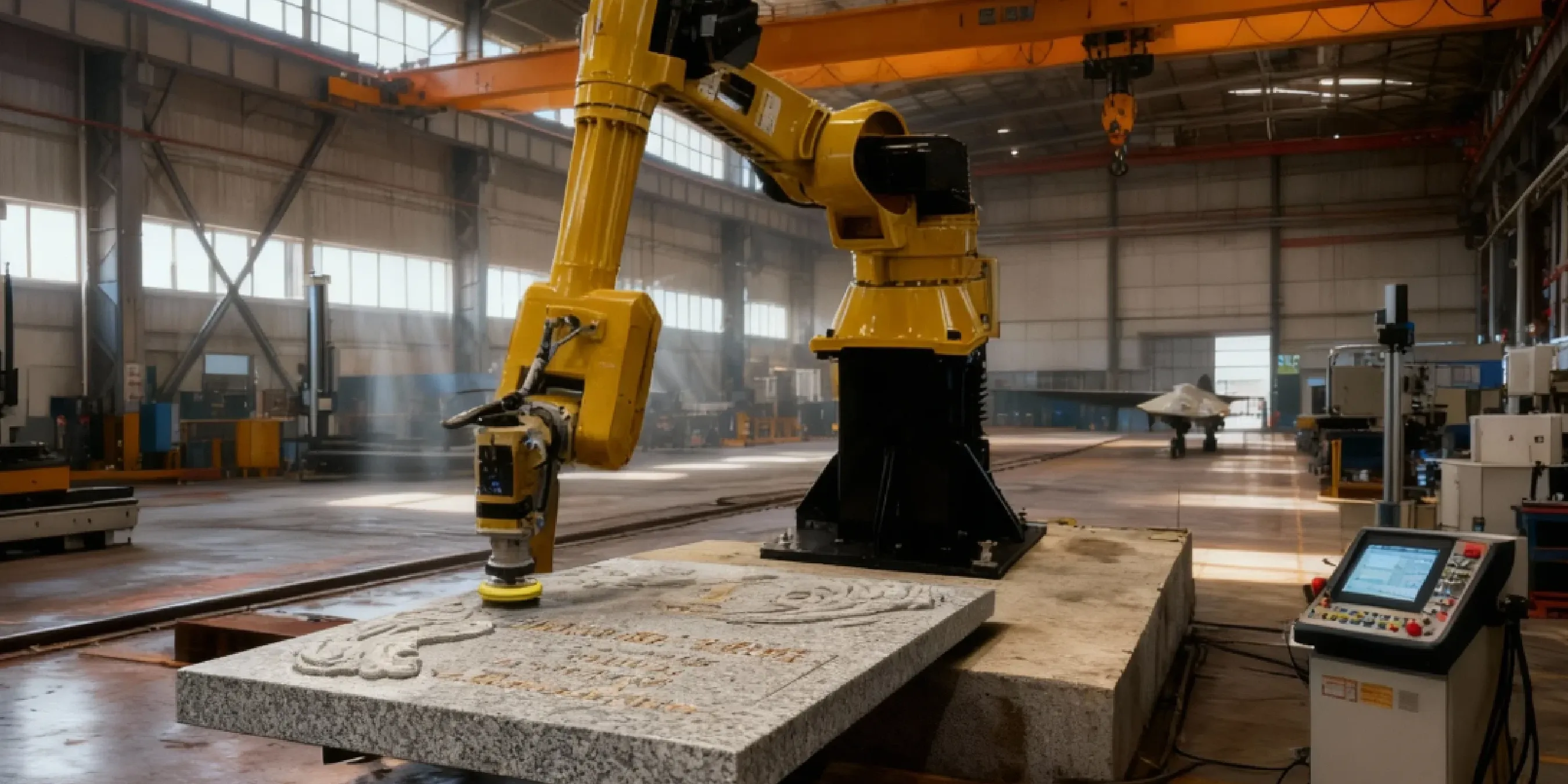 Key Purchasing Factors Checklist
Before you sign a purchase order, evaluate these critical factors to ensure you're making a smart investment.
Total Cost of Ownership (TCO): Look beyond the initial robotic polishing machine price. Factor in installation, shipping, software licensing, training, energy consumption, and scheduled maintenance over 5 years.
Spare Parts & Consumables: Does the supplier stock critical spare parts locally? What is the lead time? How proprietary are the polishing heads and pads? Availability is key to minimizing downtime.
Maintenance Window & Support: What does the preventive maintenance schedule look like? Is remote diagnostic support included? Clarify the service level agreement (SLA) for on-site technician response times.
Training Program: A comprehensive training program for both operators and maintenance staff is non-negotiable. It should cover programming, safety procedures, and basic troubleshooting.
Warranty: Understand exactly what the warranty covers (parts, labor, travel) and for how long. Pay close attention to exclusions.
Safety Certification & Compliance: Ensure the entire system (robot, controller, guarding) is certified to meet relevant safety standards, such as ISO 10218 and local electrical codes. The integrator is responsible for certifying the complete cell.
Scenario-Based Recommendations
Best For
Factories producing high-value, complex 3D pieces: custom countertops, integrated sinks, monuments, architectural elements, and bathtubs. Shops where quality consistency and labor shortages are major pain points.
A Viable Alternative For
High-volume countertop shops that can dedicate a robot to a specific, repetitive task like sink cutout polishing, freeing up other machines and labor for flatwork.
Not Recommended For
Shops that almost exclusively polish flat slabs, low-volume artistic studios, or any facility without a proper factory foundation and three-phase power
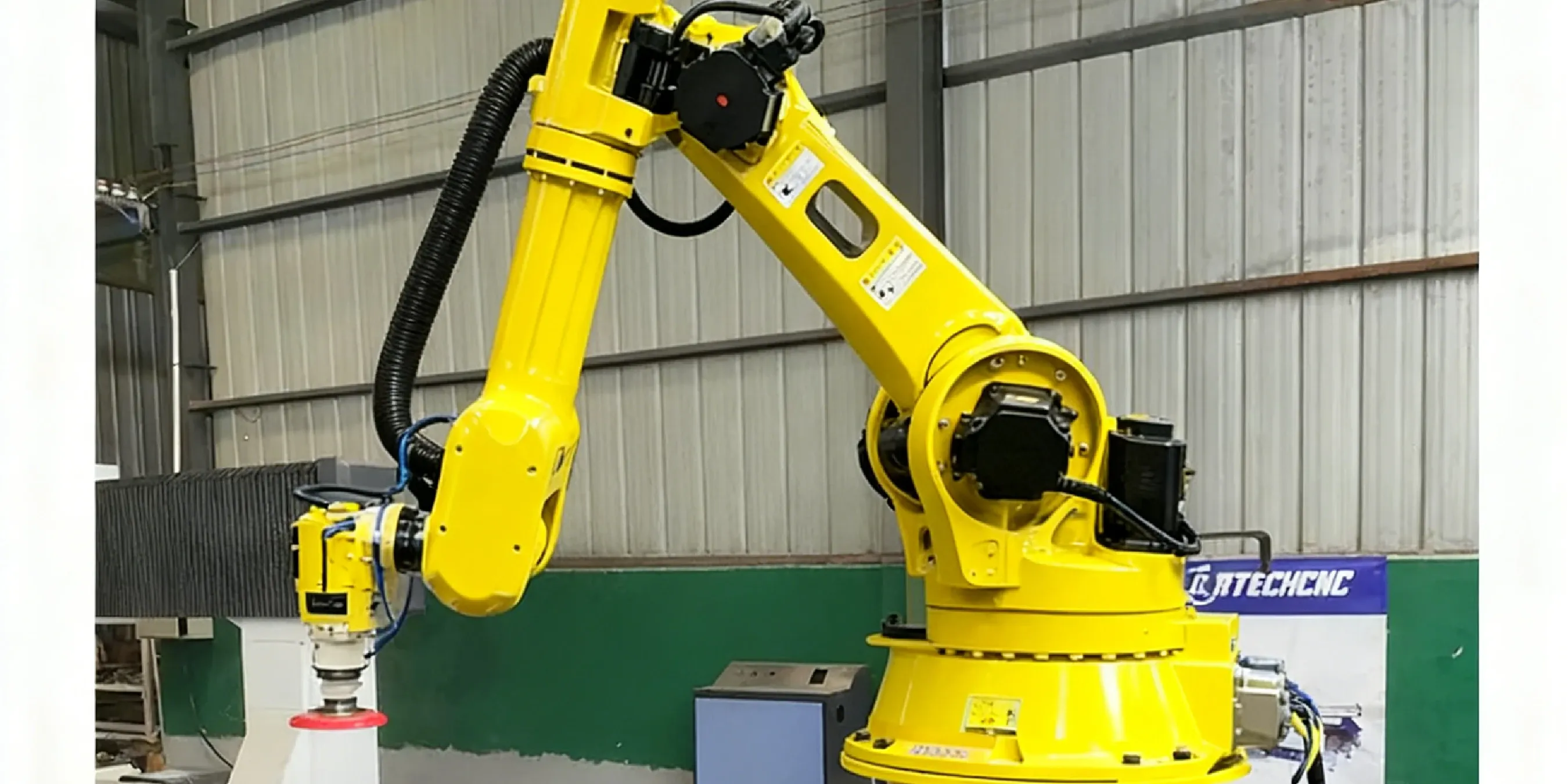 Frequently Asked Questions (FAQ)
Is a robotic arm more expensive than a CNC polisher?
Initially, the investments can be comparable, but they solve different problems.
Context: The upfront cost for a robotic system is often similar to a high-end 5-axis CNC. However, a robot's flexibility can eliminate the need for secondary machines or manual processes, potentially lowering the Total Cost of Ownership (TCO).
Boundary: For pure flat-slab polishing, a dedicated Automated Polishing Line is cheaper and more efficient. The robot's value is in complex, high-mix production. Next Step: To make an informed decision, you must compare TCO, not just the purchase price. Contact us for a personalized cost-benefit analysis.
How much space does a robotic polishing cell need?
A dedicated area is required; it's not a small machine.
Parameters: A typical cell requires a footprint of roughly 20x20 feet (6x6 meters), including the safety guarding. Vertical clearance is also critical and depends on the robot's reach.
Boundary: This space must be a permanent, controlled-access area with a proper foundation. It cannot be placed in a temporary or high-traffic zone.
Next Step: Provide our engineers with your factory layout, and they can design a cell that optimizes your floor space.
Can a robot arm be faster than a dedicated line polisher?
It depends on the job. For a finished piece, yes; for a simple slab, no.
Scenario 1 (Flat Slab): The line polisher is much faster.
Scenario 2 (Finished Countertop): The robot is faster overall. It completes the flat surfaces, sink cutout, and complex edge profile in a single, automated handling. The slab on a line would require multiple machines and manual handling steps.
Next Step: Analyze your product mix. The more handling steps a piece requires, the stronger the case for a robot.
What's the typical lead time for a robotic system?
You should plan for a multi-month project from order to production.
Parameters: A typical timeline is 4-6 months from purchase order to a fully operational system. This includes robot manufacturing, system integration and testing, shipping, on-site installation, and training.
Risk: This timeline can be affected by global supply chain conditions. Confirm current lead times with your supplier before signing.
Next Step: Begin the planning and consultation process early to align the delivery with your production schedule.
Do I need a robotics engineer to run this machine?
No, but you need a skilled operator who is properly trained.
Context: Modern polishing software is designed for machine operators, not robotics PhDs. A current CNC operator can typically learn to run the system with a few days of supplier-led training.
Boundary (Programming): For high-mix production requiring new programs daily, you do need someone with programming aptitude on staff. For repetitive production, this is not a daily requirement.
Next Step: Factor the cost of comprehensive training for at least two staff members (operator and maintenance) into your budget.
What is the best robotic arm for stone fabrication?
The "best" arm is the one correctly sized for your work and integrated into a complete polishing system.
Key Parameters:
Context: Leading brands like FANUC, KUKA, or ABB are common, but the arm is just one component. The magic is in the integration—the software, force control head, and support provided by a specialist like DINOSAW.
Next Step: Focus on the system integrator's expertise in stone polishing, not just the brand of the robot arm.
How does a robotic system improve stone polishing safety standards?
Dramatically, by removing the operator from the hazardous environment.
Mechanism: The robot performs the wet, dusty, and repetitive work inside a locked, guarded cell. The operator works from a safe distance at the control panel.
Next Step: During purchase, ensure the integrator guarantees the cell will be certified to ISO 10218 standards.
Where can I learn more about different types of stone machines?
Yes, understanding the full landscape of equipment is a great starting point.
Conclusion: The Right Tool for the Right Job
Choosing between a robotic arm and a CNC polisher isn't about which is "better," but which is right for your business. If your future is in high-value, complex, three-dimensional stone products, then investing in automated stone polishing with a robot is a strategic necessity. It addresses the core challenges of modern fabrication: quality, labor, and speed.





 中文
中文 Italian
 Türkçe
 Português
 Español
 Deutsch
 العربية
 Tiếng Việt
 Français
 Русский






 Nov 17, 20257 MIN READ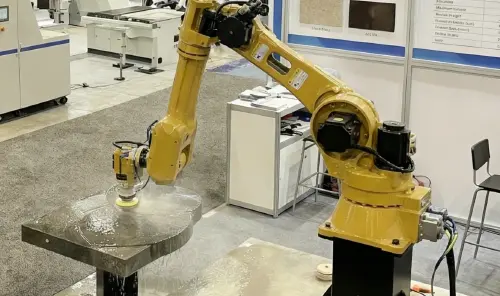
 A 30-Second Guide to Choosing Your Polisher
 English