Learn how a sandstone cutting machine delivers clean quarry blocks with higher yield. See speeds, boundaries, mini‑cases, and safety.
TL;DR: Key Takeaways
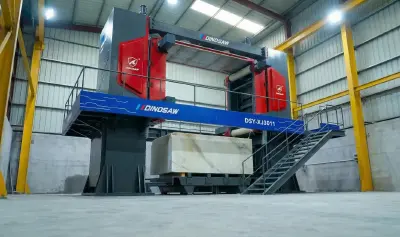
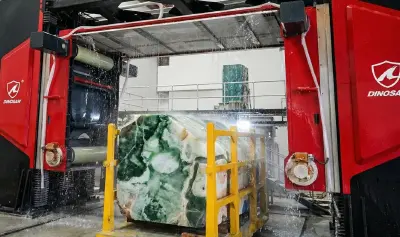
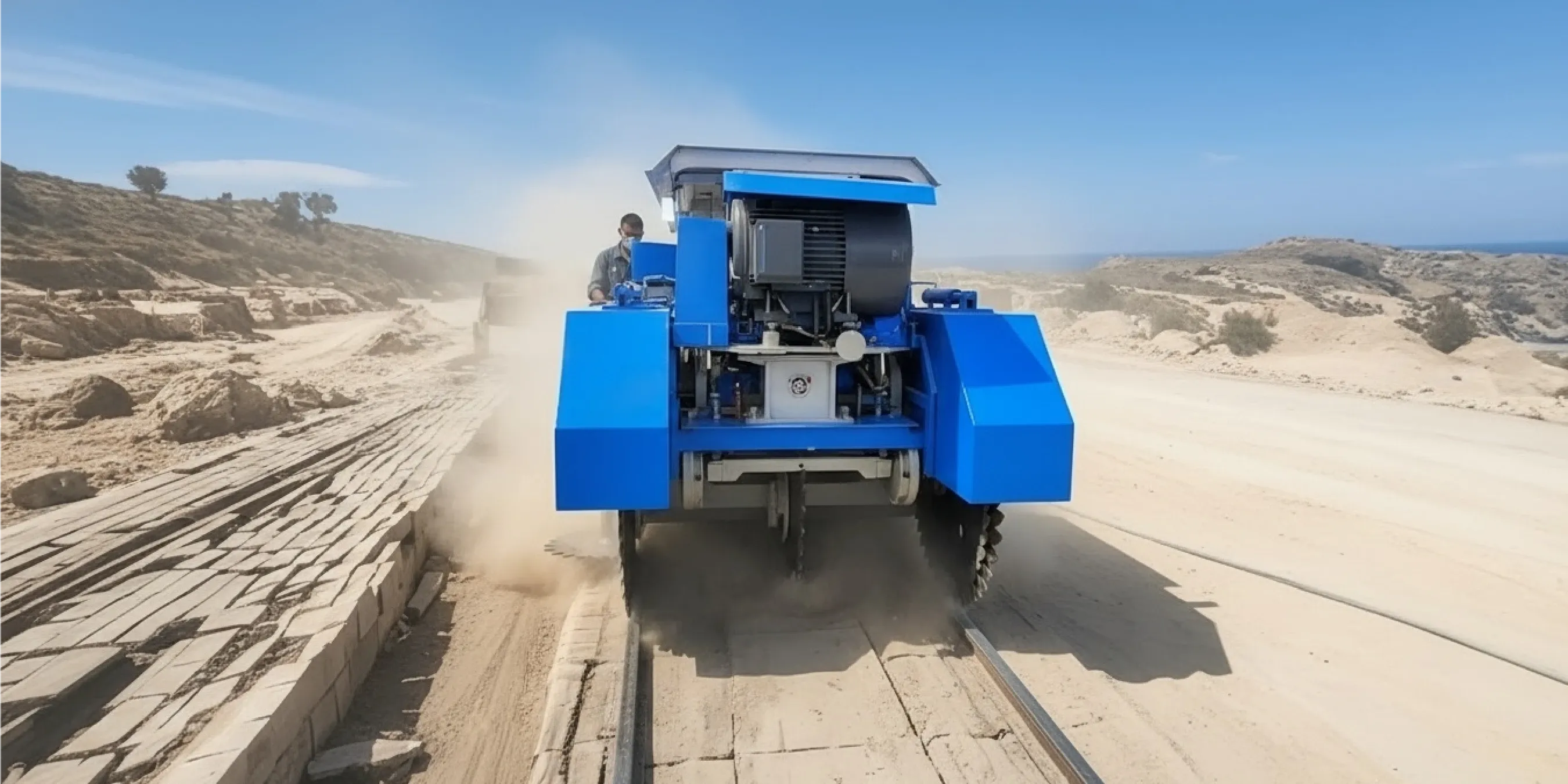
What it does:Sandstone Cutting Machine can directly cut uniform blocks of sandstone, limestone, and laterite blocks directly at the quarry face.
Core Value: Increases usable material yield by up to 35% (manufacturer-reported) and reduces labor by creating clean, right-angled blocks in a single pass.
Key Boundary: Ideal for medium-hard stone up to 500 mm thick; not for granite or non-linear cuts.
Talk to DINOSAW to confirm your material compatibility and extraction speed. If you need clean, uniform blocks cut directly from the quarry face, your priorities are yield, speed, and consistent edges. A modern sandstone cutting machine isn't just a tool; it's a complete solution for efficient quarry block production, designed to maximize the value of your raw material.
This guide answers the main question: “What can this machine do, and how does it do it?” We’ll cover compatible materials, operational boundaries, and how it outperforms traditional methods with real-world examples.
What Materials Can This Quarry Machine Process?
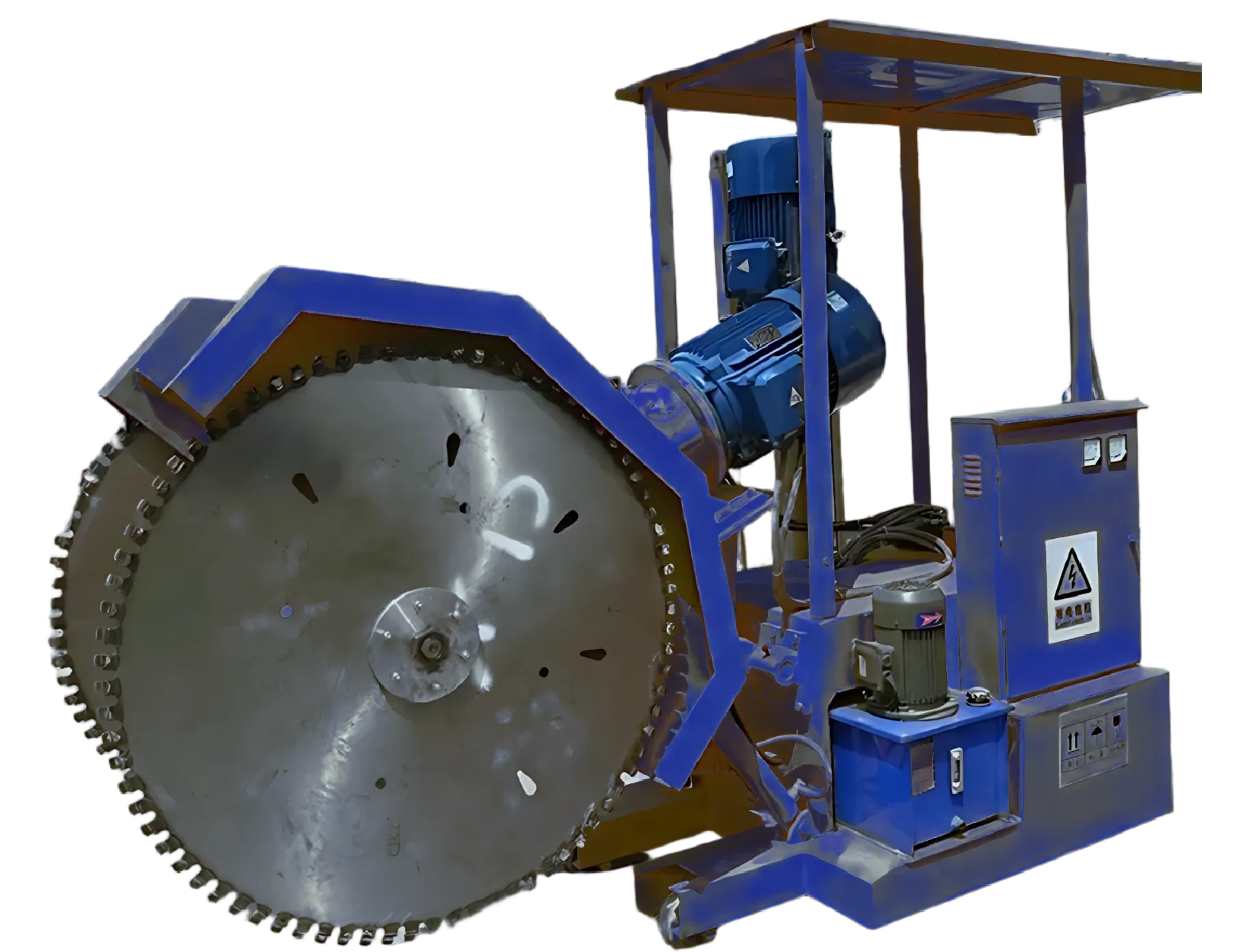
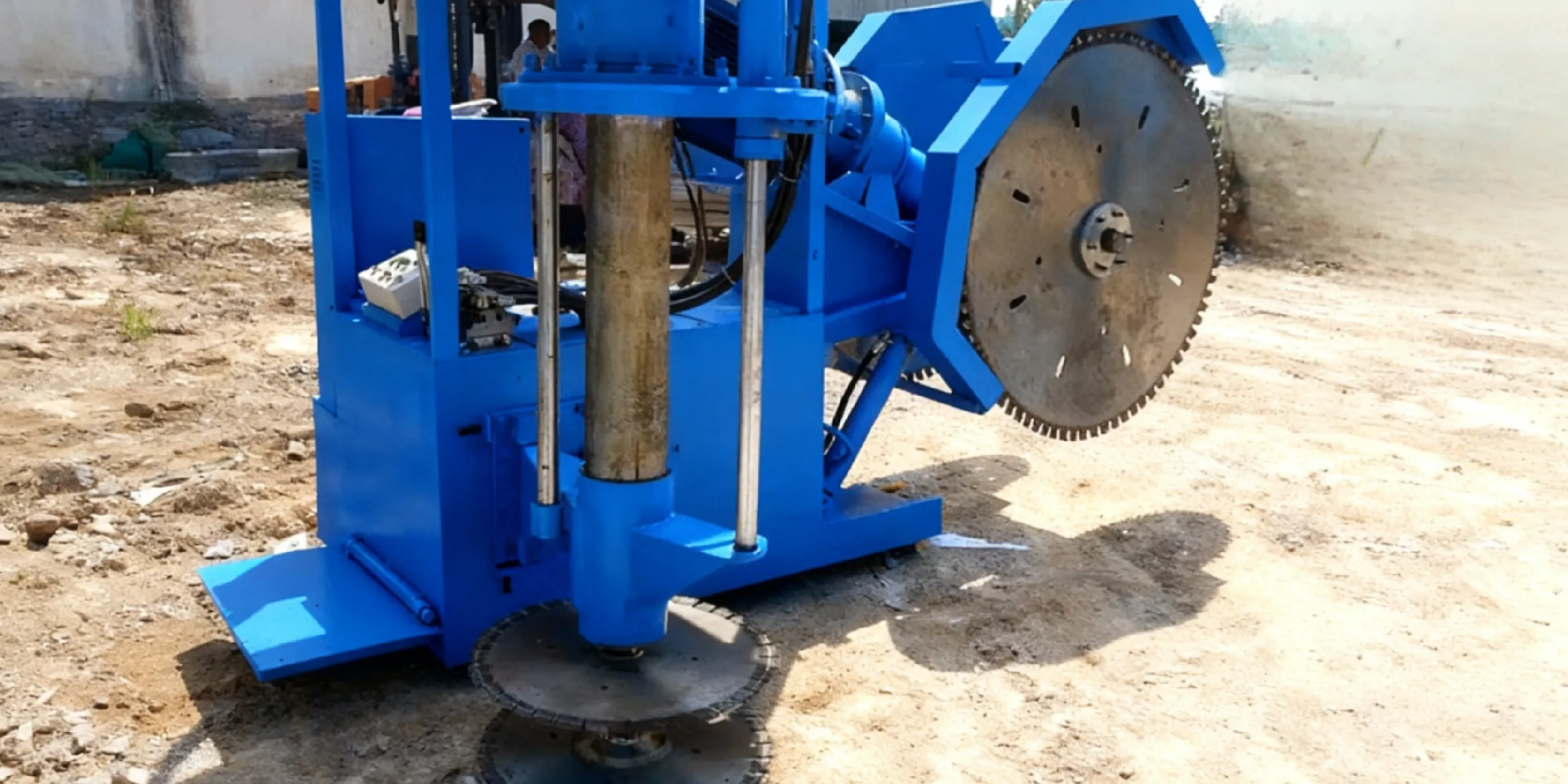
The DINOSAW SSQJ-1400 is engineered for versatility with medium-hard dimension stones. Its dual-blade design and robust power make it highly effective for the following materials.
Sandstone: Its core application. It excels at cutting large, uniform sandstone blocks, ensuring clean, right-angled separation from the quarry face with its synchronized vertical (Ø1330 mm) and horizontal (Ø600 mm) blades.
Limestone & Laterite: The machine is also highly effective as a limestone and laterite cutter. For these softer or more variable materials, operators should start at the lower end of the 10–45 m/min speed range to prevent crumbling and ensure a smooth cut.
What Are the Machine's Operational Boundaries?
Understanding the machine's limits is crucial for success. Here are the key boundaries to consider.
Maximum Cutting Depth: 500 mm (≈19.7 in). The machine cannot extract blocks thicker than this in a single pass.
Material Hardness: Designed for medium-hard stones. It is not recommended for ultra-hard rock like granite, which requires a diamond wire saw.
Site Conditions: Requires a stable, relatively level track foundation. It is not designed for steep or highly uneven quarry floors without proper site preparation.
How Does It Compare to Drilling & Splitting?
A dual-saw quarry cutting machine offers significant advantages over traditional methods like drilling and splitting, particularly in scenarios where precision and yield are paramount.
Scenario
Advantage of Dual-Saw Machine
High-Volume Block Production
Delivers superior material yield (up to 35% less waste reported) and faster cycle times by producing finished blocks in a single pass.
Architectural & Dimension Stone
Produces blocks with clean, straight edges and precise right angles, minimizing the need for costly secondary processing.
Labor-Constrained Operations
Automated cutting reduces labor requirements by up to 60% (manufacturer-reported) compared to manual-intensive drilling and splitting.
How Have Others Succeeded? (3 Mini-Cases)
Case 1: Indian Sandstone Quarry
Problem: High material waste (>40%) and inconsistent block sizes from drilling and splitting.
Action: Implemented the SSQJ-1400 at an average speed of 30 m/min.
Result: Reduced waste to below 15% and produced uniform, architectural-grade blocks, meeting a large export order.
Case 2: Brazilian Limestone Operation
Problem: Slow, multi-step extraction and high labor costs hindered fulfillment of large construction orders.
Action: Deployed the dual-saw system at a tailored speed of 25 m/min for their limestone.
Result: Eliminated secondary processing, reduced labor costs, and achieved consistent block dimensions ready for direct shipment.
Case 3: UK Landscape Stone Producer
Problem: Production bottlenecks and high finishing costs for limestone blocks used in landscaping products.
Action: Adopted the DINOSAW technology at a controlled speed of 20 m/min for the softer stone.
Result: Scaled production by eliminating multi-step extraction and reducing on-site finishing requirements.
What Are the Key Risks & Safety Prerequisites?
To ensure safe and efficient operation, three areas are non-negotiable: safety compliance, power stability, and site preparation.
Safety & Compliance: Operating any quarry stone cutting machine generates respirable crystalline silica. Employers must comply with regional regulations. In the US, OSHA's standard 1926.1153 sets a permissible exposure limit (PEL) of 50 µg/m³. In the UK, the HSE's Quarries Regulations ACOP provides guidance. Dust suppression and appropriate PPE are mandatory.
Power Supply: The machine requires a total power of 150 kW. A stable power source, such as a 180 kW generator, is essential for uninterrupted operation.
Operator Training & Site Prep: Proper training on setup and maintenance is critical. A stable, level foundation for the 100m track is the most important factor for cut quality and machine longevity.
Frequently Asked Questions (FAQ)
What is a quarry cutting machine for sandstone?
It's a specialized machine that cuts large, uniform blocks of stone directly at the quarry face.
Context : It uses synchronized vertical (Ø1330 mm) and horizontal (Ø600 mm) blades to make clean, right-angled cuts in a single pass, maximizing usable material.
Boundaries: It is designed for medium-hard stones and is not suitable for ultra-hard rock like granite. The maximum cutting depth is 500 mm.
Can this machine cut sandstone blocks cleanly at the quarry face?
Yes, achieving clean, straight cuts at the quarry face is its primary function.
Context : With a stable track system and a manufacturer-reported travel speed of 10–45 m/min, it produces blocks with excellent edge quality.
Boundaries: Cut quality depends on a stable, level track foundation and correct speed selection for the stone's density. Excessive vibration will degrade the finish.
Next Steps: Consult with our team to determine the optimal speed for your specific type of sandstone.
What are typical starting speeds for sandstone versus limestone?
Start with 25-35 m/min for dense sandstone and a more moderate 15-25 m/min for softer limestone.
Context : These speeds are starting points. The operator should adjust based on motor load, cut quality, and material feedback.
Boundaries: Pushing the speed too high on soft stone can cause chipping. Always wear appropriate PPE.
How does this sandstone cutter compare to drilling/splitting on yield?
The sandstone cutter provides substantially higher material yield.
Context : By creating precise cuts with minimal kerf, it can reduce material waste by up to 35% (manufacturer-reported) compared to the unpredictable fractures from drilling and splitting.
Boundaries: This advantage is most significant in applications where dimensional accuracy and minimal waste are critical, such as for architectural stone.
Next Steps: Analyze your current waste percentage to calculate the potential ROI from improved yield.
Is a dual-blade quarry machine better than a wire saw for this application?
For straight-line block cutting in medium-hard stone, yes, the dual-blade machine is typically faster and more efficient.
Context : A dual-blade machine excels at producing standard-sized blocks (up to 500 mm deep) with high throughput.
Boundaries: A diamond wire saw is the superior choice for ultra-hard rock (like granite), very large blocks, or non-linear cuts.
Next Steps: If you process granite or require cuts deeper than 500 mm, explore wire saw options.
What is included in a standard configuration?
A standard package typically includes the main machine, track, blades, cables, and a generator set.
Context: This usually consists of 100m of track, 6 vertical blades, 6 horizontal blades, 150m of cable, and one 180 kW generator.
Boundaries: This list is a starting point and is adjustable by order. Items like spare parts or specialized blades may be additional.





 中文
中文 Italian
 Türkçe
 Português
 Español
 Deutsch
 العربية
 Tiếng Việt
 Français
 Русский






 Nov 19, 20256 MIN READ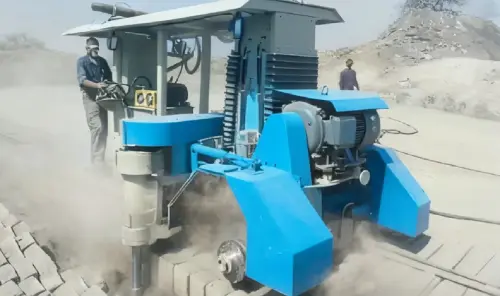
 English