
A decision-driven guide comparing wet vs. dry core bits for stone. Use our checklist to select the right bit based on material, thickness, and your drill setup to optimize TCO.
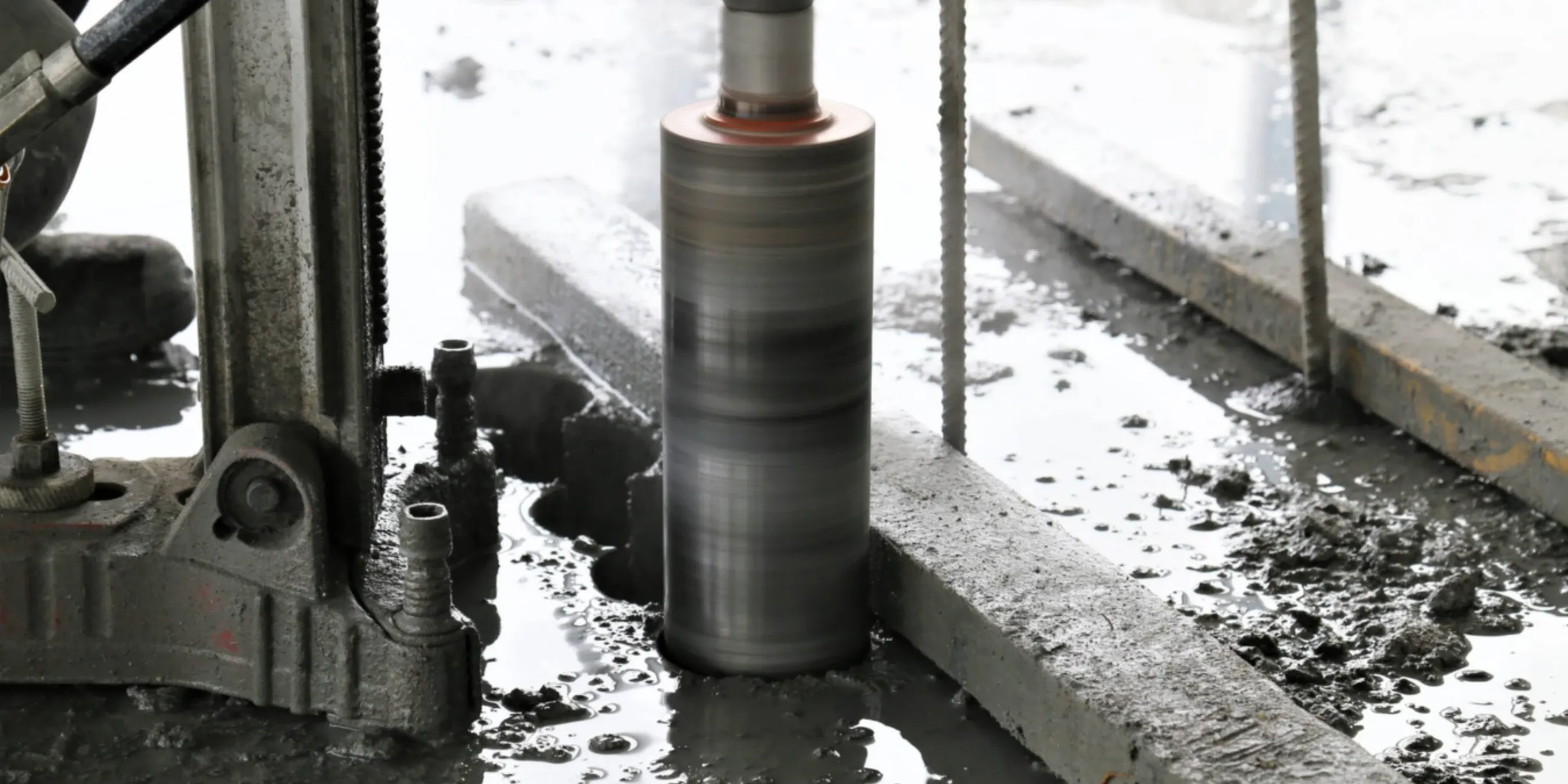
TL;DR: Your 30-Second Selection Guide

  • Wet Bits for Production: For hard, thick stone like granite countertops or reinforced concrete, wet drilling is non-negotiable. It ensures tool longevity and a clean finish.
  • Dry Bits for Convenience: For on-site, occasional jobs like drilling thin tile or shallow holes where water is impractical, a dedicated dry bit is the right tool.
  • Match Bond to Material: Use a soft-bond bit for hard materials (granite) and a hard-bond bit for soft, abrasive materials (sandstone). This is the key to performance.
If you're unsure which bit fits your specific machine and material, our team can provide a quick recommendation.

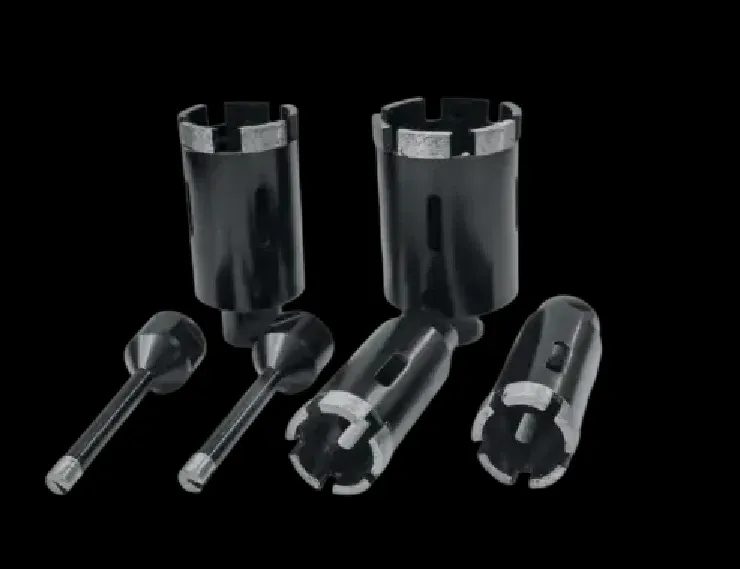
金刚石取芯钻头-产品图@1.5x.webp

What Key Factors Drive Your Granite Core Drill Bit Purchase Decision?

Before comparing models, define your operational needs. The right bit is a balance of these four factors:
  •  Material Hardness & Abrasiveness: Is it hard, dense granite or soft, abrasive sandstone? This determines the required bond hardness.
  •  Drilling Environment (Wet vs. Dry): Is water readily available? Is dust control a primary concern? This is the fundamental choice between wet and dry bits.
  • Hole Diameter & Depth: Are you drilling small anchor holes or large passages for plumbing? This impacts the required drill rig and bit construction.
  • Equipment Used: Are you using a high-power, stable rig-mounted drill or a handheld angle grinder? This affects the choice between standard and thin-wall bits.

Your If-Then Selection Tree for Wet vs. Dry Diamond Core Drill Bits

Use this quick guide to find your ideal configuration.
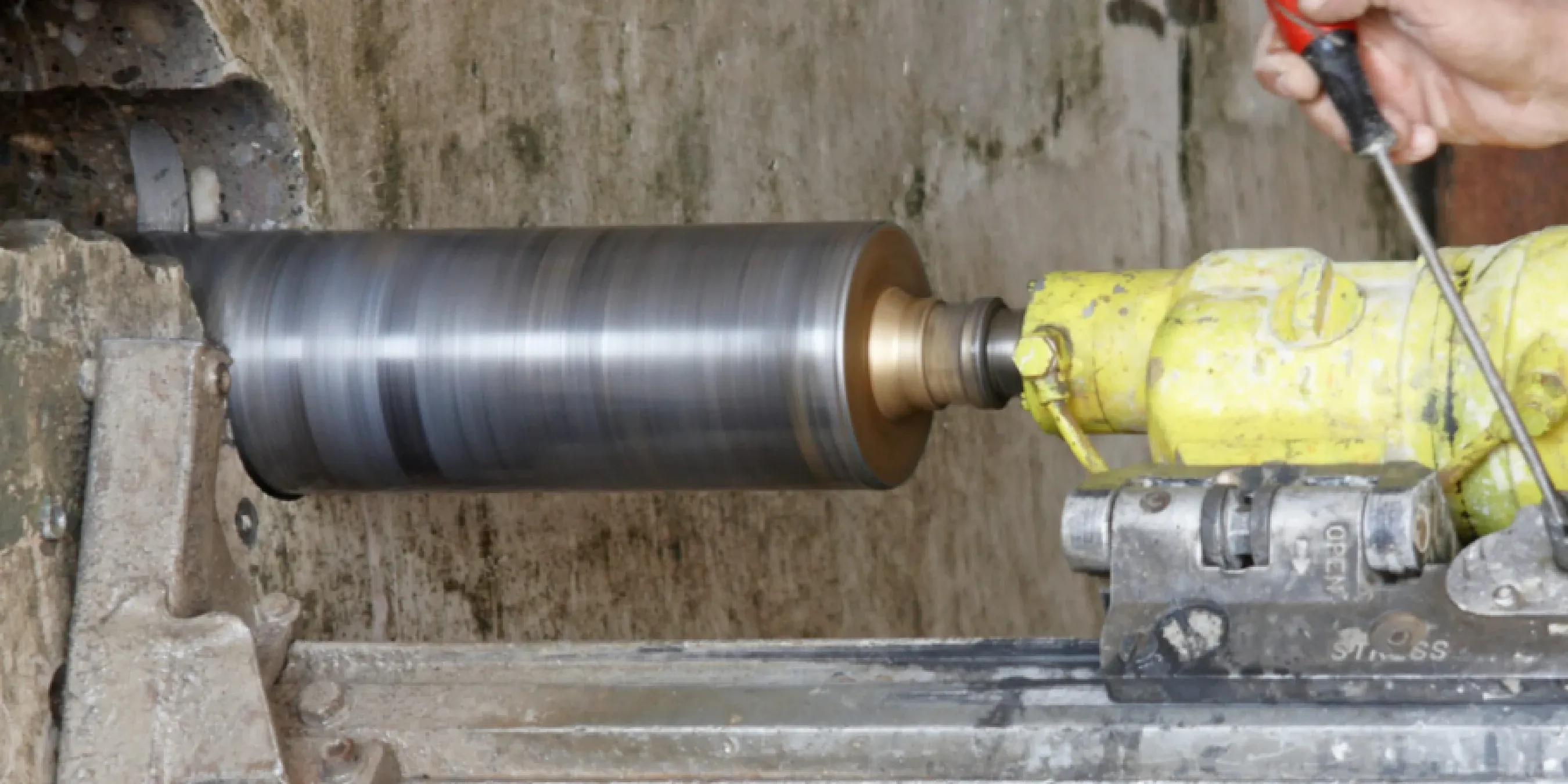
  • IF drilling hard granite (>1 inch / 25mm thick) in a workshop, THEN use a wet bit with a soft bond. Start at a low RPM (manufacturer-reported 600-900 RPM for 2" bits) with steady pressure. Risk Note: Using a dry bit will cause rapid failure.
  • IF drilling reinforced concrete (>4 inches / 100mm deep), THEN use a wet bit rated for rebar with a medium-hard bond on a securely anchored rig. Maintain high water flow. Risk Note: A standard stone bit may fail upon hitting rebar.
  • IF drilling soft, abrasive sandstone on-site, THEN use a wet bit with a very hard bond to resist premature wear. Risk Note: A soft-bond bit will be destroyed very quickly by the abrasive material.
  • IF drilling shallow holes in porcelain tile on-site with a handheld grinder, THEN use a dry bit with a wax-filled core for cooling. Start at an angle to prevent wandering. Risk Note: Do not apply excessive pressure; let the bit's speed do the work.
  • IF performing high-volume, repetitive drilling on a CNC machine, THEN use a thin-wall wet bit to maximize speed. Ensure your Automatic Drilling Machines (Gantry & Vertical) provides robust cooling. Risk Note: Thin-wall bits are less forgiving of misalignment.
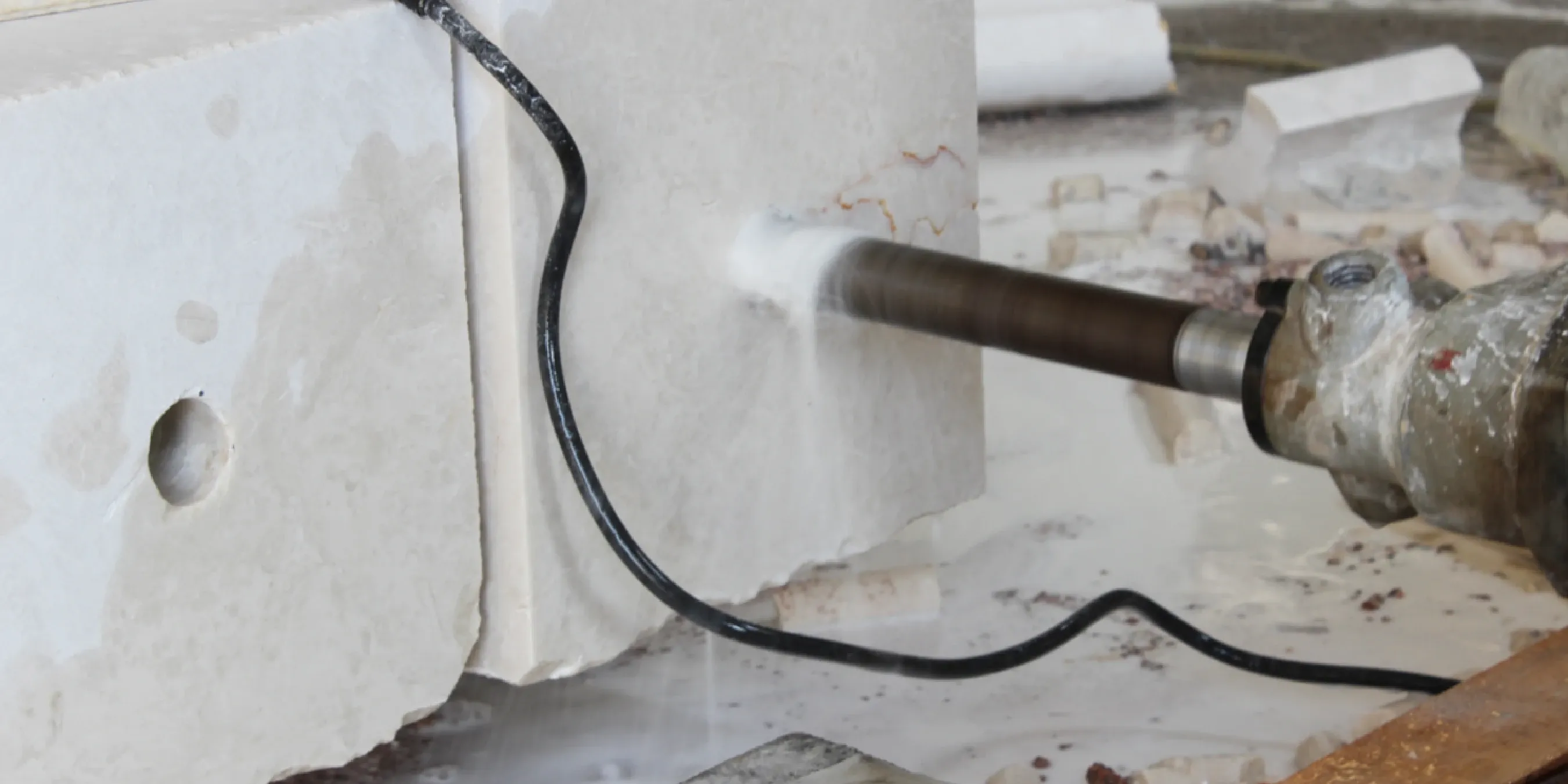
  • IF drilling marble or other delicate stones, THEN use a wet bit with a medium bond and crown-style Diamond Segment for Core Drill Bit for a finer finish and reduced chipping. Risk Note: Excessive pressure can easily cause micro-fractures.

14@1.5x.webp

What Are the Key Decision Drivers?

Beyond wet vs. dry, your choice has direct impacts on total cost of ownership (TCO) and operational efficiency.
Decision Driver
Wet Core Bit Advantage
Dry Core Bit Advantage
Tool Lifespan & TCO
Significantly longer life due to constant cooling. Lowers the long-term cost-per-hole, making it the superior choice for production environments.
Shorter lifespan due to heat stress. Higher cost-per-hole but avoids setup time for water management, making it viable for quick, one-off jobs.
Finish Quality
Superior. Water flushes debris, resulting in a cleaner, chip-free hole that rarely requires secondary finishing.
Acceptable for rough work. Can leave a slightly rougher edge and burn marks, especially if pressure is too high.
Operator Safety (Dust)
Excellent. Turns hazardous silica dust into a manageable slurry. According to OSHA's silica standard, wet methods are a primary engineering control.
Requires strict controls. A high-efficiency vacuum dust collection system (VDCS) is mandatory to comply with safety regulations.
Operational Speed
Faster cutting in hard, thick materials due to efficient cooling and debris removal. Overall project time may be longer due to water setup/cleanup.
Slower penetration rate. However, total time for a single hole can be faster due to zero setup for water.
  1. Your Procurement & Lifecycle Checklist for Stone Core Drilling Machine Adoption

  • Total Cost of Ownership (TCO): Don't just look at the upfront price. Calculate cost-per-hole by factoring in the expected lifespan. A premium Industrial Granite Drill Bits: 3× Longer bit may have a higher initial cost but a lower TCO.
  • Spare Parts & Retipping: Can the bits be retipped? Is there a reliable supply of replacement segments? This extends the life of the steel barrel, reducing long-term costs.
  • Maintenance Window: Choose laser-welded segments for dry or high-heat applications, as they are far more resistant to heat-related failure than brazed segments.
  • Training & Support: Does the supplier provide clear operational guidelines? Access to technical support can prevent costly errors.
  • Warranty & Certifications: Check for manufacturing defect warranties. Ensure the supplier complies with quality standards like ISO 9001.

16@1.5x.webp

Frequently Asked Questions (FAQ)

For a countertop business, should I stock both wet and dry bits?

Yes, it's a practical strategy to cover all job site requirements.
  • Context: Most of your work (cutting sink/faucet holes in granite) will be done in the workshop where wet drilling is optimal. However, on-site adjustments or installations may require a dry bit for convenience.
  • Guidance: Stock wet bits in your most-used diameters (e.g., 1-3/8" for faucets) for production. Keep a small set of versatile dry bits for your installation crews.
  • Next Step: Review your job history to identify the 80/20 rule for diameters and purchase your primary stock of wet bits accordingly.

 What does 'TCO' mean for a disposable tool like a core bit?

It means calculating the cost-per-hole, not the upfront purchase price.
  • Context: A cheap bit that drills 50 holes costs more in the long run than a premium bit that drills 300 holes. TCO includes the initial price, lifespan (number of holes), and associated labor/time costs.
  • Guidance: A bit that cuts faster and lasts longer reduces operator downtime and increases throughput, directly impacting profitability. Factor in the cost of potential rework from a low-quality bit.
  • Next Step: Ask for manufacturer-reported data on expected lifespan for your specific material to calculate a rough TCO before purchasing.

12@1.5x.webp

Is a 'thin wall' core bit better?

It is 'better' for speed, but not necessarily for durability or all applications.
  • Context: Thin-wall bits remove less material, reducing friction and allowing for faster penetration. This makes them ideal for high-speed CNC machines.
  • Guidance: Their lower rigidity makes them less suitable for less stable handheld drilling, where a standard, thicker-walled bit is more robust and forgiving.
  • Next Step: Choose thin-wall bits for stable, rig-mounted, or CNC operations where cycle time is critical. Stick with standard bits for general-purpose or handheld use.

Which bond hardness should I choose for sandstone vs granite?

The choice is opposite to the material's hardness due to the abrasiveness factor.
  • Context: Granite is hard but not very abrasive. Sandstone is soft but extremely abrasive. The bond must be chosen to counteract the material's properties.
  • Guidance: Use a soft bond for hard granite, allowing the bond to wear away and expose new diamonds. Use a hard bond for soft, abrasive sandstone to resist being worn down too quickly.
  • Next Step: Consult the supplier's bond hardness chart. When in doubt, describe your material to the supplier to get a precise recommendation.

Which diameters should I stock for faucet and sink holes?

Standardizing on a few common sizes for countertop operations is most efficient.
  • Context: Most plumbing fixtures have standard sizing, allowing fabricators to stock a limited, high-use inventory.
  • Guidance: A typical faucet hole requires a 1-3/8" (≈35 mm) bit. Other common accessory holes for soap dispensers or sink clips may require 2" (≈50 mm) or 3" (≈76 mm) bits.
  • Next Step: Audit your last 50 jobs to identify the most common diameters you drill. Standardize your inventory around these 2–3 core sizes to optimize stock levels.

How do I stay compliant with silica dust regulations?

Compliance involves a combination of engineering controls, work practices, and documentation.
  • Context: Regulations like OSHA's Respirable Crystalline Silica standard (1926.1153) apply to stone drilling and mandate employers to limit worker exposure.
  • Guidance: Prioritize wet drilling as it is a primary engineering control. If