How DTH Drilling Technology Works for Hard Rock | DINOSAW
lizzy·Oct 26, 2025·6 MIN READ
lizzy·Oct 26, 2025·6 MIN READ
A technical dive into down-the-hole drilling. Understand the hammer, drill bit, and air flow that deliver superior energy transfer and penetration rates in hard rock.
TL;DR: The Core Tech of DTH Drilling
How it works:A pneumatic hammer strikes the bit directly *down the hole*, minimizing energy loss and maximizing impact on the rock.
Why it's better for hard rock:DTH Drilling delivers high-frequency, high-impact energy for faster penetration with significantly less hole deviation than other methods.
Key components:The system's performance relies on the synergy between the DTH hammer, a specialized drill bit, and a powerful air compressor.
Next Step:Dive into the anatomy of the five key components to understand the mechanics behind its power.
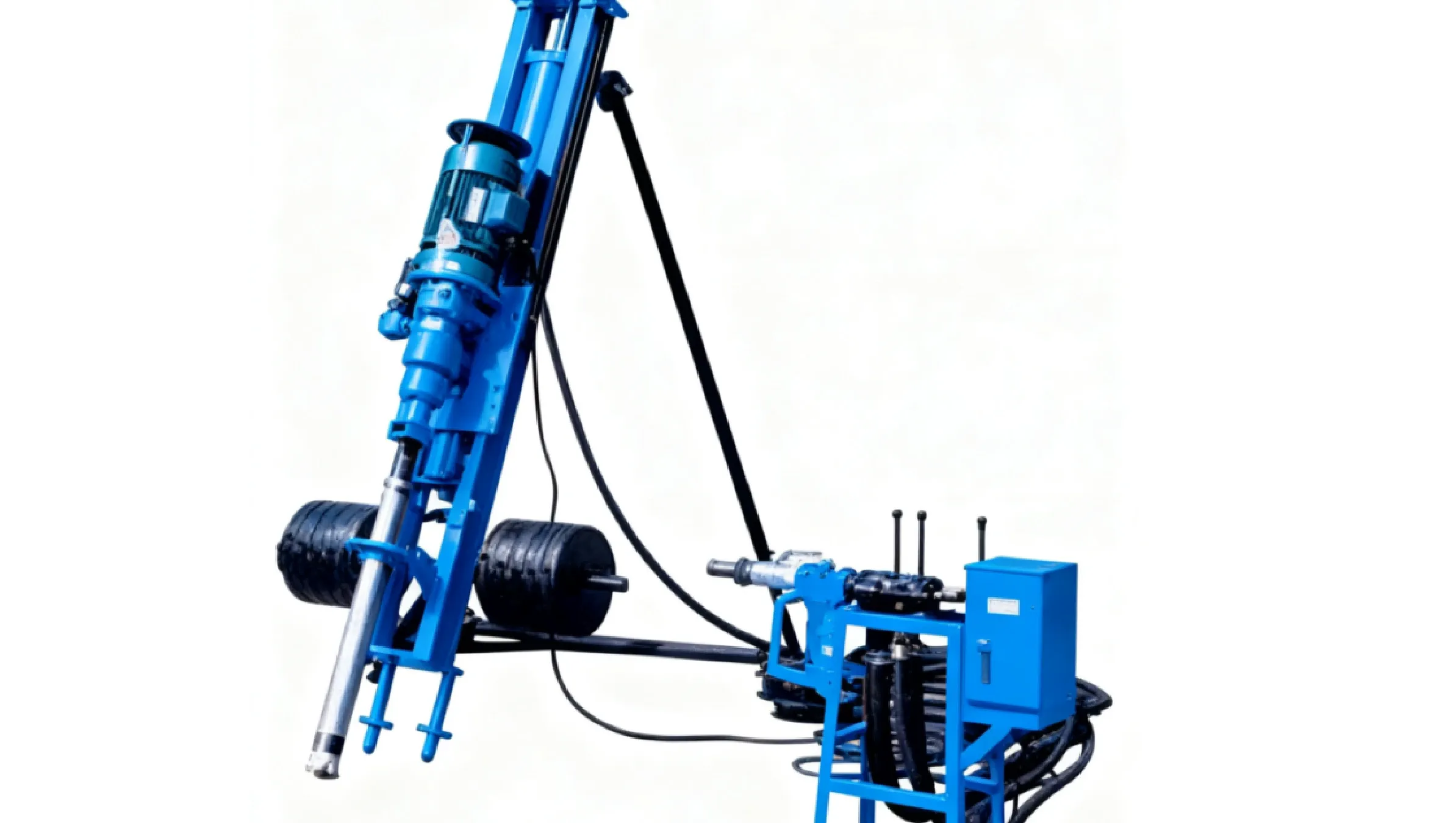
At its core, Down-The-Hole drilling is a percussive drilling method. Unlike top-hammer rigs where the percussion mechanism is on the rig outside the hole, a DTH system places the hammer—the component doing the actual work—directly at the bottom of the hole. Compressed air is the lifeblood of this process, serving two functions: it powers the piston within the hammer to strike the drill bit, and the exhaust air then flushes the crushed rock cuttings up and out of the hole. This fundamental design is the source of its high energy transfer efficiency, as impact energy doesn't have to travel down a long string of drill rods.
System Architecture: How the Components Work Together
A DTH drilling system is a sequence of connected components designed for a single purpose: efficient rock fracturing. The process flow is straightforward:
The rig's air compressor generates high-pressure air.
Air travels through the rotation unit and down the hollow drill rods.
It enters the DTH hammer, where it drives a piston to strike the back of the drill bit at high frequency.
The drill bit crushes the rock, while the rotation unit slowly turns the drill string to ensure the entire hole face is worked.
Exhaust air from the hammer powerfully flushes the rock chips up the annulus between the drill rods and the hole wall.
Anatomy of a DTH System: 5 Key Components
The performance of a DTH rig is dictated by the quality and synergy of its core components.
Component
Function & Mechanism
Typical Parameter Ranges & Notes
DTH Hammer
The heart of the system. It converts pneumatic energy into kinetic impact energy via an internal reciprocating piston.
Models are designated by size (e.g., 3", 4", 5" class). Choice depends on hole diameter and required impact energy.
Drill Bit
The consumable tool that makes contact with the rock. Features tungsten carbide buttons to crush and fracture the material.
Types include flat face, concave, and convex designs with spherical or ballistic buttons. A button bit for granite is designed for wear resistance in abrasive rock.
Drill Rods
Hollow, thick-walled pipes that transmit rotation and feed force to the hammer, while also serving as a conduit for compressed air.
Proper drill rod coupling and thread maintenance are critical to prevent energy loss and component failure.
Rotation Unit
A hydraulic or pneumatic motor on the rig that provides slow, high-torque rotation to the drill string.
Rotation speed is typically low (e.g., 15-75 RPM). It doesn't cut the rock, but indexes the bit to strike a fresh surface with each blow.
Air Compressor
The power source. It must supply sufficient air volume (CFM) at high pressure (PSI/bar) to power the hammer and flush the hole.
This is a critical system match. Insufficient high-pressure air compressor CFM is the most common cause of poor drilling performance.
Why DTH Outperforms Top-Hammer in Hard Rock
While both are percussive methods, the location of the hammer makes all the difference. According to industry resources like the NIOSH Mining Program, which researches drilling efficiencies, energy loss in the drill string is a major factor. In a top-hammer system, the impact energy must travel from the rig down the entire length of the drill string, losing energy at every joint. In DTH, this loss is almost zero.
DTH Drilling Advantage
The hammer is at the bottom, delivering direct impact. This leads to a much higher drilling penetration rate, especially in holes deeper than a few meters. It also produces less noise and vibration on the rig.
Top-Hammer Limitation
The hammer is at the top. Energy is lost with every drill rod added. This significantly reduces drilling speed in deeper holes and increases the risk of hole deviation due to the less rigid drill string.
Common Failures and How to Mitigate Them
Even the most robust system requires proper operation and maintenance. Proactively addressing these common issues is key to preventing downtime.
Issue / Symptom
Primary Cause(s)
Mitigation & Solution
Reduced Penetration Rate
Insufficient air pressure/volume; worn drill bit; improper hammer lubrication.
Verify compressor output matches hammer specs. Inspect and replace worn bits. Follow the lubrication schedule for the hammer for hard rock.
Start holes at reduced power. Adjust feed pressure to match rock conditions. Ensure the rig is on a level, stable platform.
Stuck Drill String
Poor flushing of cuttings; hole collapse in fractured ground; sudden loss of air.
Ensure adequate air volume for flushing. Avoid drilling in highly fractured zones where possible. Regularly check air lines for leaks.
Premature Hammer Failure
Lack of lubrication; ingress of water/debris; running the hammer without load.
Adhere strictly to the maintenance of DTH hammer procedures, especially lubrication. Ensure filters are clean. Avoid "dry firing."
System Compatibility: Integrating with Your Setup
Modern DTH drilling rigs can be more than standalone machines. For quarries aiming for automation and data collection, system compatibility is key. Many advanced rigs offer PLC (Programmable Logic Controller) integration capabilities. This allows the drill to communicate with the plant's central control system. For data exchange, protocols like OPC UA or Profinet integration may be available, enabling real-time monitoring of drilling parameters, automated reporting, and remote troubleshooting. When selecting a rig, consider your long-term automation strategy.
FAQs on DTH Drilling Technology
What is the main reason DTH has better energy transfer efficiency?
The main reason is the location of the hammer; it strikes the bit directly at the bottom of the hole, eliminating energy loss through the drill string.
Context:In top-hammer systems, energy dissipates at every rod joint, weakening the impact force, especially in deep holes.
Benefits:This direct impact results in a much higher percentage of the rig's power being converted into rock-breaking work, increasing the drilling penetration rate.
Next Step:When evaluating rigs, compare the specified energy output of the hammer, not just the engine power.
How does the hammer for hard rock differ from one for soft rock?
Hammers designed for hard rock typically operate at higher air pressures and deliver higher impact energy with each blow.
Context:Hard, competent rock like basalt requires immense force to fracture, whereas softer rock can be broken with less energy.
Benefits:Using a matched hammer prevents underperformance (too weak) or excessive wear and tool damage (too strong for the rock).
Next Step:Specify your primary rock type (e.g., basalt hard rock drilling) when consulting with our engineers to ensure the correct hammer selection.
Why is drill rod coupling maintenance so important?
The couplings (threads) are critical for transmitting rotation and ensuring an airtight seal for the air to reach the hammer.
Context:Damaged or improperly lubricated threads can leak air, seize up, or even break, leading to a lost drill string in the hole.
Benefits:Proper maintenance ensures full air pressure reaches the hammer and prevents costly downtime from fishing a lost string.
Next Step:Implement a daily routine of cleaning and greasing drill rod threads as part of your pre-operation checklist.
Can I use any high-pressure air compressor?
No, you must use a compressor that meets or exceeds the specific CFM (cubic feet per minute) and pressure (PSI/bar) requirements of your DTH hammer.
Context:An undersized compressor is the single most common cause of poor drilling performance, as it starves the hammer of power.
Benefits:A correctly sized compressor ensures the hammer operates at its designed frequency and impact, maximizing your drilling speed.
Next Step:Always refer to the hammer's technical data sheet for its air consumption requirements before pairing it with a compressor.
What is the role of the rotation unit if the hammer does the work?
The rotation unit's job is to slowly turn the bit, ensuring that each blow from the hammer strikes a new piece of rock.
Context:Without rotation, the bit would simply pulverize the same spot. This process, called indexing, is crucial for advancing the hole.
Benefits:Correct rotation speed ensures even bit wear and efficient fracturing of the entire hole face.
Next Step:Adjust rotation speed based on rock conditions—slower for harder rock, slightly faster for softer rock.





 中文
中文 Italian
 Türkçe
 Português
 Español
 Deutsch
 العربية
 Tiếng Việt
 Français
 Русский






 Oct 26, 20256 MIN READ
 What is Down-The-Hole (DTH) Drilling?
 English