Selecting the right diamond router bit is a strategic decision that impacts your workshop's efficiency, finish quality, and bottom line. It's more than just matching a tool to a machine; it's about aligning the bit's technology with your specific application, material, and business goals. This guide provides a clear, decision-driven framework for procurement and engineering teams to make the optimal choice.
A 30-Second Guide to Choosing Your Router Bit
Use this quick decision tree to see which router bit aligns with your production needs.
If you profile high-volume granite countertops → Your best choice is a Sintered Bit (Medium Grit). Prioritize longevity and use a multi-position CNC set to ensure high-flow cooling.
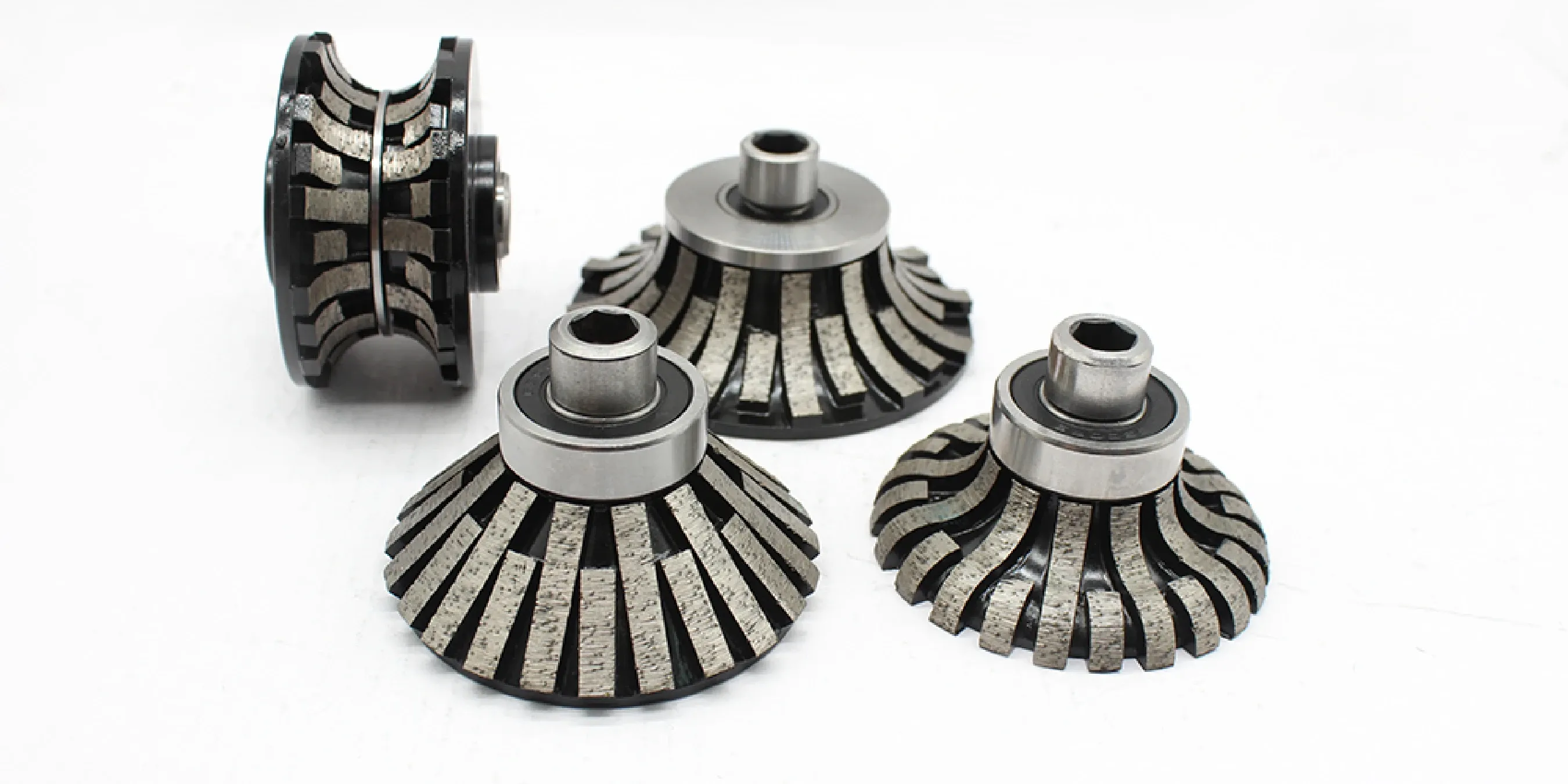
If you do intricate marble carving or sculpting → A Vacuum Brazed Bit (Fine Grit) is superior. It maximizes cutting speed and detail, with exposed diamonds providing an aggressive cut ideal for softer stone.
If you need to achieve a polished edge on quartz → Use a Resin-Bond Bit (Final Positions). This should be used after a sintered bit has shaped the profile, as resin bits are for honing and polishing, not heavy material removal.
If you perform on-site seam dressing with a portable grinder → A Sintered Bit (Coarse/Medium Grit) is essential. Its durability is key to handling the rigors of field use and variable pressure.
If you create custom shapes in porcelain tiles → An Electroplated or Brazed Bit (Fine Grit) is required. These brittle materials need a fast, clean cut with lower RPMs and ample water to prevent chipping.
If you are routing engineered stone on a budget → Choose a Sintered Bit and focus on TCO. Don't compromise on bond quality; a longer-lasting sintered bit offers a lower total cost than frequently replacing cheaper bits.
Decision Drivers: Speed vs. Longevity vs. Finish Quality
Every diamond router bit offers a trade-off between three key performance indicators. Understanding your priority will guide your selection. For example, a high-volume production shop may prioritize speed and longevity, while a custom artisan may prioritize finish quality above all else. This balance also informs decisions on machine investment, such as the benefits described in this complete comparison of ATC vs multi-head CNC routers.
Speed (Throughput)
Favors: Vacuum Brazed bits. Their high diamond exposure provides the most aggressive cutting action, removing material faster.
Cost: Higher throughput reduces labor cost per piece.
Longevity (Tool Life)
Favors: Sintered bits. The multi-layered diamond matrix ensures a very long operational life, especially on hard materials.
Cost: Reduces total cost of ownership (TCO) through fewer replacements.
Finish Quality
Favors: Resin-bond bits and fine-grit brazed/sintered bits. They provide a smoother cut with minimal chipping.
Cost: Reduces or eliminates secondary polishing steps, saving time and labor.
Beyond the Bit: Procurement Topics to Consider
A strategic procurement process looks beyond the unit price. Consider these factors when evaluating a supplier for your stone router bits.
Total Cost of Ownership (TCO): Calculate the cost per linear meter of routing, not just the cost per bit. A more expensive, longer-lasting bit is often cheaper in the long run.
Spares and Availability: Can the supplier guarantee stock of your critical bits to avoid production stoppages? What are the lead times?
Warranty and Support: What is the policy for premature failure? Do they offer technical support to help you optimize parameters as detailed in a good CNC stone routing guide?
Certifications and Compliance: Does the manufacturer adhere to quality management systems like ISO 9001:2015? Do their tools meet safety standards relevant to your machinery, such as the EU Machinery Regulation 2023/1230?
Scenario Recommendations
Based on common workshop profiles, here are our recommendations. A well-designed countertop fabrication shop setup will often stock bits for multiple scenarios.
Scenario
Preferred Bit
Alternative
High-Volume Production: Focus on speed and low TCO.
Sintered Multi-Position Set
Vacuum Brazed (if speed is the absolute priority over life)
Intricate Custom Work: Focus on precision and finish.
Vacuum Brazed (Fine Grit)
Sintered (Fine Grit) for better control on harder materials.
Budget-Conscious Shop: Focus on versatility and value.
Sintered (Medium Grit)
A quality vacuum brazed bit for general-purpose use if materials are softer.
FAQ: Buyer's Common Questions
How much should I expect to pay for a quality diamond router bit?
Prices vary based on size, bond type, and quality, but investing in a reputable brand often yields a lower Total Cost of Ownership (TCO) due to longer life and better performance.
Context: This is a primary concern for procurement managers balancing upfront costs with long-term value.
Answer: Expect to pay more for sintered and large-diameter bits. While entry-level bits have a lower initial price, they often wear quickly, leading to higher costs from frequent replacements and machine downtime.
What is the typical ROI on upgrading from carbide to diamond bits?
The Return on Investment (ROI) is primarily driven by dramatic reductions in downtime, tooling costs over time, and labor cost per piece due to increased throughput.
Context: This calculation is essential for managers needing to justify the capital expenditure for upgrading their tooling.
Benefits: With diamond tools lasting up to 50x longer, the savings from fewer tool changes and higher productivity mean a busy shop can often achieve a positive ROI within a few months.
Is there a difference between brands, or are all diamond bits the same?
Yes, there is a significant difference in performance and reliability between brands. This is due to variations in R&D investment, quality control, and materials used.
Context: This is a crucial consideration for buyers trying to differentiate between what appear to be similar products at different price points.
Answer: Reputable manufacturers optimize bond formulas, diamond quality, and tool geometry for consistent performance. Cheaper bits often use lower-grade diamonds or inconsistent bonds, leading to unpredictable wear and finish quality.
How do I compare a sintered bit vs a brazed bit for the same task?
The best way to compare them is to run a controlled test in your own shop, focusing on the metrics that matter most to your operation: speed, longevity, and finish quality.
Context: This is a practical step for an engineering or operations manager aiming to optimize a specific production line.
Answer: A sintered bit should win on longevity (linear meters processed), while a brazed bit should win on speed (time per job). Measure both and evaluate the final surface finish to make a data-driven choice.
What information should I provide to get an accurate quote?
To get the most accurate recommendation and quote, you need to provide details about your specific application, materials, and machinery.
Context: This is the essential first step when engaging with a supplier to ensure they understand your needs.
Answer: Please provide: 1) Material(s) to be cut, 2) Machine type and shank size, 3) Desired edge profile, and 4) Estimated usage volume. This allows the supplier to recommend the most cost-effective solution.
Can I get a sample bit to test before placing a large order?
Yes, many suppliers offer pilot programs or sample bits for qualifying customers. This is a standard and highly recommended practice to validate performance in your environment.
Context: This is a common request for businesses looking to make a significant tooling investment and wanting to mitigate risk.
Answer: Testing a bit on your specific material and machine is the best way to confirm its performance and calculate an accurate ROI before committing to a large purchase.




 中文
中文 Italian
 Türkçe
 Português
 Español
 Deutsch
 العربية
 Tiếng Việt
 Français
 Русский






 Nov 3, 20255 MIN READ
 English