TL;DR: The 30-Second Executive Summary
Value Proposition: This isn't an expense, it's an investment in efficiency and higher margins. It automates labor and unlocks high-value 3D carving services.
Selection Cue: Match the stone engraving machine to your primary money-maker. Rigid 3-axis for monuments, 4/5-axis for complex architectural work. Don't overspend on capabilities you won't use. Implementation Path: A successful rollout is a phased process: facility prep, installation, training, then a pilot phase to standardize workflows.
The Bottom Line (ROI): Calculate ROI based on labor savings, increased throughput, and new revenue streams—not just the initial machine price.
Ready to build a specific business case for your workshop?
Schedule a consultation with our specialists to analyze your potential ROI.
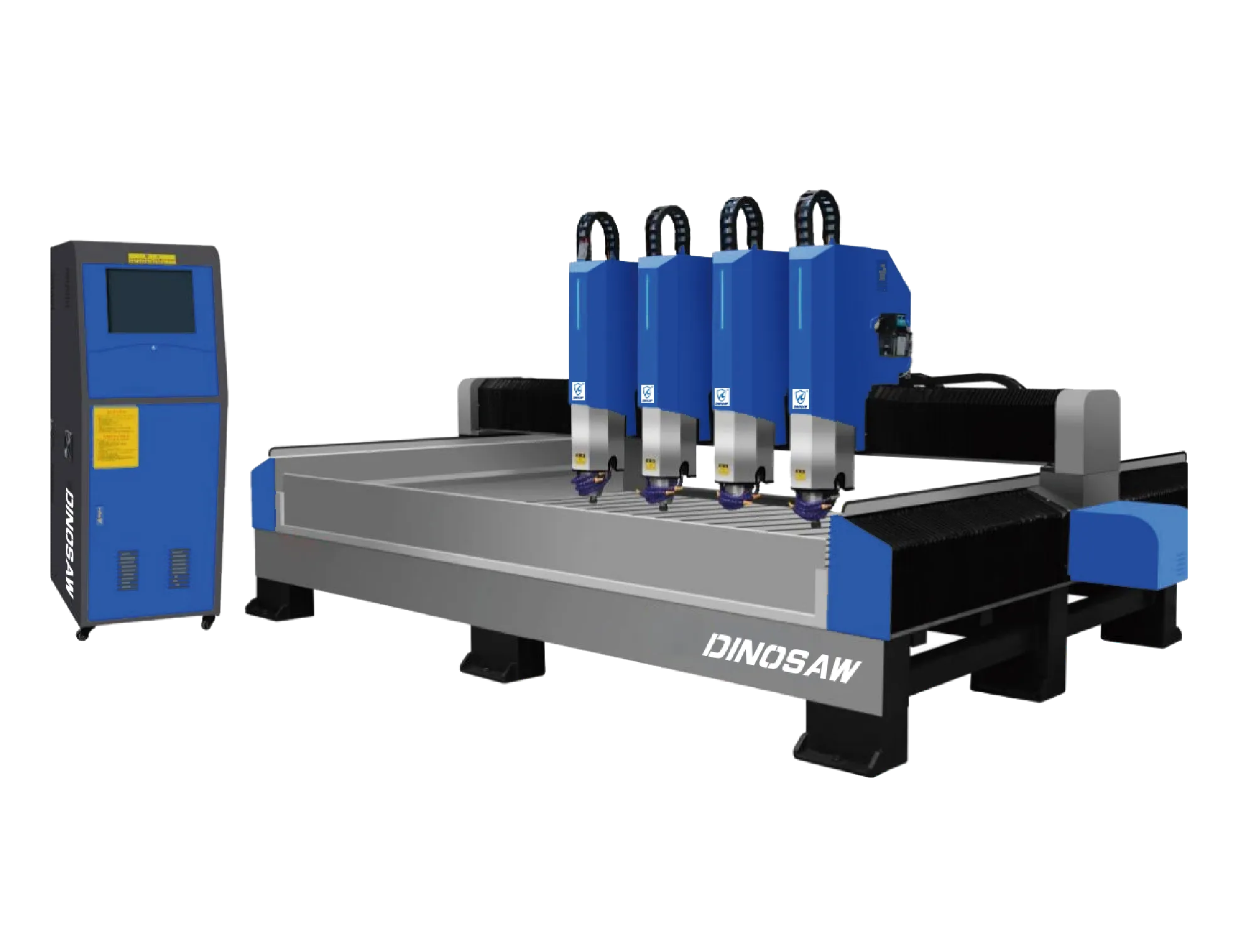 Quick Q&A for Procurement Stages
Awareness: "Why do I even need this?"
You need it to stay competitive. Manual methods are slow and costly, while a CNC increases efficiency, ensures perfect quality, and opens up profitable new markets like 3D relief carving.
Evaluation: "What capabilities matter most?"
Focus on frame rigidity, spindle power (5.5kW+ for granite), and the drive system (servo motors are better). Match the number of axes (3, 4, or 5) to the complexity of your work.
Purchase: "What's in the contract?"
Look beyond the price. Check the warranty period, training details, delivery timeline, and the supplier's service level agreement (SLA) for support response times.
After-Sales: "What happens after delivery?"
A good partner provides installation, comprehensive training, and responsive technical support. Ensure they have a reliable stock of spare parts to minimize potential downtime.
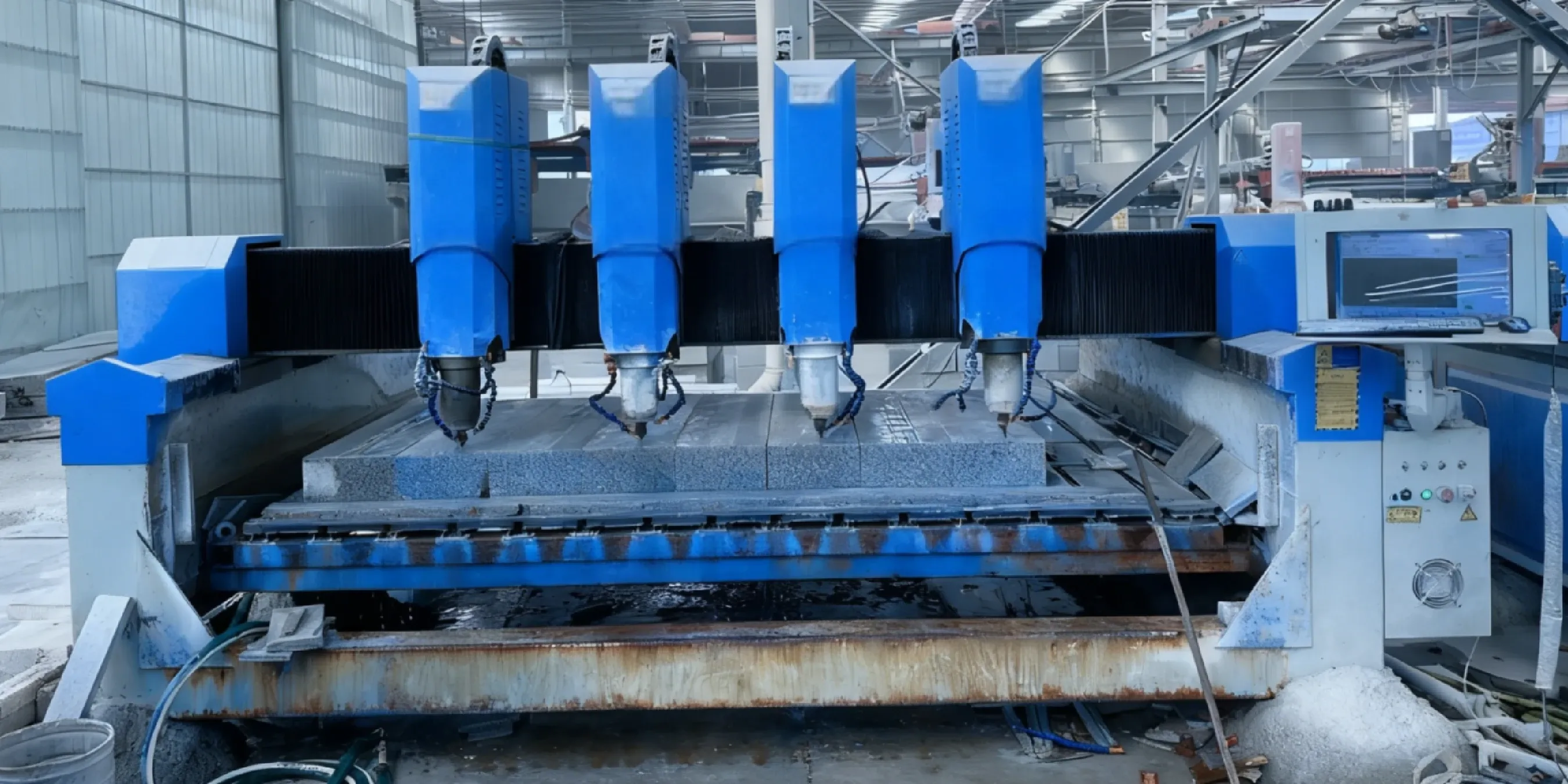 Your Requirements Definition Checklist
Use this checklist to clearly define your needs before you request quotes for a new stone engraver machine.
Materials: What are your primary and secondary stone types? (e.g., Granite, Marble, Limestone)
Geometry: What is the largest workpiece size (L×W×H)? Do you need 3D relief or full 3D sculpture capabilities?
Precision: What is the required tolerance for your finished products? (e.g., ±0.1mm)
Cycle Time: How many pieces do you need to produce per shift to meet demand?
Facility: Do you have adequate space, three-phase power, and a solid foundation?
Safety & Compliance: What are the local regulations for silica dust and machine safety you must meet?
Selection Overview: A Text-Based Comparison
For high-volume, flat engraving (e.g., headstones): A heavy-duty 3-axis machine is your workhorse. Its primary advantage is cost-effectiveness and simplicity. Its boundary is that it cannot produce complex 3D shapes. For complex artistic and architectural work: A 4 or 5-axis machine is required. Its advantage is unmatched geometric freedom, allowing for high-margin products. Its boundary is higher cost and a steeper operator learning curve.
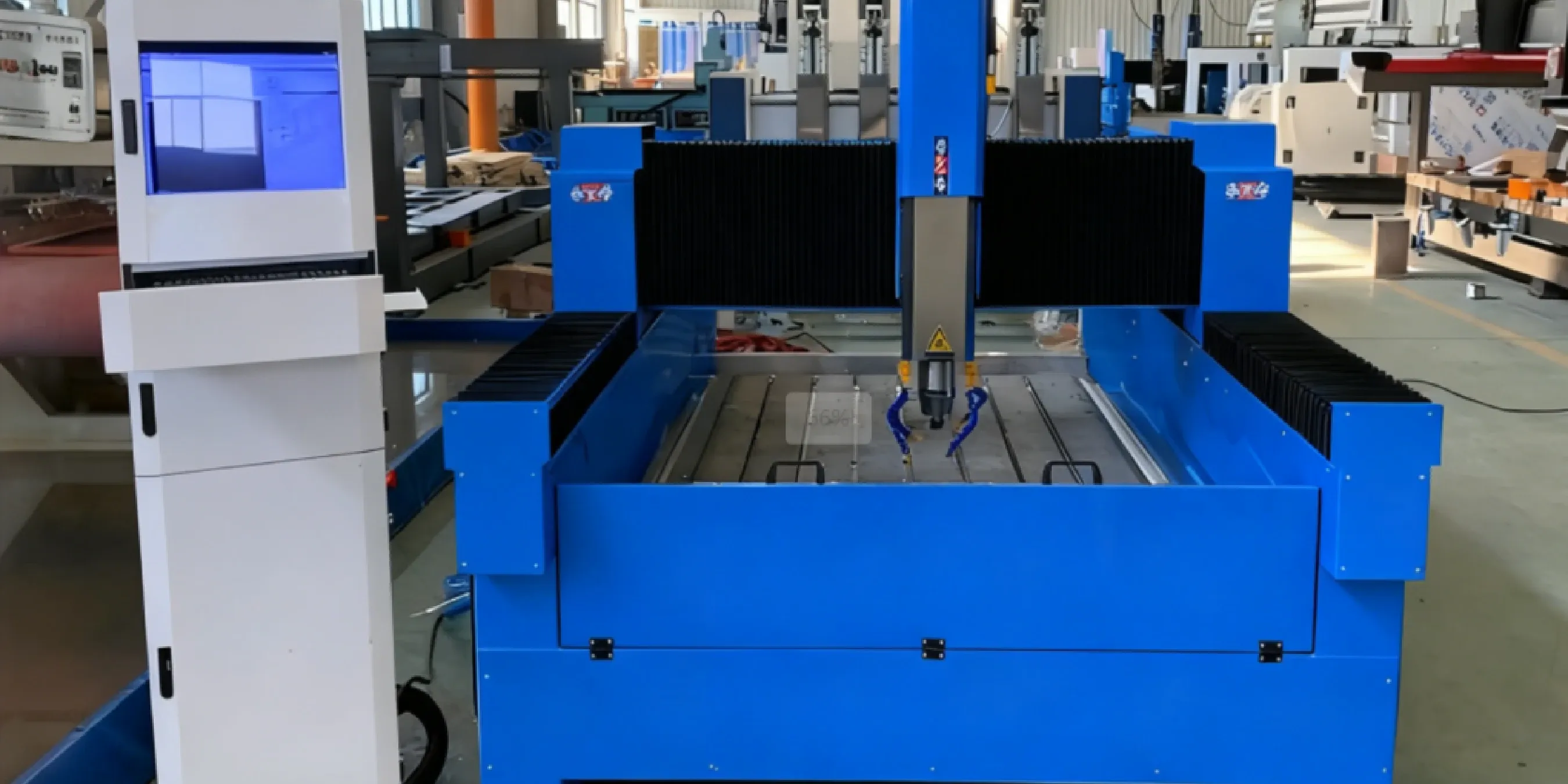
Pilot & Acceptance: 5 Steps to Success
Step 1: Install & Calibrate. Technician installs and validates machine accuracy. KPI Example: Positional accuracy verified at ≤±0.1mm.
Step 2: Train Operators. Team receives comprehensive training on machine operation and CAM software. KPI Example: Operators can independently load, run, and troubleshoot a simple job.
Step 3: Run Pilot Projects. Start with simple, low-risk jobs to build confidence and standardize parameters. KPI Example: Successfully complete 10 consecutive jobs with a <5% error rate.
Step 4: Develop Workflow. Document best practices for tooling, speeds/feeds, and maintenance. KPI Example: A standard operating procedure (SOP) document is created.
Step 5: Final Acceptance. Sign off on the installation once the machine meets all predefined performance criteria.
Decision Gates Checklist
Technical Gate: Does the machine meet our defined requirements for size, power, and precision?
Business Gate: Does the ROI projection meet our company's investment threshold?
Legal Gate: Have we reviewed the purchase agreement, warranty, and liability terms?
Compliance Gate: Does the machine and our planned workflow meet all safety and environmental regulations?
Final Sign-off: Have all key stakeholders (production, finance, management) approved the investment?
Contract & Delivery Essentials
Your contract should clearly specify the delivery timeline, payment terms, and acceptance criteria. It should also outline the warranty period (typically 1-2 years) and the supplier's commitment to spare parts availability. For guidance on procurement best practices, consult professional resources like the CIPS capital equipment purchasing guide .
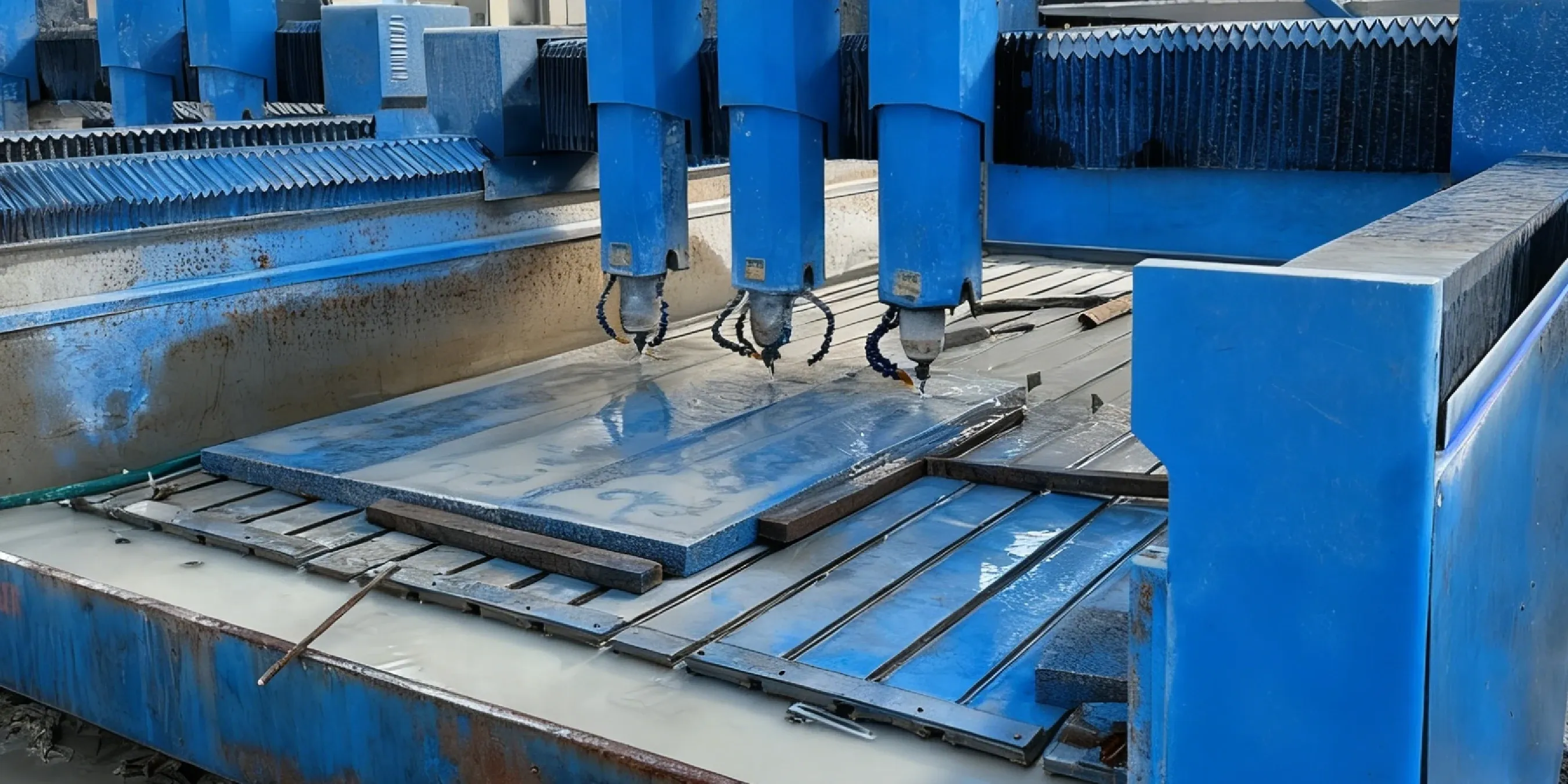 Implementation & Training
A successful implementation requires designating a lead operator or "CNC champion" on your team. The training schedule should include both classroom-style software instruction and hands-on machine operation, led by the supplier's technician.
After-Sales & SLA
Your Service Level Agreement (SLA) should define response times for technical support (e.g., 4-hour remote response, 48-hour on-site technician). It should also confirm the supplier's policy on spare parts logistics to ensure critical components can be shipped quickly to minimize downtime.
Your Complete Resource: A Summary of Our Guides
This guide gives you the high-level overview. For deeper dives, our specialized articles cover every angle you need to consider. We’ve designed this series to be your complete resource, which you can use to build
the definitive guide to CNC stone engravers for your own team.
Technical Principles: Get an engineer's look under the hood to understand the core components that guarantee precision. Selection & Comparison: A buyer's framework for choosing the right machine and looking beyond the sticker price to TCO.
 FAQ for Decision-Makers
How do I justify the cost of a CNC stone machine to stakeholders?
You justify the cost by framing it as a strategic investment focused on ROI, not as a simple expense.
Context: A strong business case should present clear financial projections. This includes labor cost savings from automation, increased throughput (more jobs completed per shift), and new revenue streams from high-value services that were previously impossible.
Next Step: Present this as an investment in efficiency, quality control, and competitive advantage. Our team can help you build a detailed ROI projection for your specific business.
What is a realistic implementation timeline?
A typical timeline from delivery to full production capability is approximately 4 to 8 weeks.
Parameters: This timeline can be broken down into phases:
Installation & Calibration: 2–3 days
Operator Training: 1–2 weeks
Pilot Phase (workflow development): 2–4 weeks
Risk: Rushing the training and pilot phases is a common mistake. This is where your team builds the confidence and develops the standard procedures needed to run the machine efficiently and safely.
How will this impact our existing workflow?
It will fundamentally shift your workflow from being manual-labor-centric to digital-first.
Context: The focus moves from manual chiseling and polishing to digital design (CAD/CAM), machine setup, and operation. This change brings significant efficiency gains.
Opportunity: This allows you to redeploy your highly skilled artisans to higher-value tasks that automation cannot replace, such as complex hand-finishing, final quality control, and developing new, creative product designs. This is a much better use of their valuable talent.
How do we future-proof this investment?
You future-proof the investment by choosing a modular machine and a reliable long-term partner.
Machine Choice: Select a machine that is modular and can be upgraded. For example, start with a 3-axis machine but ensure the supplier can add a 4th-axis rotary device later as your business grows into new applications.
Supplier Choice: Partner with a supplier who has a strong reputation for long-term support and guaranteed spare parts availability. A machine is only as good as the support behind it.
What are the biggest hidden costs to watch out for with stone engraving CNC machines?
Beyond the machine's sticker price, the biggest hidden costs are typically facility upgrades, software/training, and tooling.
What's the difference in profitability between flat engraving and 3D carving?
3D carving is significantly more profitable than standard flat engraving.
Context: While market dependent, 3D relief and sculptural work can often command profit margins that are 50% to 200% higher than simple lettering or 2D patterns.
Reason: This premium is driven by the higher perceived artistic value, complexity, and customization of the work.
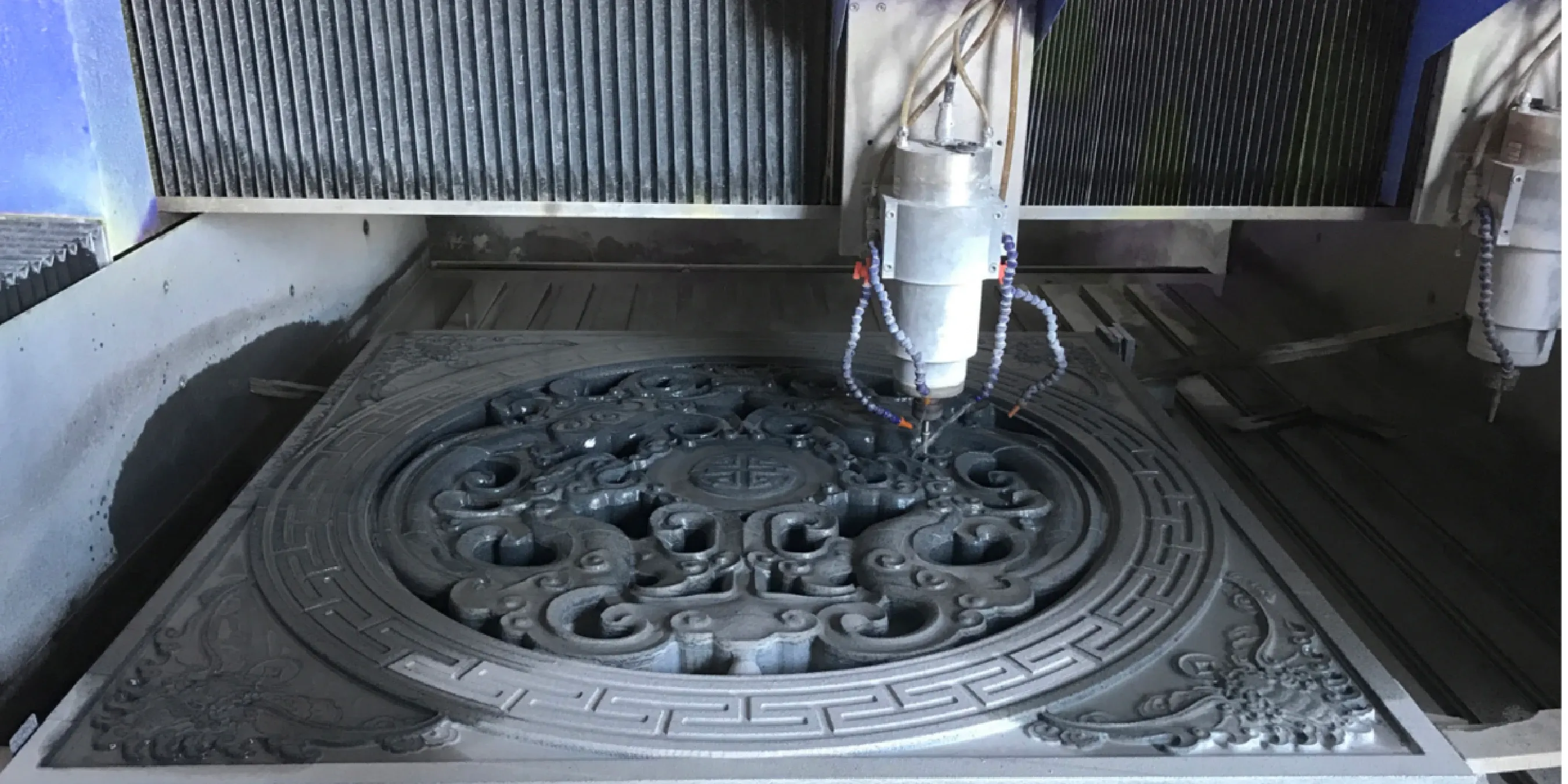
Boundary: Unlocking this market requires a machine with true 3D capabilities, such as a 3d stone relief machine, and the CAM programming skills to create the designs.




 中文
中文 Italian
 Türkçe
 Português
 Español
 Deutsch
 العربية
 Tiếng Việt
 Français
 Русский






 Nov 15, 20257 MIN READ
 English