TL;DR: The Engineering Breakdown
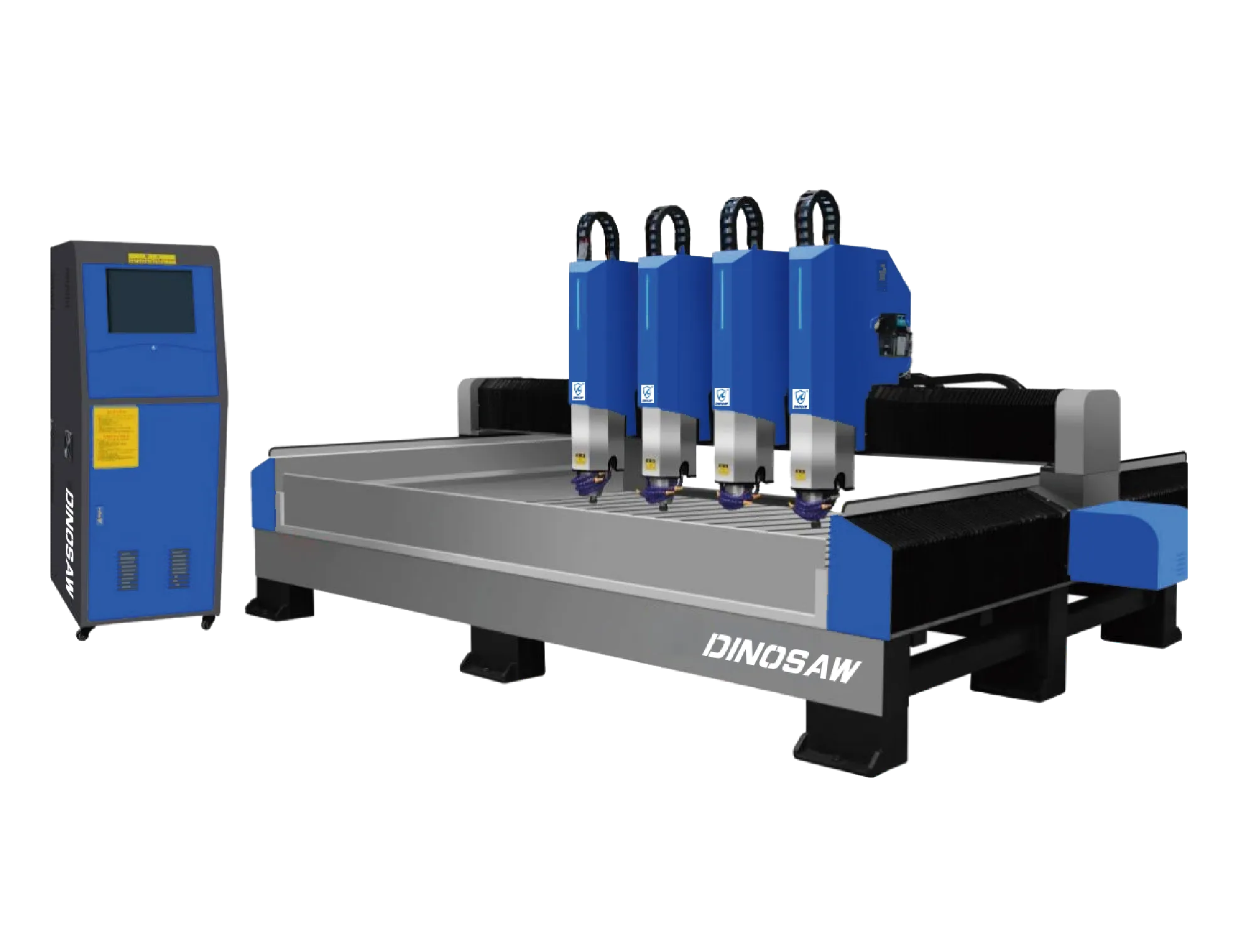
The precision of a CNC stone engraver isn't magic—it's a symphony of robust mechanics and intelligent control systems working in perfect concert. For engineers and maintenance staff, understanding these core principles is the key to maximizing both performance and uptime. Let's break down the essential components that deliver repeatable accuracy for everything from granite to marble.
Tech Overview: Why It's Better Than Traditional Methods
A
CNC stone engraver's superiority comes down to two verifiable points: precision and automation. Unlike manual carving, which relies on operator skill and is prone to variability, a CNC operates on a digital command system. This provides manufacturer-reported repeatability of ±0.02mm, a level of consistency impossible to achieve by hand. Furthermore, the use of closed-loop servo motors ensures the machine's position is constantly monitored and corrected, eliminating the positional errors that can occur in less advanced systems.
Architecture & Data Flow
The process from design to finished product follows a clear data pathway:
      [CAD Software: You create a 2D/3D design]
      ---> [CAM Software: Design is converted to G-code toolpaths]
      ---> [CNC Controller: Reads G-code and calculates motor commands]
      ---> [Servo Drives: Send power to motors]
      ---> [Motors & Ball Screws: Convert electrical signals into precise X, Y, Z motion]
      ---> [Spindle & Tool: Carves the stone]
 What Are the 5 Core Components That Matter Most?
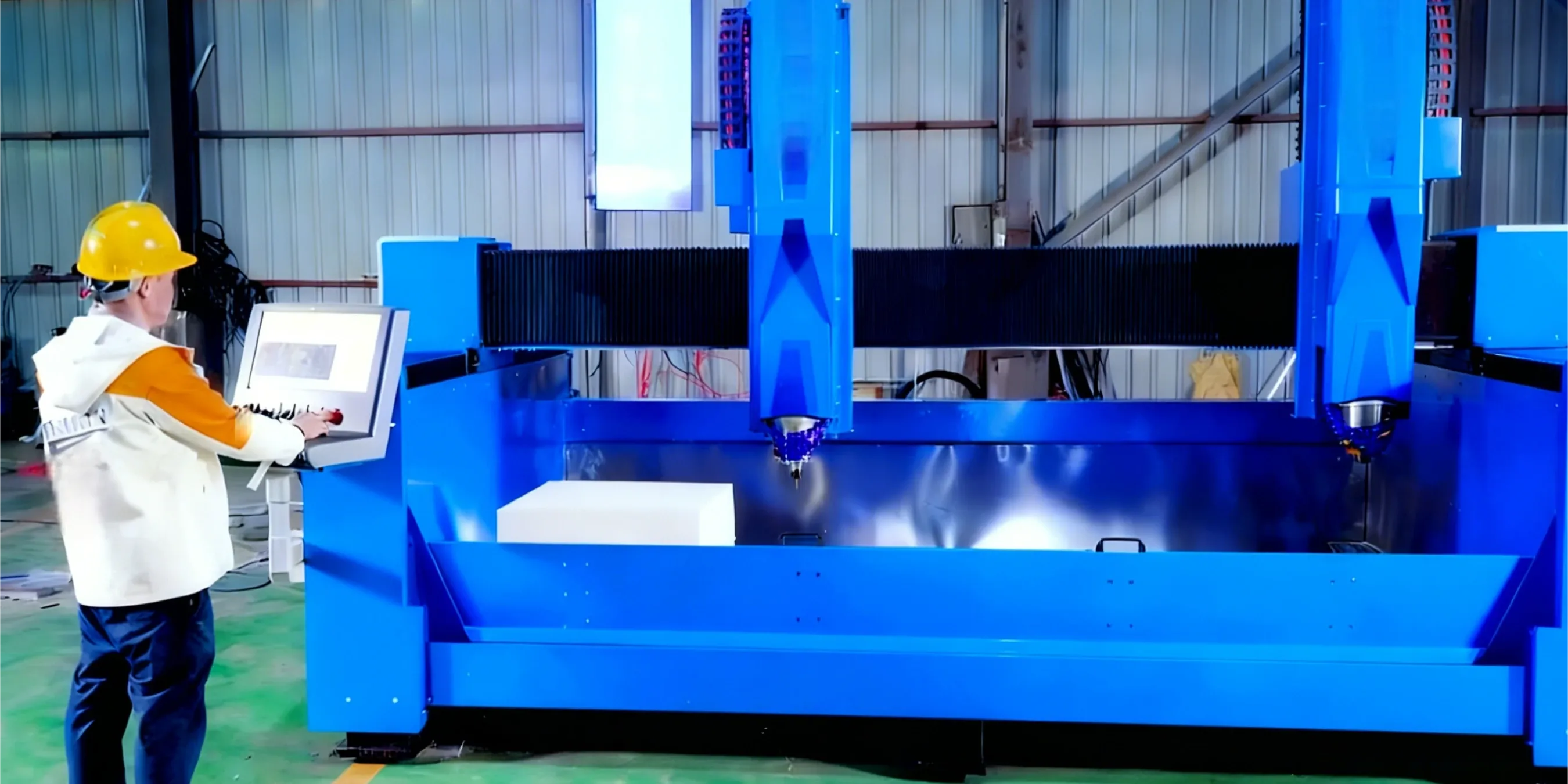
The performance and reliability of any stone CNC machinery depend on the quality of its core components. If you're evaluating a machine, here are the critical elements to inspect:
1. Machine Frame and Gantry: The machine's skeleton. It must be exceptionally rigid (heavy-duty, stress-relieved welded steel) to absorb vibrations. A weak frame is a recipe for inaccuracy and tool chatter.
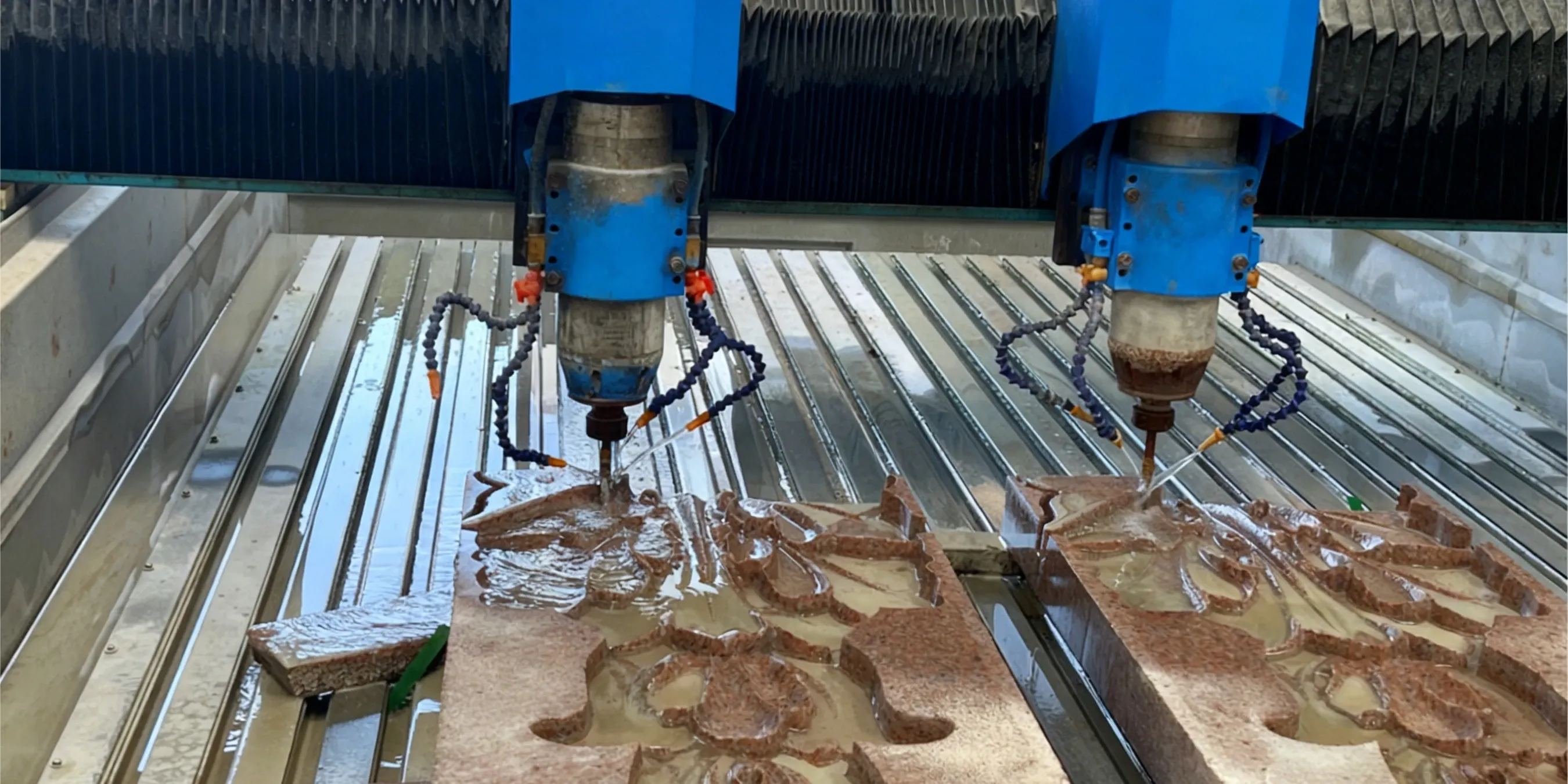
2. Spindle: The "heart" of the machine. For stone, a high-torque, water-cooled spindle (5.5 kW to 7.5 kW range) is essential to prevent overheating during long jobs.
3. Drive System (Ball Screws & Linear Guides): This translates motor rotation into precise linear motion. High-precision ball screws (compliant with standards like ISO 3408 ) ensure smooth, backlash-free movement. 4. Control System: The machine's "brain." Professional systems (e.g., Syntec, Siemens) offer better processing speed and "look-ahead" functions to smooth out motion.
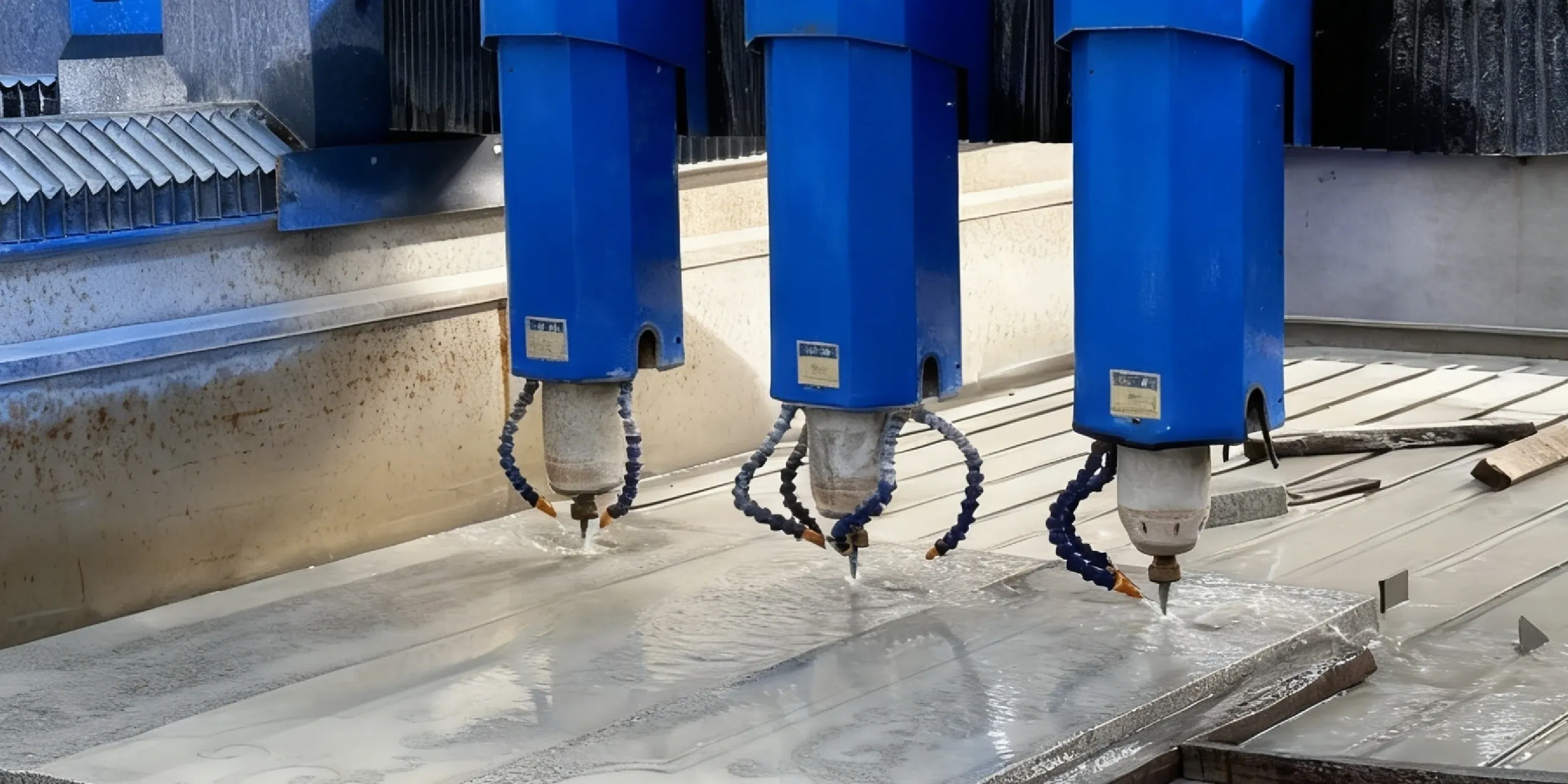
5. Water Cooling & Filtration: This is indispensable. It cools the CNC stone tools to prevent wear and suppresses hazardous silica dust.
Common Failure Modes & Mitigations
Tool Chatter: Caused by a weak frame, loose workpiece, or tool stick-out. Mitigate by using a rigid machine, ensuring solid clamping, and minimizing tool length.
Lost Steps: Occurs when stepper motors are overloaded. Mitigate by using servo motors with closed-loop feedback or by reducing cutting forces (slower feed rate, shallower cuts).
Spindle Overheating: Caused by insufficient coolant flow or running at the wrong RPM. Mitigate by ensuring the water pump and lines are clear and operating the spindle within its specified range.
Dust Ingress: Abrasive stone dust destroys mechanical components. Mitigate with effective seals, bellows covers on linear guides, and a positive air pressure system for electronics cabinets.
 Compatibility (PLC/Interfaces)
Industrial CNC machines are designed to integrate into larger production systems. While standalone operation is standard, they often support common industrial communication protocols. Depending on the controller, this can include interfaces like Modbus, Profinet, or OPC UA, allowing the machine to connect with PLCs, robotic loaders, or factory monitoring systems. Always confirm specific compatibility with the manufacturer.
Three Common Scenarios: Starting Parameters
Scenario 1: Granite Bas-Relief
RPM: 18,000–22,000. Feed Rate: 1,000-1,500 mm/min. Stepover: 8-15% of tool diameter for finishing. Cooling: Continuous water flow is essential.
Scenario 2: Marble Lettering
RPM: 15,000–20,000. Feed Rate: 2,000-3,500 mm/min. Tool: 60 or 90-degree V-bit. Cooling: Water mist or flood.
Scenario 3: Sandstone 3D Relief
RPM: 12,000–18,000. Feed Rate: 3,000-5,000 mm/min. Step-down: Can be more aggressive due to softness. Cooling: High-flow water to clear debris from deep cuts.
 Frequently Asked Questions (FAQ)
What is the typical accuracy of a CNC stone engraver?
Industrial-grade machines offer very high accuracy and even better repeatability.
Parameters: You can expect positional accuracy in the range of ±0.05mm to ±0.1mm. Repeatability, which is the machine's ability to return to the same spot, is often even tighter at around ±0.02mm.
Context: This level of precision is essential for creating detailed work and ensuring uniformity across multiple pieces, which is critical when creating 3d stone engraving quotes for clients who expect consistent quality.
Boundary: This accuracy is verified using international standards like ISO 230-1 and depends on the machine being properly installed and maintained.
What are the power requirements for this machinery?
Most industrial stone CNC machines require a three-phase power supply.
Parameters: A typical requirement is 380V/50-60Hz. The total power draw usually ranges from 10 kW to 15 kW, depending on the spindle size and number of axis motors.
Risk: Assuming your workshop's power is sufficient without checking can lead to costly electrical upgrades and installation delays.
Next Step: Always confirm the exact power requirements with the manufacturer's specification sheet before purchasing or preparing your site.
What software is compatible with your machines?
Yes, our machines are compatible with any CAM software that outputs standard G-code.
Context: This flexibility allows you to integrate the machine into your existing design workflow without learning a new proprietary system. You can continue using software you are already familiar with.
Examples: This includes popular programs like Vectric Aspire, ArtCAM, Type3, and Mastercam.
How do I choose the right spindle power?
The correct spindle power depends entirely on the hardness of the materials you plan to process.
Parameters: For softer stones like marble or limestone, a 3.5–5.5 kW spindle is often sufficient. For hard stones like granite, a 5.5 kW to 7.5 kW (or higher) water-cooled spindle is strongly recommended to provide adequate torque and prevent stalling.
Risk: Using an underpowered spindle on hard stone will lead to slow performance, poor surface finish, and can cause premature wear on the spindle itself.
What is the difference between stepper and servo motors on stone engraving routers?
Servo motors are the superior choice for professional engraving machine stone work, though stepper motors are a cost-effective option for smaller machines.
Context: Stepper motors use an "open-loop" system, meaning they can lose their position ("lose steps") if overloaded, leading to errors. Servo motors use a "closed-loop" feedback system with an encoder, allowing them to be more precise, faster, and more reliable, as they constantly verify and correct their position.
Recommendation: For high-speed applications or precision-critical jobs, servos are always the preferred choice to ensure accuracy and avoid ruined workpieces.
What maintenance is required for the drive system?
Regular maintenance of the drive system is absolutely crucial for maintaining long-term accuracy and machine longevity.
Context: The drive system includes the linear guides and ball screws that control the machine's movement.
Tasks: Key tasks include lubricating these components according to a set schedule (e.g., weekly or every 40 hours of operation), keeping them clean of abrasive dust, and periodically checking for signs of wear.
Next Step: Our O&M guide provides a detailed maintenance checklist and schedule to make this easy to manage.




 中文
中文 Italian
 Türkçe
 Português
 Español
 Deutsch
 العربية
 Tiếng Việt
 Français
 Русский






 Nov 13, 20256 MIN READ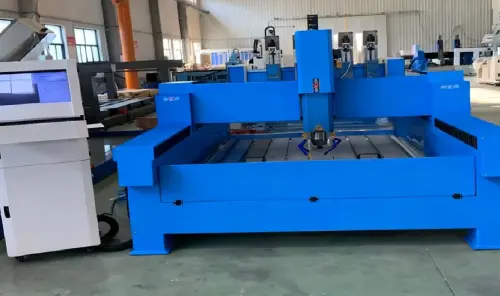
 English