As a decision-maker, your goal is to invest in technology that delivers a clear and measurable return. DTH (Down-The-Hole) drilling technology represents a significant capital investment, but one that can fundamentally enhance quarry productivity, especially in hard rock environments. This guide is designed for you—the executive, the quarry manager, the procurement lead—to provide a standalone overview of the business case for DTH, moving beyond technical jargon to focus on requirements, decision gates, and strategic implementation.
Quick Q&A for Decision Makers
Here are answers to the key questions that arise at each stage of the procurement process.
Awareness Stage: Is DTH even relevant to me?
What business problem does DTH solve?
In one sentence:DTH drilling overcomes the bottlenecks of low speed and poor precision in hard rock, leading to higher throughput and better blast results.
Context:Traditional methods lose impact energy over distance, making them slow and inaccurate in deep or hard formations. DTH maintains full power at the bit, ensuring consistent performance.
Next Step:Review the top-hammer vs DTH comparison in our selection guide to quantify the performance gap for your geology.
Evaluation Stage: Is it a viable investment?
What are the non-negotiable prerequisites?
In one sentence:You must have a suitable high-pressure air compressor and a team prepared for a disciplined maintenance schedule.
Context:The DTH system's performance is directly tied to its air supply. An undersized high-pressure air compressor CFM is the number one cause of failure. Furthermore, the maintenance of the DTH hammeris critical for its longevity.
Next Step:Use the Requirements Checklist below to audit your existing infrastructure and team readiness.
Sign-Off Stage: How do we justify the cost?
What is the core value proposition?
In one sentence:The investment translates to a lower cost per ton of rock extracted, driven by faster drilling, reduced waste, and improved safety.
Context:Straighter holes mean better blast fragmentation (less secondary breaking) and more stable walls. Faster drilling means more rock drilled per shift. These efficiencies directly impact your operational expenditures.
Next Step:Use our pilot planning guide to define KPIs (e.g., meters drilled per hour, bit life) to build a concrete business case based on your own data.
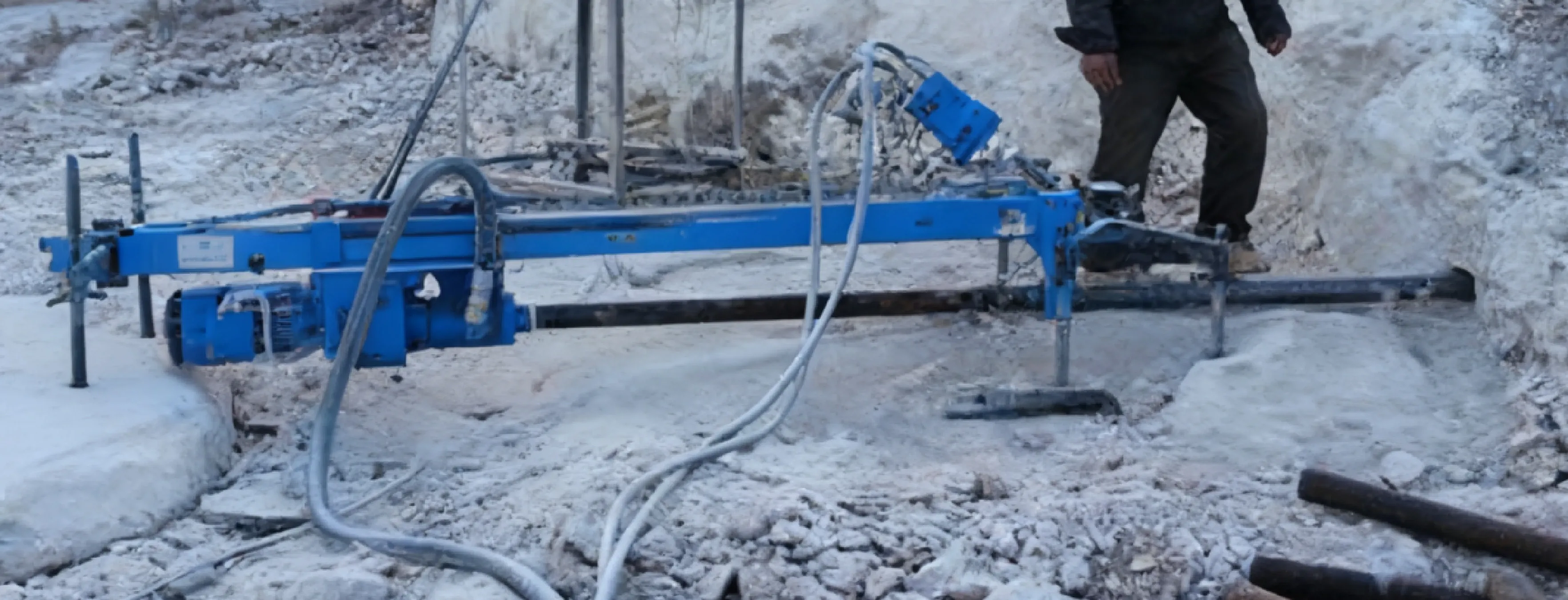
Requirements Definition Checklist
Use this checklist to define your needs. A clear definition is the first step toward a successful investment.
☐Material:Our primary drilling is in ________ (e.g., Granite, Basalt, Limestone).
☐Geometry:Our typical drilling depth per pass needs to be around ________ meters, and our desired hole diameter is in the ________ mm range.
☐Precision:We require hole deviation control to be within an acceptable tolerance (e.g., under 2-3%) for effective blasting.
☐Throughput:We need a system capable of achieving a target penetration rate sufficient for our production goals in our specific rock type.
☐Interfaces:The rig should have capabilities for future data integration (OPC UA/Profinet integration).
☐Safety & Compliance:The system must include adequate dust suppression for drilling(e.g.,wet drilling kit) and support the use of all necessary PPE for quarry drilling.
Selection Snapshot: DTH vs. Legacy Methods
DTH is not a universal replacement but a specialized tool. In its target environment—hard rock—it offers unparalleled advantages. At DINOSAW, we engineer our
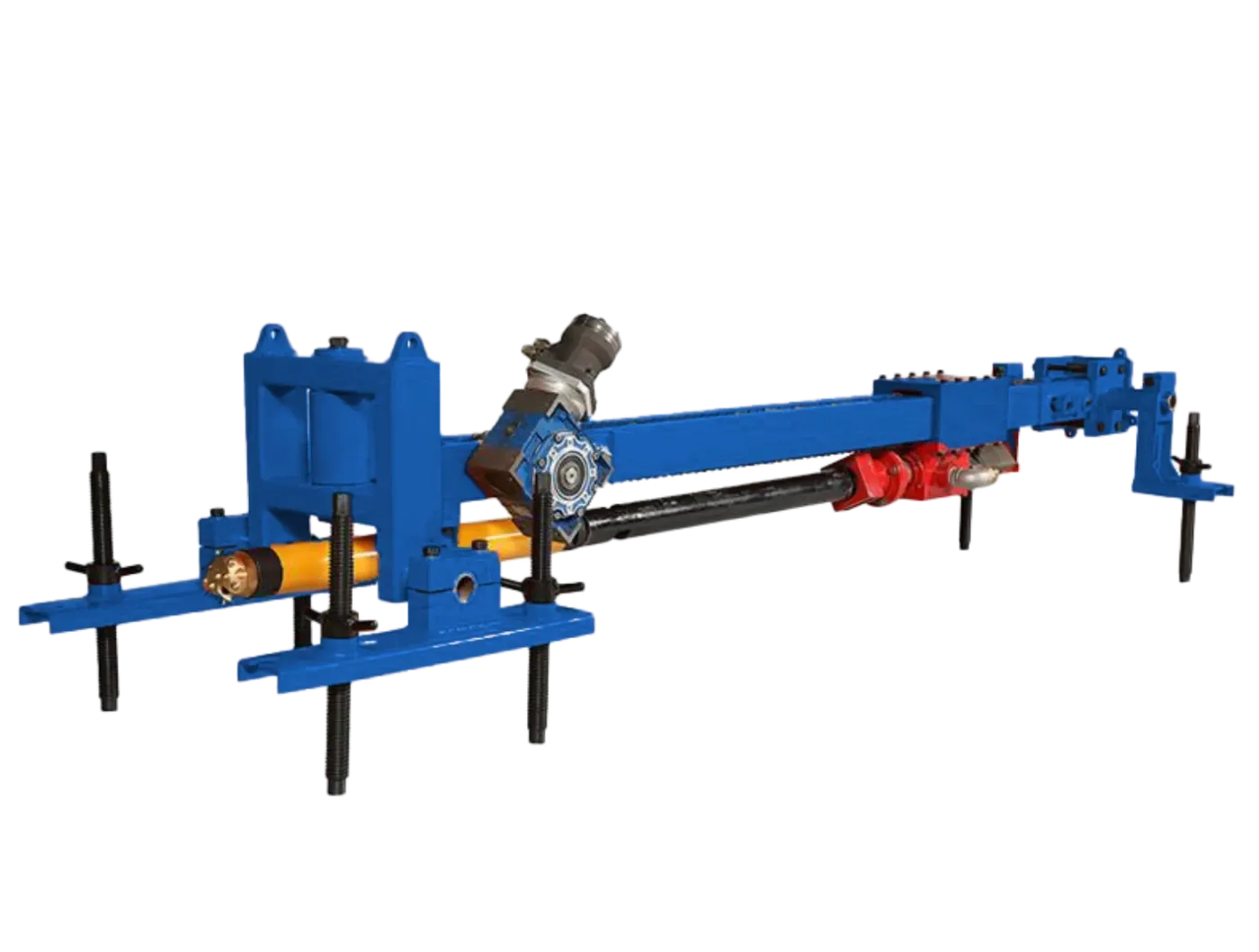
stone quarry drilling machine to maximize these strengths, focusing on robust construction and efficient energy transfer. While top-hammer rigs may have a lower initial cost and suffice for softer ground, they cannot match the deep-hole performance and precision of a DTH system in challenging geology. The DINOSAW advantage lies in providing a complete, optimized system—from the
hammer for hard rock to the durable
drill rod coupling—that delivers a lower total cost of ownership through superior performance and longevity.
Navigating Internal Decision Gates
Securing approval requires satisfying stakeholders across the business.
Business & Finance Sign-Off
Legal & Compliance Sign-Off
Verify compliance with all safety and environmental regulations.
Review contract terms, warranty, and SLA.
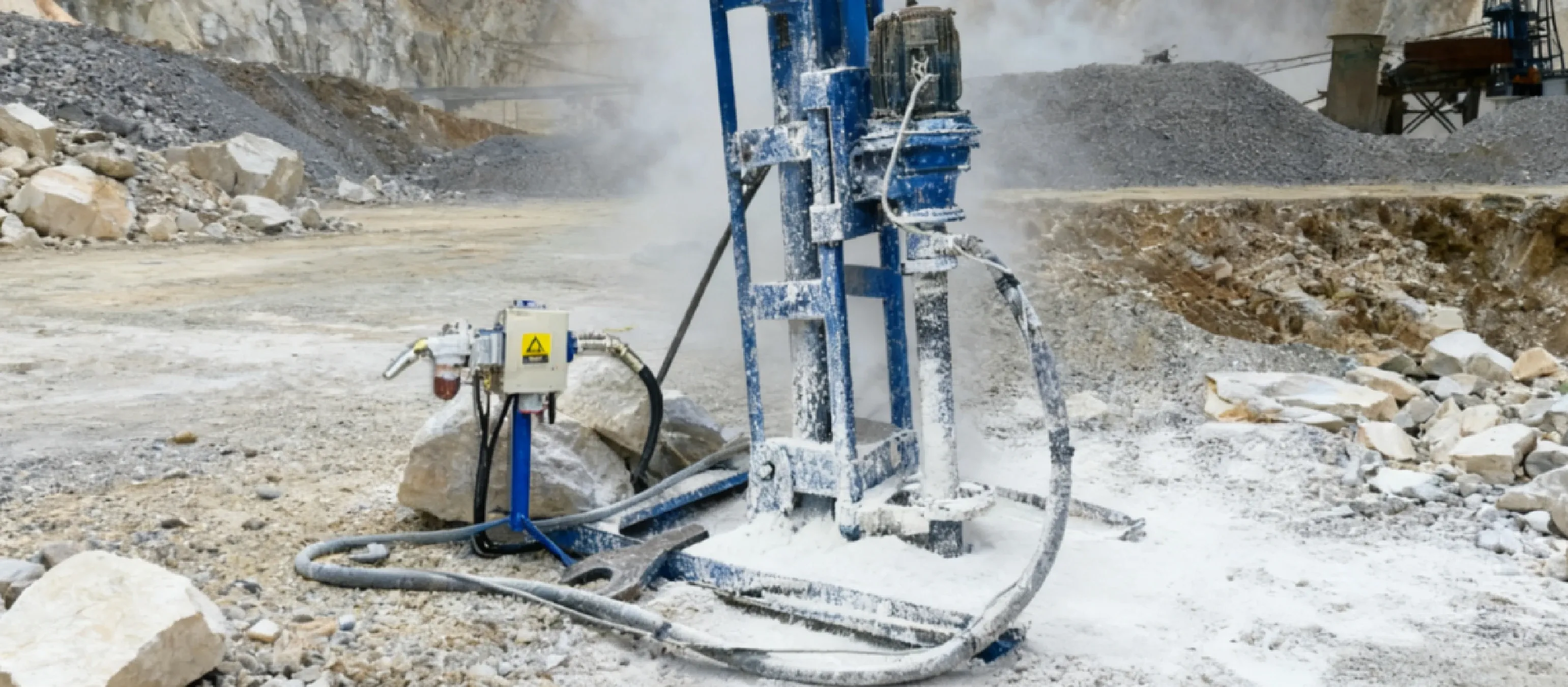
Key Contract & Delivery Points
Delivery Lead Time:Confirm a realistic delivery schedule.
Shipping Terms:Clarify responsibilities using standard terms like Incoterms® 2020. Acceptance Criteria:Ensure the KPIs from the pilot are written into the contract.
Warranty Period:Define what is covered and for how long.
Spare Parts Package:Negotiate an initial package of critical spares (e.g., bits, hoses, hammer service kit).
Implementation, Training, and Post-Sales Support (SLA)
The value of your investment is realized through successful implementation and ongoing support. At DINOSAW, we provide a structured process covering installation, operator training tailored to your conditions (starting parameters for
limestone quarry drilling vs.
basalt hard rock drilling), and clear service channels. Ou
r Service Level Agreement (SLA) outlines guaranteed response times and an escalation path to ensure any
troubleshooting of drilling issues is handled swiftly, minimizing downtime and protecting your investment.
FAQs for Executive Decision-Making
What is the primary business case for switching to DTH drilling?
Primarily, DTH drilling delivers a lower total cost per ton of rock extracted by boosting operational efficiency in hard rock quarries.
Context:It excels in hard rock by delivering higher penetration rates and superior hole straightness compared to other methods.
Benefits:This leads to better blast fragmentation (reducing secondary breaking costs), higher throughput, and improved safety from more predictable blasts.
Is DTH always better than top-hammer drilling?
No, DTH is a specialized solution for specific conditions, not a universal upgrade.
Context:DTH provides unparalleled performance in medium-to-hard rock and for deep holes (>15 meters), where its energy efficiency shines. Top-hammer rigs can be more suitable for softer ground or shallower holes.
Benefits:Choosing the correct technology based on geology and scale prevents over-investment and ensures optimal performance.
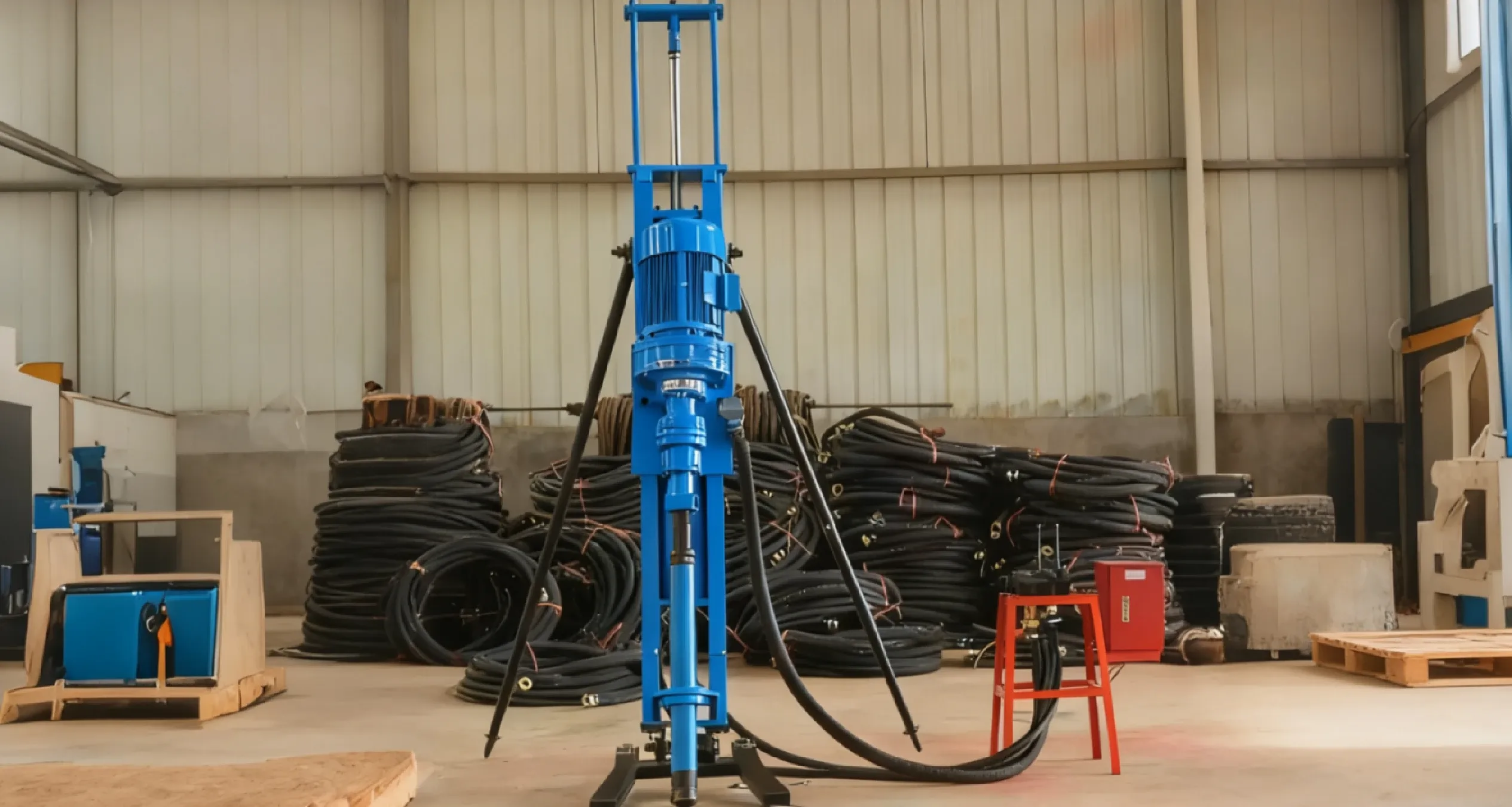
What is the single biggest mistake to avoid when purchasing a DTH system?
The most common and costly mistake is under-sizing the air compressor.
Context:A DTH hammer's performance is directly dependent on receiving adequate air volume (CFM) at high pressure (bar/PSI). An undersized compressor will "starve" the hammer.
Benefits:Procuring the rig and compressor as a matched system guarantees the hammer operates at its specified performance, preventing a drastic drop in drilling speed.
How do I calculate the ROI for a DTH drilling machine investment?
A precise ROI is calculated by benchmarking current operations and quantifying improvements across key metrics after implementing DTH.
Context:The goal is to measure direct operational savings and increased output from using a DTH system.
Benefits:Tracking metrics like meters drilled per hour, cost per meter, and reduction in secondary breaking costs provides tangible data for a robust business case.
Next Step:We can help you set up a pilot project to track these KPIs. Contact our team to start planning.
What kind of training is required for my team?
Successful implementation requires comprehensive, hands-on training for both operators and maintenance staff.
Context:Operators need to learn DTH-specific techniques (collaring, feed pressure), while maintenance needs training on lubrication, hammer service, and troubleshooting.
Benefits:Proper training ensures the machine is operated efficiently and maintained correctly, maximizing its lifespan and preventing costly downtime.
Next Step:Ask about our on-site training packages included with the commissioning of a new DTH drilling machine.
What does a typical after-sales support (SLA) package include?
A strong Service Level Agreement (SLA) is crucial for protecting your investment and ensuring long-term operational continuity.
Context:An SLA should clearly define response times for service, guarantee availability of critical spare parts, and outline the process for accessing expert technical support.
Benefits:This ensures that any issues are handled swiftly, minimizing downtime and giving you peace of mind that your machine will operate at peak efficiency.
Can I use my existing drill bits with a new DTH hammer?
No, it's highly unlikely, as DTH systems require bits with a specific shank design to match the hammer.
Context:Drill bits are designed to match the specific shank, splines, and performance characteristics of a particular hammer model. A bit for one hammer will not fit another.
Benefits:Using the correct, specified bit ensures proper function, prevents severe damage to the hammer, and maintains drilling performance.
Next Step:Always procure bits specified for your exact DTH hammer model to avoid compatibility issues.
How long does a DTH hammer last before it needs to be rebuilt?
The service life varies significantly, but it primarily depends on maintenance quality and operating conditions.
Context:A hammer's lifespan is influenced by rock abrasiveness, adherence to lubrication schedules, and correct operating procedures. A well-maintained hammer can last hundreds of hours.
Benefits:Proactive maintenance and regular inspections are the key to maximizing service life and preventing premature, costly failures.
Next Step:Implement the preventive maintenance schedule outlined in our operator's handbook to extend hammer life.
Further Reading




 中文
中文 Italian
 Türkçe
 Português
 Español
 Deutsch
 العربية
 Tiếng Việt
 Français
 Русский






 Oct 28, 20256 MIN READ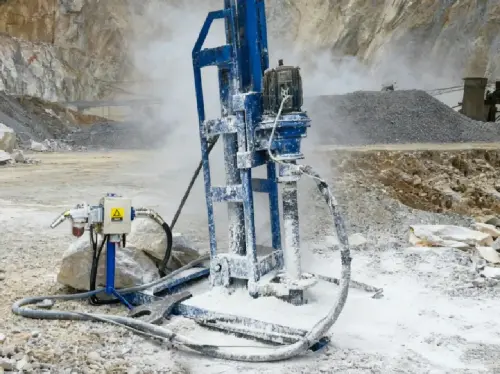
 English