It solves three core problems: high material waste from inefficient cutting (improving yield), inability to produce complex designs (unlocking new revenue streams), and poor quality from material damage (reducing scrap rates and rework costs).
Q: What is the typical ROI?
For shops processing high-value ceramics, ROI can be achieved in 12-24 months. This is driven by direct savings from reduced kerf loss (up to 15% better material yield) and labor savings from automation, plus the added margin from producing high-value, complex parts.
Stage 2: Comparison & Approval
Q: How does the TCO compare to a waterjet?
While the initial purchase price might be comparable or lower, the TCO analysis for a wire saw is significantly more favorable. It avoids the high operational costs of waterjets, such as expensive high-pressure pump maintenance, garnet abrasive consumption, and complex water treatment systems, leading to lower long-term expenses.
Q: What are the key decision gates we need to pass?
Approval typically requires a technical sign-off (validating performance via a pilot), a commercial sign-off (approving the TCO and ROI analysis), a safety/compliance review, and final executive approval based on the strategic business case.
Stage 3: Implementation & After-Sales
Q: What resources are needed to implement this technology?
Implementation requires adequate facility space with a stable foundation, sufficient power, a mandatory dust collection system, and trained personnel. We provide comprehensive training for operators and maintenance staff to ensure a smooth transition and rapid ramp-up.
Q: What does long-term support look like?
Our support model includes defined Service Level Agreements (SLAs) covering remote diagnostics, on-site service response times, and guaranteed availability of critical spare parts. This ensures maximum uptime and protects your investment for its entire lifecycle.
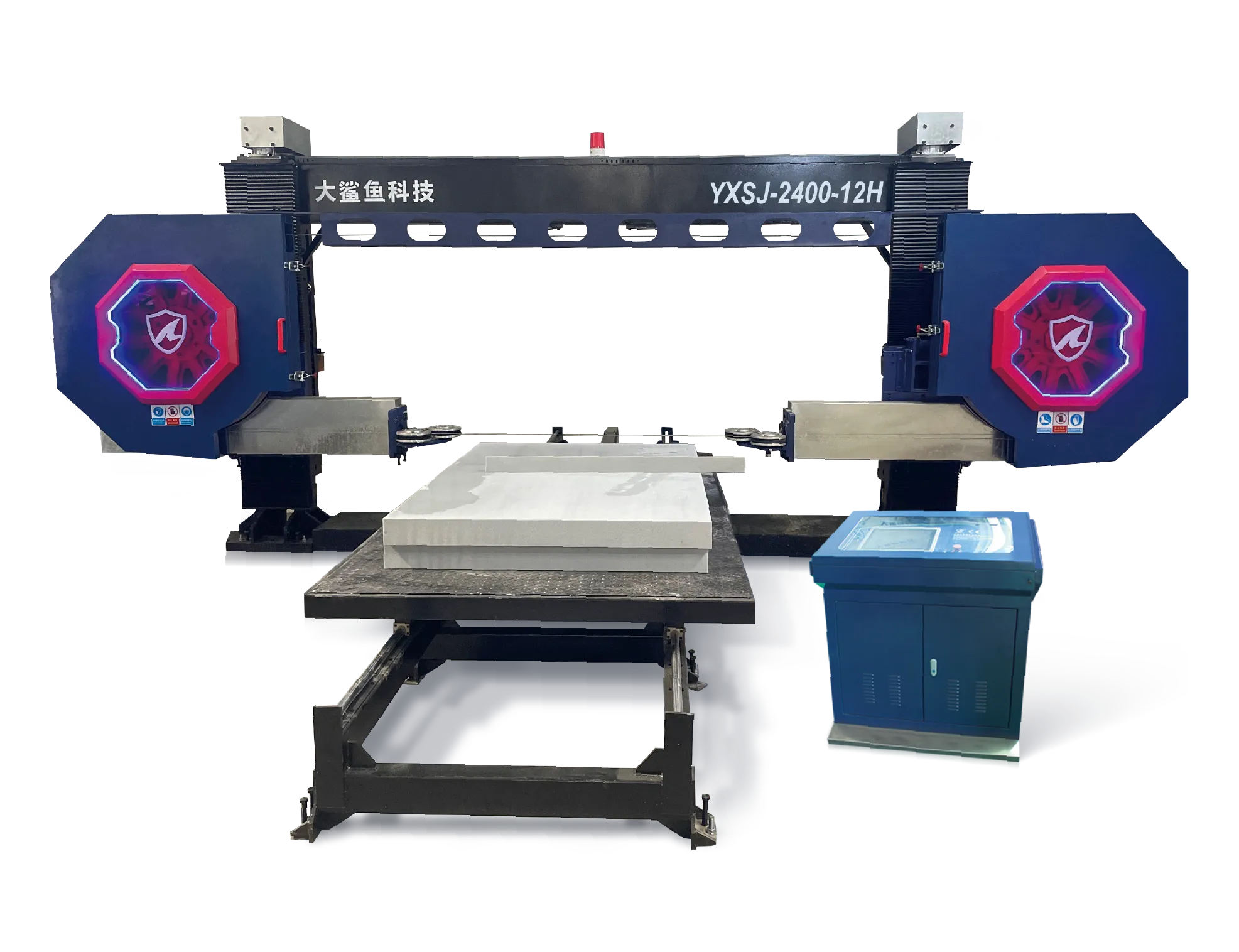
Requirements Checklist for Ceramic Cutting Machine (porous ceramic blocks)
Before engaging vendors, use this checklist to define your needs. This clarifies your goals and provides a baseline for evaluating different solutions.
Requirement Area
Checkable Condition
Example Range / Target
Materials
Primary materials to be cut?
e.g., Alumina foam, SiC foam, Porous Zirconia
Geometry
Are complex curves or 3D shapes required?
e.g., Yes, require 5-axis capability.
Precision
What is the required dimensional tolerance?
e.g., +/- 0.5mm
Cycle Time
What is the target throughput?
e.g., 20 parts per 8-hour shift.
Interfaces
Does it need to integrate with CAD/CAM or ERP systems?
e.g., Yes, must accept DXF files and provide production data.
Space
What is the available machine footprint?
e.g., 6m x 4m x 3m (L x W x H)
Safety & Compliance
Is a dedicated dust extraction system in place?
e.g., Yes, must connect to central HEPA system.
Decision Gates: ROI/TCO Approval for CNC Stone Cutting Machine Foamed Ceramics
A capital investment like this requires multi-level approval. Prepare for these key sign-off stages.
Technical Sign-off
Confirm performance via a pilot project or test cut on your material.
Verify maintenance requirements with your facilities team.
Commercial Sign-off
Present a detailed TCO and ROI analysis.
Secure budget approval from the finance department.
Legal & Compliance Sign-off
Review warranty, SLA, and contract terms.
Confirm machine meets all local safety and environmental regulations.
Executive Sign-off
Submit the final business case, highlighting strategic benefits.
Gain final approval from C-level leadership.
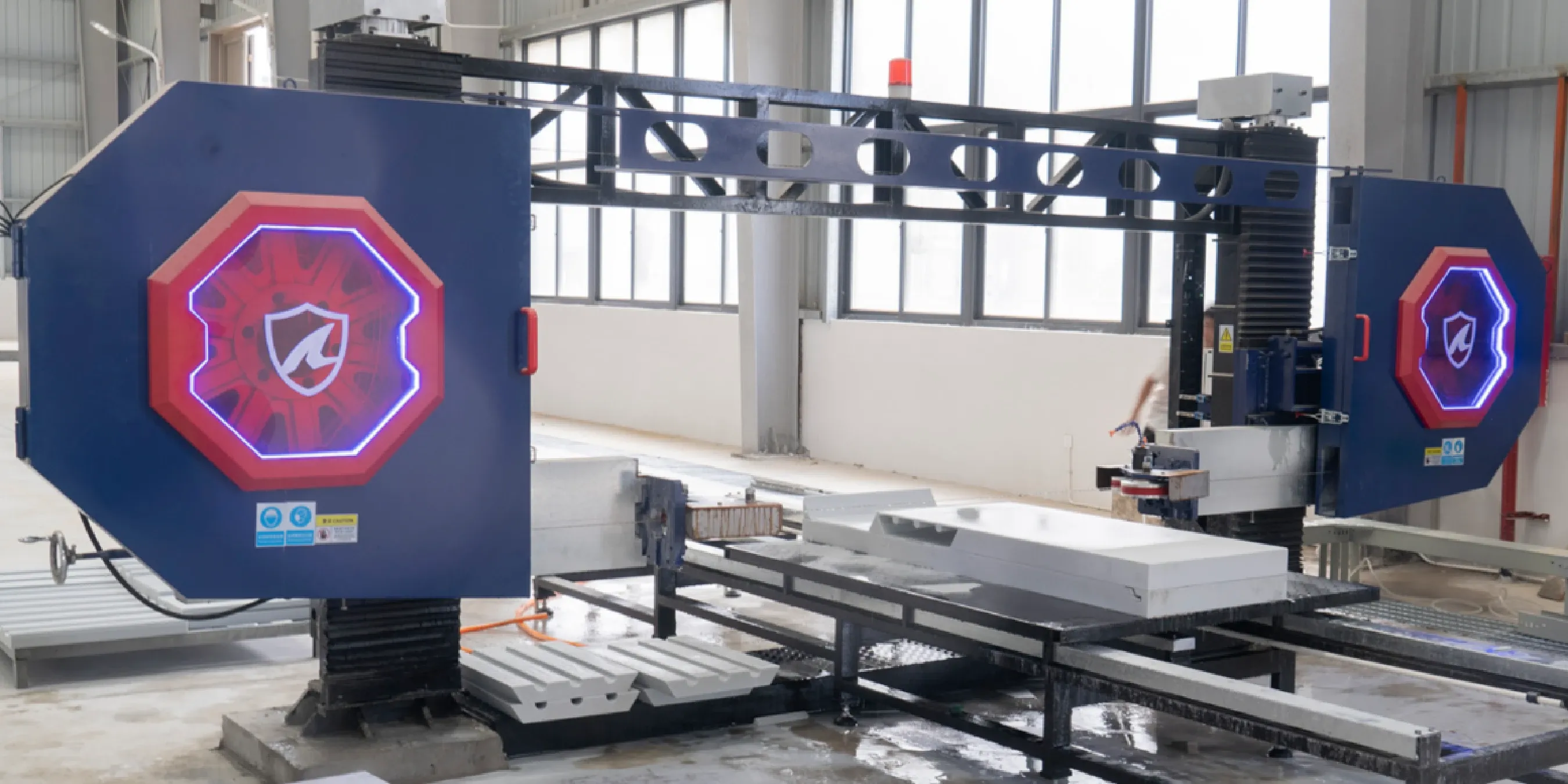
Contract & Delivery for CNC Diamond Wire Saw
Once approved, focus on the contractual details to ensure a smooth handover and long-term success.
Final Quotation: Ensure it includes the machine, all optional accessories, shipping, installation, and training costs.
Payment Terms: Clarify the payment schedule (e.g., 50% on order, 40% on delivery, 10% on commissioning).
Delivery & Installation Timeline: Get a firm schedule for ex-factory date, shipping time, and on-site installation.
Training Plan: Define the scope, duration, and location of operator and maintenance training.
Safety Compliance Documentation: Confirm that the machine will be delivered with all necessary compliance certificates, particularly regarding electrical safety and adherence to the OSHA silica standard.
Service Level Agreement (SLA): The SLA should be an appendix to the contract, detailing support response times and spare parts availability, referencing best practices from sources like the NIOSH guidelines for engineering controls.
Acceptance Criteria: Define the objective criteria (e.g., successful cutting of a specific test part) that must be met for final sign-off and payment.
Selection Speed-Read: Wire Saw vs Waterjet
For a quick comparison, here’s how the CNC diamond wire saw stacks up against incumbent technologies for foamed ceramics:
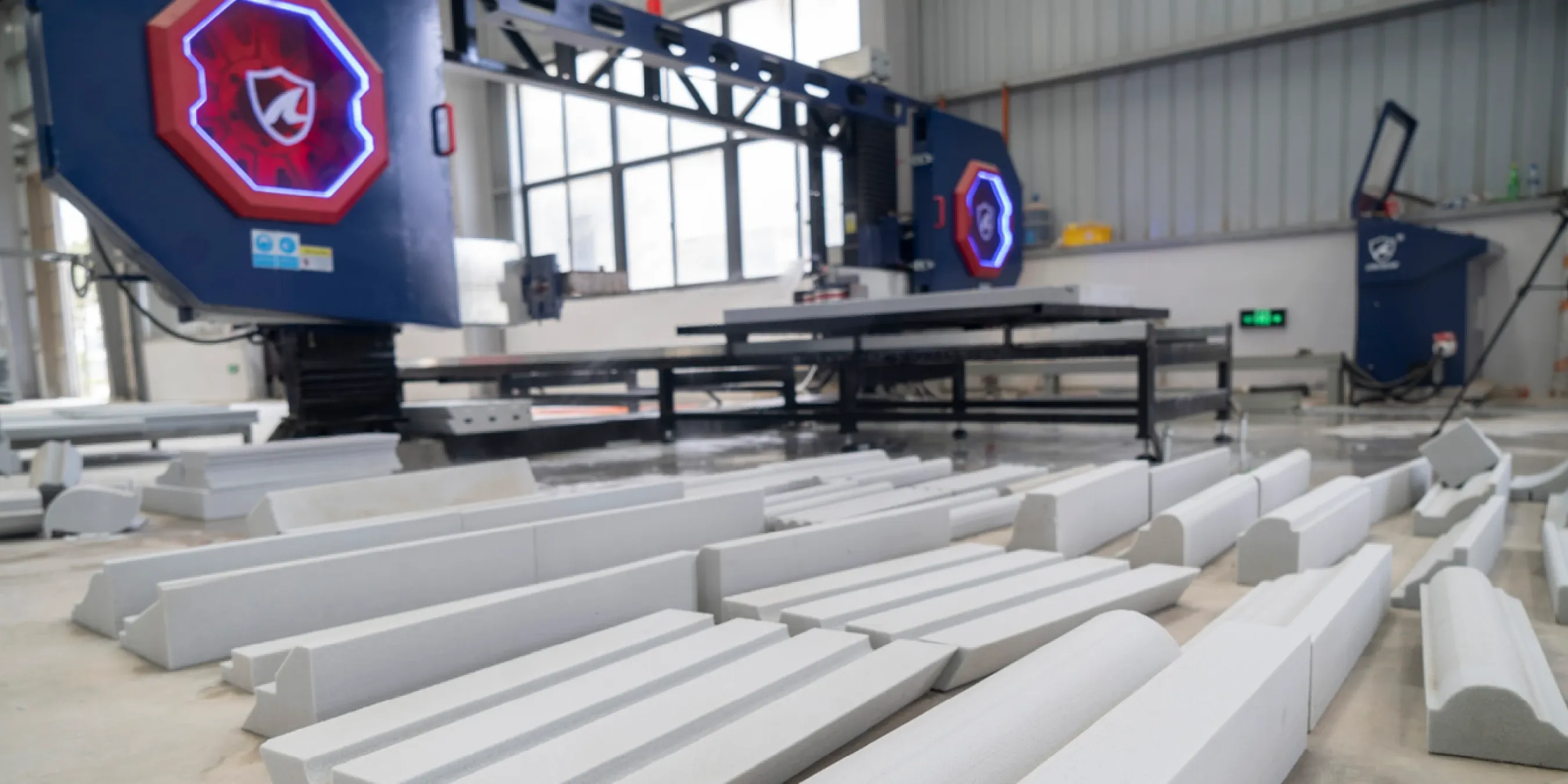
vs. Blade Saws: The wire saw wins on precision and material savings. Its ultra-low kerf cutting minimizes expensive material waste, and the low-stress abrasive process prevents the micro-cracks and chipping common with high-impact blades, resulting in higher quality parts.
vs. Waterjets: The wire saw wins on operational cost and reduced water ingress. It avoids the high TCO of waterjets (pumps, abrasives). While wire saws typically use water cooling, the controlled flow is less aggressive than a high-pressure jet, reducing the risk of deep water absorption into porous ceramics which can compromise the final part's structural properties.
Pilot Program: Validate CNC Diamond Wire Saw for Foamed Ceramics
A pilot program is the most effective way to de-risk your investment. A typical pilot involves:
Define Success Criteria: Set clear, measurable goals (e.g., "achieve a dimensional tolerance of +/- 0.5mm on three consecutive parts").
Provide Material & Designs: Send us samples of your most challenging foamed ceramic and the CAD files for the parts you need to cut.
Receive Test Parts & Report: We will cut your parts and provide a detailed report on the parameters used, cycle times achieved, and final part quality for your internal evaluation.
Installation, Training & After-Sales: Complete Guide
Our team provides end-to-end support to ensure a smooth transition from delivery to full production. This integrated service package covers on-site installation, machine calibration, and comprehensive training programs designed to empower your team and maximize your investment's value from day one.
Installation & Commissioning: A certified technician will manage the complete on-site installation, including mechanical assembly, electrical hookup, final calibration, and executing a site acceptance test (SAT) to verify performance.
Operator & Maintenance Training: We provide two distinct training tracks—one for operators focusing on machine operation and CAD/CAM workflow, and another for maintenance staff covering preventative tasks and basic troubleshooting.
Documentation & Resources: You will receive a complete documentation package, including operation manuals, maintenance schedules, and access to our online portal for parameter libraries and software updates.
Warranty & Service Level Agreements (SLA): Standard warranty covers parts and labor, with optional premium SLAs available for guaranteed faster response times and extended support hours.
Frequently Asked Questions (FAQ)
How long does installation and commissioning take?
Typical on-site installation and SAT (site acceptance test) complete in 2–4 working days depending on model and site readiness.
Context: Duration depends on machine size, power hookup, and site preparation.
Procedure: Technician performs mechanical setup, electrical connections, calibration, and SAT.
Next Step: Confirm site readiness checklist before scheduling to avoid delays.
What training modules are included and how long?
Operator (1–2 days) and maintenance (1 day) modules cover CAD/CAM workflow, parameters, daily checks, and preventative maintenance.
Context: Two tracks ensure both production and upkeep competency.
Procedure: Classroom + hands-on sessions with your parts; remote refreshers available.
Next Step: Define trainee list and preferred schedule when booking installation.
Can training be delivered on-site and remotely?
Yes—core training is on-site; remote refreshers and new-hire onboarding are available upon request.




 中文
中文 Italian
 Türkçe
 Português
 Español
 Deutsch
 العربية
 Tiếng Việt
 Français
 Русский






 Nov 11, 20255 MIN READ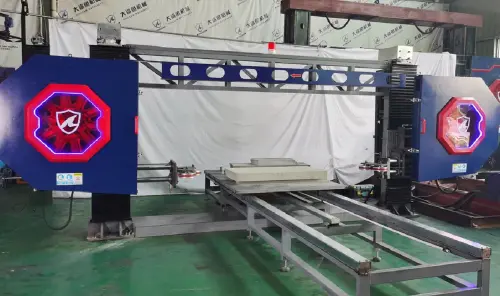
 Legal & Compliance Sign-off
 Selection Speed-Read: Wire Saw vs Waterjet
 Frequently Asked Questions (FAQ)
 English