How to Choose a Quarry Cutting Machine | An If-Then Guide
lizzy·Nov 19, 2025·5 MIN READ
lizzy·Nov 19, 2025·5 MIN READ
Use an If-Then decision map to select the right sandstone cutting machine. Review key specs, comparisons, and procurement topics.
TL;DR: The Decision Framework
Start Here: Verify your project against the five fundamental requirements: material hardness, cutting depth, geometry needs, power, and site conditions.
Use the If-Then Tree: Match your specific scenario (e.g., high-volume sandstone vs. softer limestone) to the recommended operational approach and be aware of the risks.
Compare Technologies: Understand when this quarry cutting machine is superior (speed and precision in medium-hard stone) and when a wire saw is better (granite, non-linear cuts).
Choosing the right quarry cutting machine is a critical engineering and procurement decision. Your choice depends on material hardness, required geometry, cycle time targets, and automation goals. This guide provides a structured, If-Then approach to help you select the optimal configuration for your quarrying scenario.
What Are the Must-Have Prerequisites?
Before diving into scenarios, verify your project against these five fundamental requirements. If your operation cannot meet these, you may need an alternative solution.
Material Type: Is your primary material a medium-hard stone like sandstone, limestone, or laterite?
Cutting Depth: Do you need to cut blocks with a thickness of 500 mm (≈19.7 in) or less in a single pass?
Geometry Needs: Is achieving high right-angle consistency a primary goal for minimizing waste?
Power Supply: Can you provide a stable power source of at least 150 kW (a 180 kW generator is recommended)?
Site Conditions: Is the quarry floor stable enough for a 100m track system, or can it be prepared to be level?
How Do I Configure the Machine for My Scenario?
Use this decision tree to match your quarrying needs with the right operational approach.
If: High-volume sandstone blocks
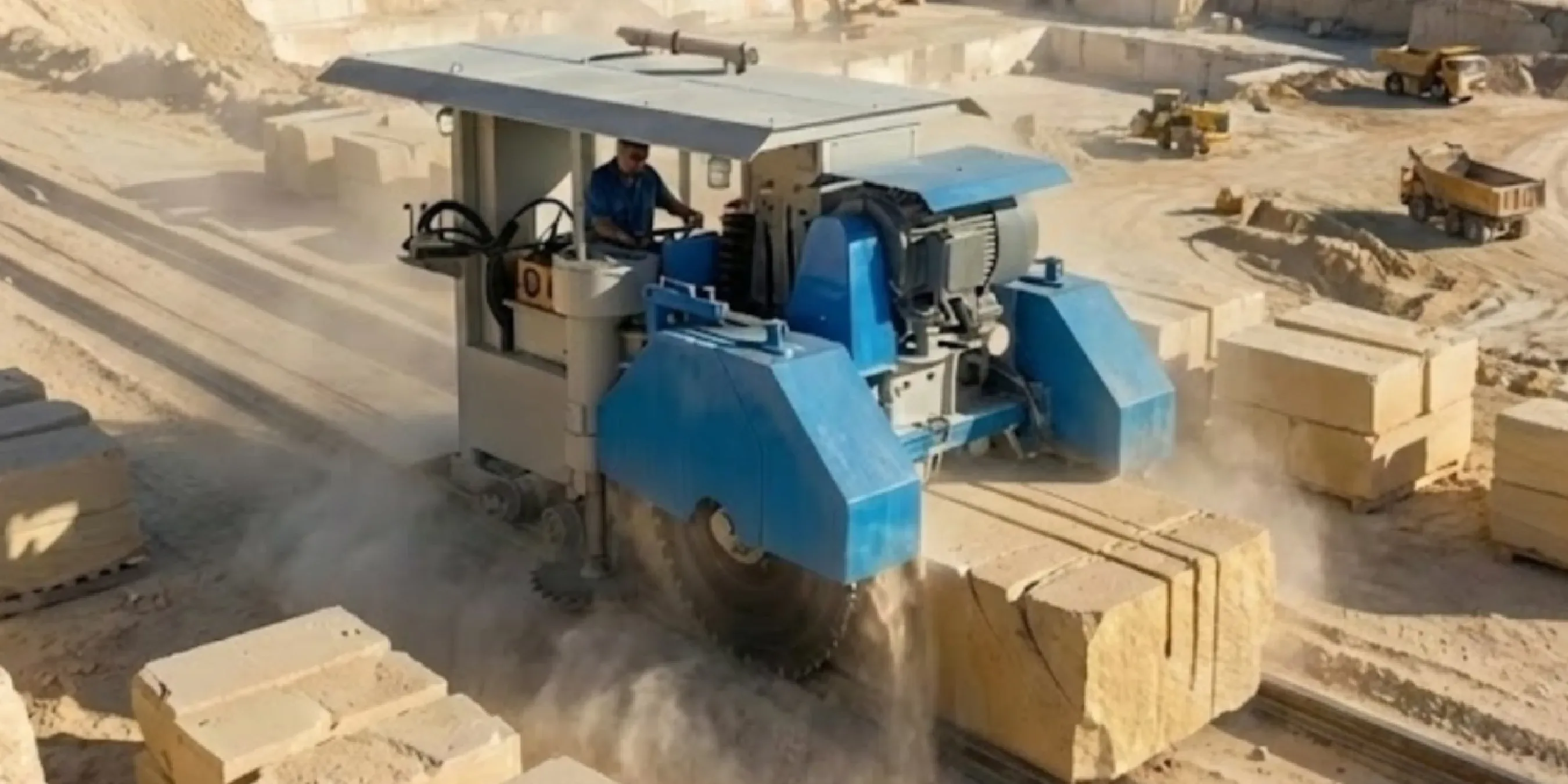
Then: Use the dual-direction machine and start with a travel speed of 25–35 m/min.
Risk: At high speeds, track stability is critical. Monitor blade wear and ensure regular track inspections.
If: Softer limestone or travertine
Then: Operate at a more moderate speed, around 15–25 m/min, to prevent chipping.
Risk: Softer stones can be more abrasive. Plan for more frequent blade segment inspections.
If: Perfect right angles are critical
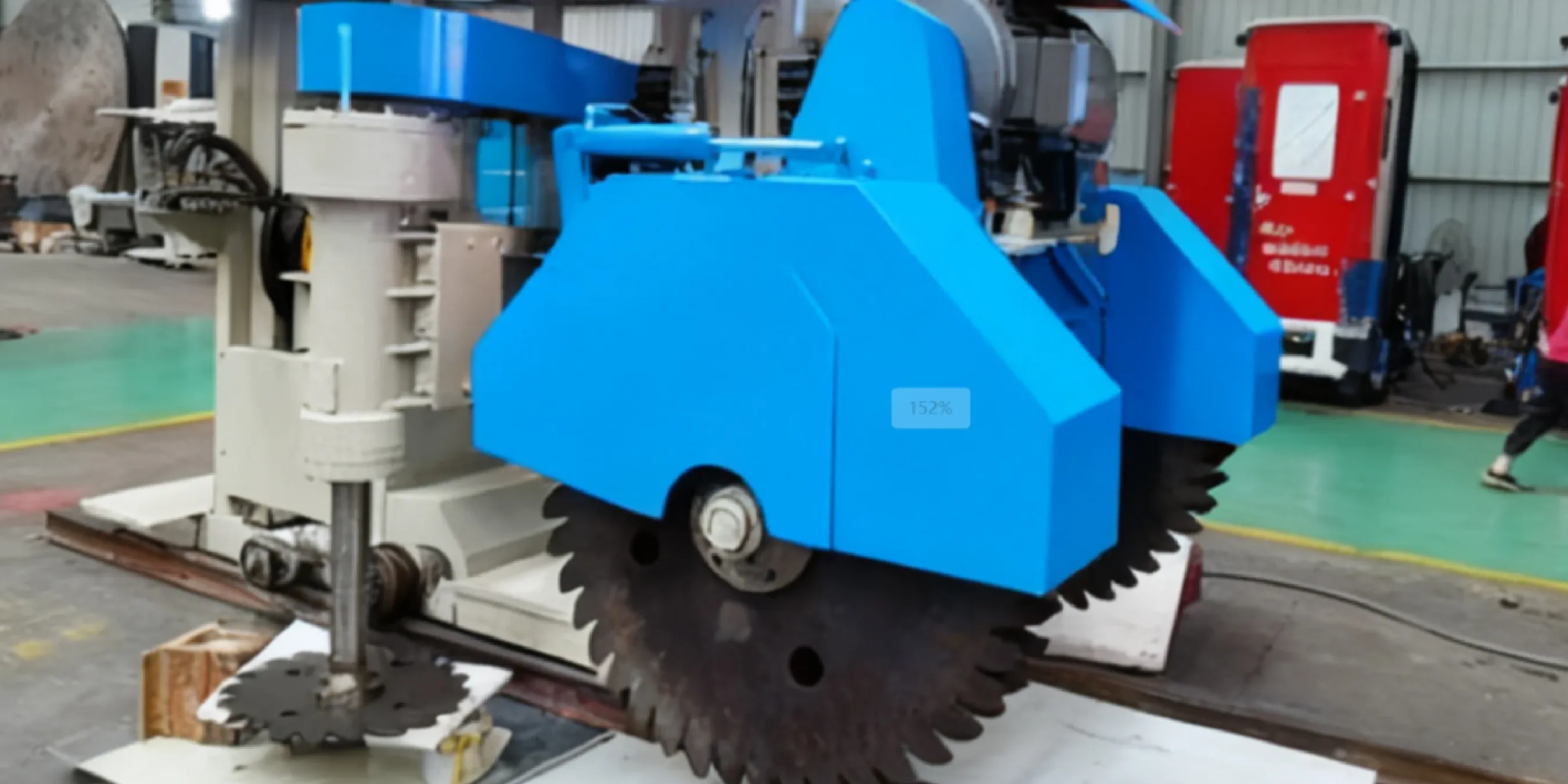
Then: The integrated dual-saw architecture is your ideal choice, as its single-pass cutting guarantees geometric precision.
Risk: Head misalignment can compromise accuracy. Schedule weekly calibration checks.
If: Power supply is limited
Then: Ensure you have a dedicated generator of at least 180 kW. The machine's total power draw is 150 kW.
Risk: Power fluctuations can damage electrical components. Use a reliable generator.
How Does This Machine Compare to Alternatives?
Understanding where the SSQJ-1400 excels requires a neutral comparison with other extraction technologies.
vs. Drilling & Splitting: This traditional method has low initial cost but poor predictability and low material yield. The dual-saw machine replaces uncontrolled fractures with deterministic cuts, ensuring accuracy and boosting usable material.
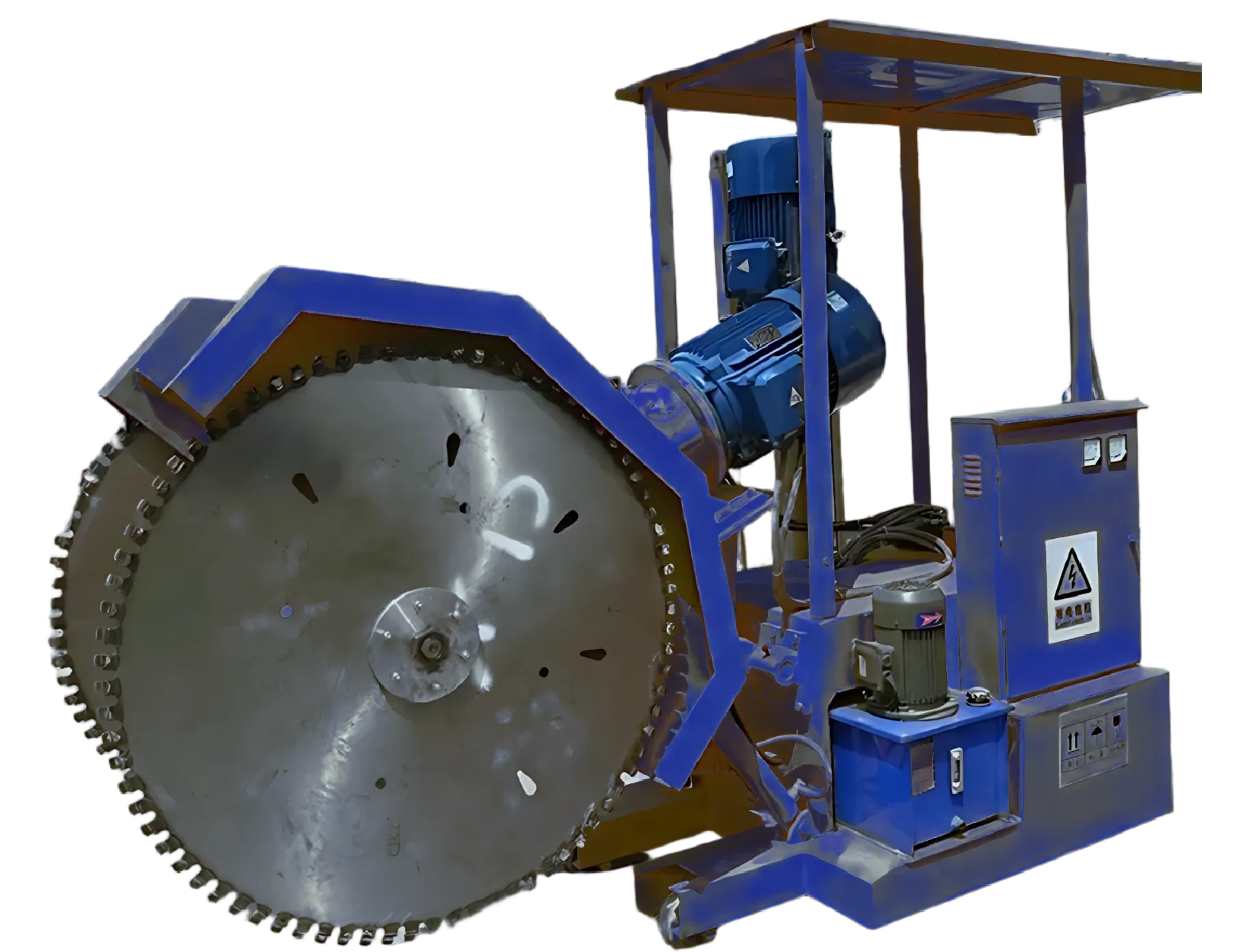
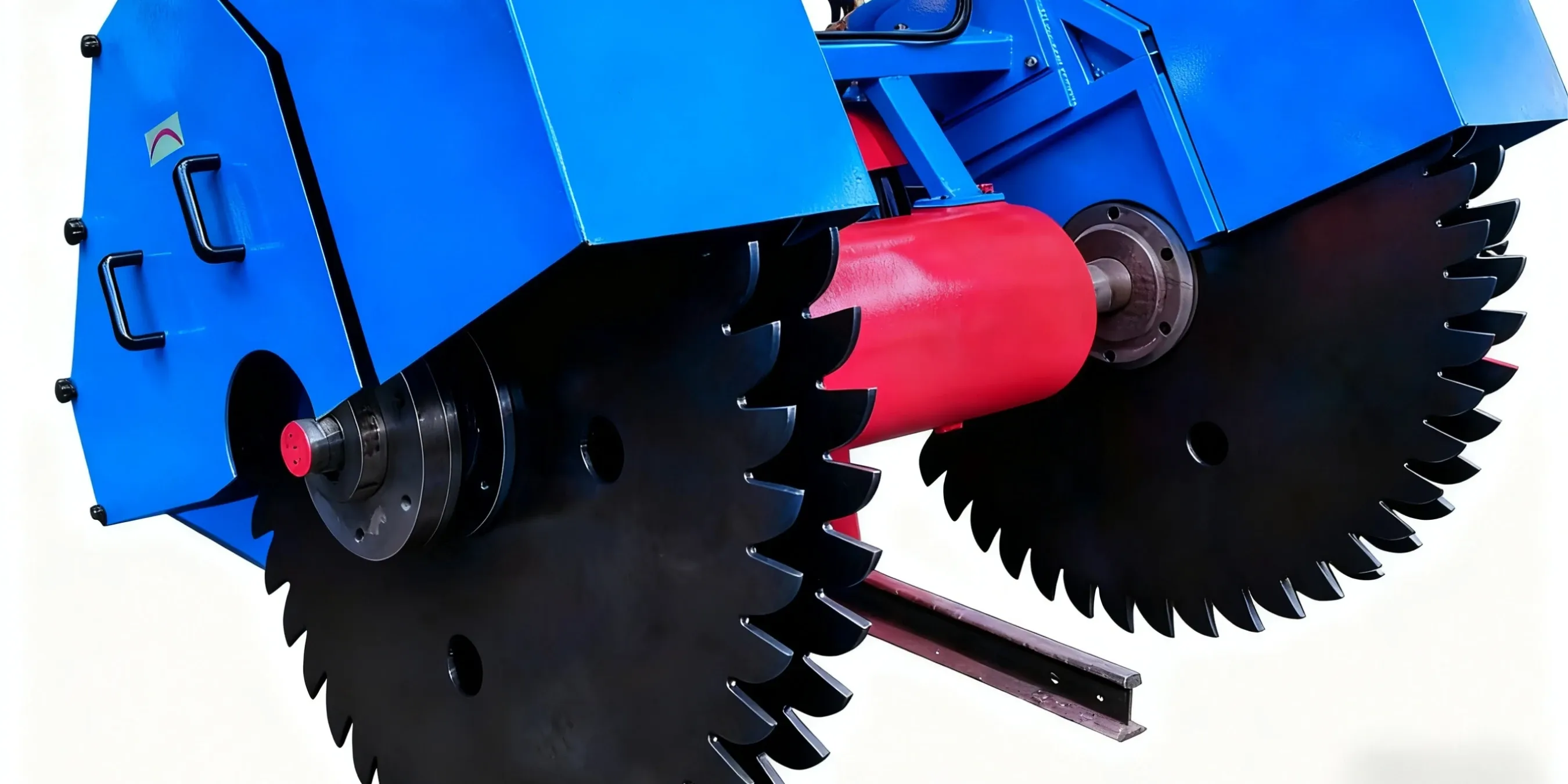
vs. Single-Blade Saws: A single-blade machine requires two separate passes to form a corner, creating a risk of misalignment. The SSQJ-1400's integrated dual-saw head cuts both simultaneously, guaranteeing a perfect right angle.
vs. Diamond Wire Saws: A wire saw is superior for cutting extremely hard rock (like granite) or very large, deep blocks. For straight-line, standard-sized blocks (up to 500 mm deep) in medium-hard stone, the dual-saw machine is faster and more cost-effective.
What Is on the Standard Supply List?
A typical configuration for the SSQJ-1400 includes the following components. This list is a starting point and can be adjusted based on your specific order.
Vertical Saw Blade (Ø1330 mm): 6 pcs
Horizontal Saw Blade (Ø600 mm): 6 pcs
Track System: 100 meters
Dedicated Power Cable: 150 meters
Cutter Segments: 6000 pcs
Generator Set: 180 kW (1 set)
Frequently Asked Questions (FAQ)
Why prefer a quarry cutting machine over drilling/splitting?
It uses saws for precise cuts, unlike the uncontrolled fractures of drilling and splitting.
Context : It is preferred when material yield and geometric accuracy are key business drivers, as it can minimize waste by up to 35% (manufacturer-reported).
Boundaries: The initial CAPEX is higher, but this is often offset by reduced waste and less need for secondary processing.
How do thickness and geometry needs affect my choice?
These are primary decision factors. This machine is ideal if your target block thickness is under 500 mm and you need consistent right angles.
Context & Parameters: The 500 mm maximum cutting depth is a hard limit. The dual-saw architecture guarantees right-angle consistency.
Boundaries: If your blocks are thicker, or if slight variations are acceptable, other methods like wire saws might be considered.
Next Steps: Check your customer's dimensional specifications to confirm if this level of precision is a "must-have."
Is a single-blade quarry cutter enough if I don’t need perfect right angles?
It can be a lower-cost alternative, but it comes with trade-offs in speed and accuracy.
Context : It requires two separate passes to form a corner, which doubles the cycle time and introduces a higher risk of misalignment.
Boundaries: A dual-saw system's single-pass operation eliminates misalignment risk and maximizes throughput, making it better for high-volume production.
Next Steps: Compare the value of higher throughput against the lower initial cost of a single-blade machine.
Which specification matters most when starting my selection?
Start with the two hard limits: maximum cutting depth (500 mm) and material hardness (medium-hard stone).
Context : Once confirmed, evaluate productivity drivers like blade diameters (Ø1330/Ø600 mm) and travel speed (10-45 m/min).
Boundaries: If you need to cut deeper or process granite, this machine is not the right choice.
Next Steps: Once these are confirmed, explore the full specifications on the product page to forecast output.
Which safety certifications and PPE rules should we check?
Verify machine certifications (e.g., CE, ISO) and ensure your site operations comply with regional rules for silica dust and PPE.
Context: Key regulations include permissible exposure limits (PEL) for silica dust, which can be managed with wet cutting.
Boundaries: Compliance is mandatory and can lead to fines or work stoppages if ignored.




 中文
中文 Italian
 Türkçe
 Português
 Español
 Deutsch
 العربية
 Tiếng Việt
 Français
 Русский






 Nov 19, 20255 MIN READ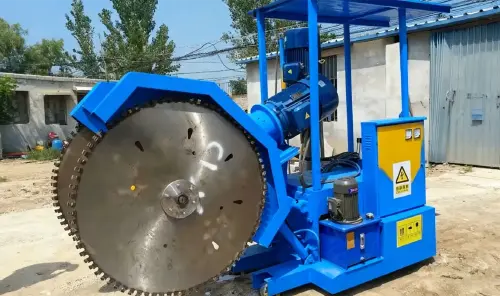
 English