How a Dual-Blade Stone Block Cutter Works | Technical Guide
lizzy·Nov 23, 2025·6 MIN READ
lizzy·Nov 23, 2025·6 MIN READ
Discover the technical principles of a PLC-controlled slab cutting machine. Learn how the dual-blade system on our granite and marble block cutter achieves precision.
TL;DR: Engineering Quick Facts
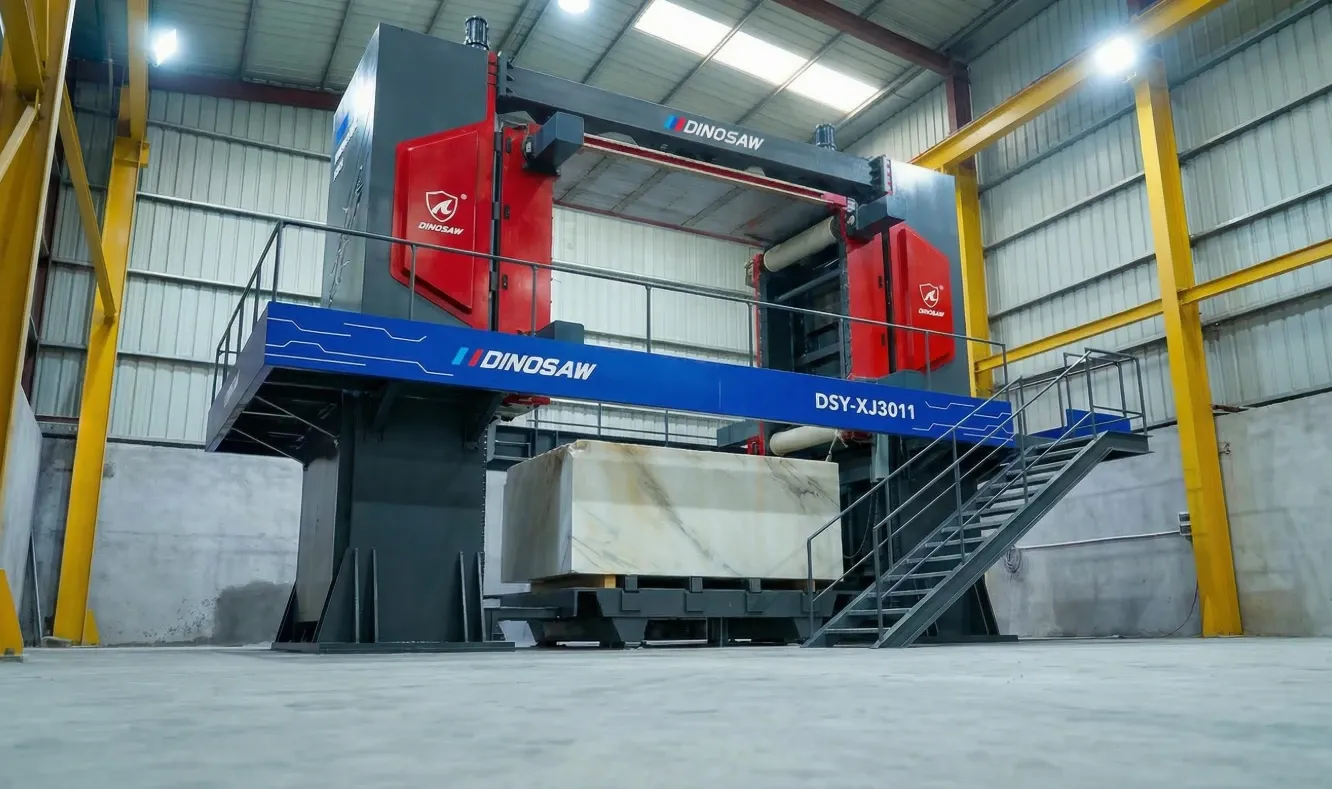
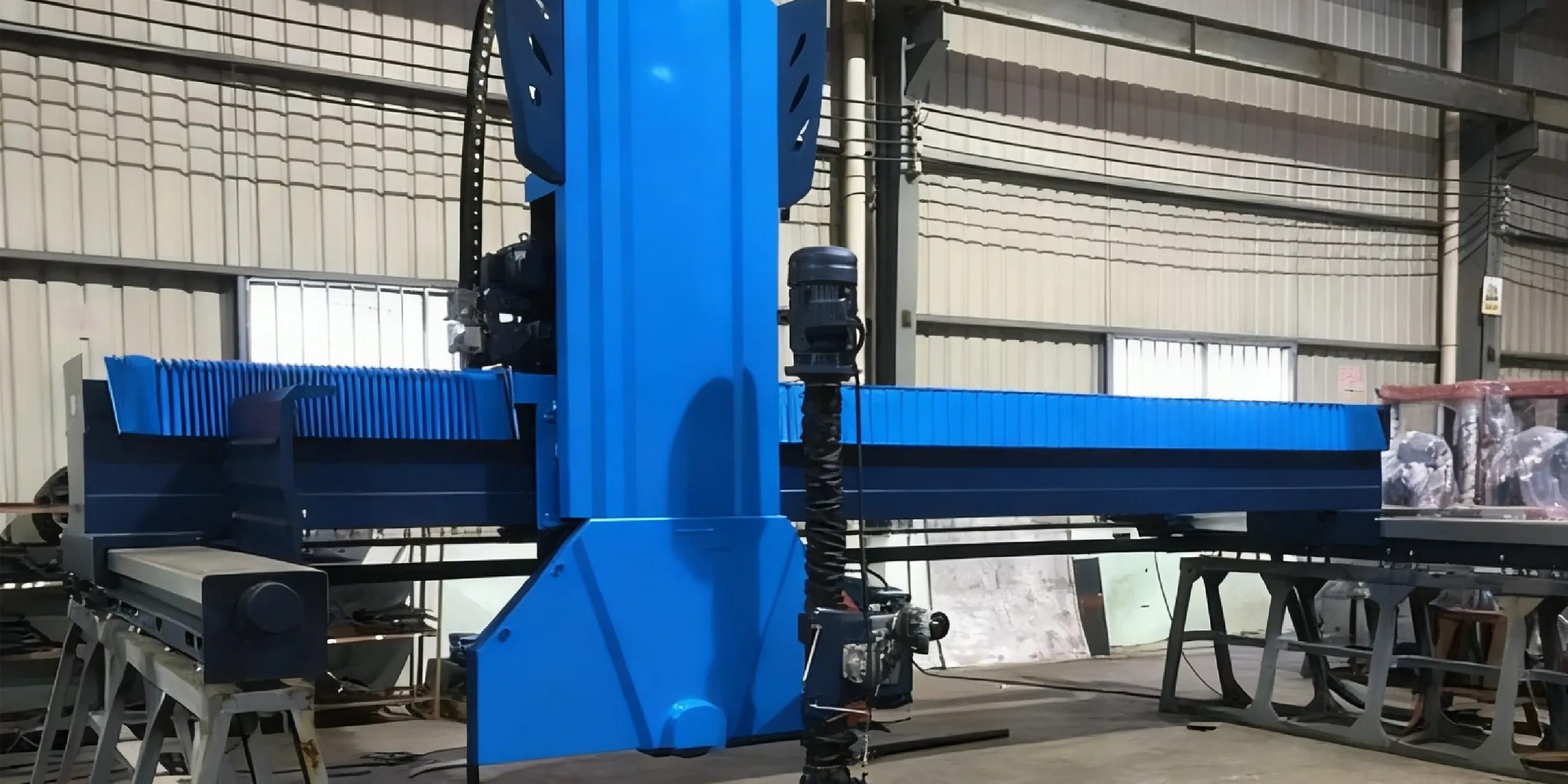
Core Mechanism: On a Stone Block Cutter with Horizontal Blade, the system synchronizes a powerful vertical blade (Ø1200/1600mm) and a secondary horizontal blade (Ø400–600mm) to perform a complete cut‑and‑separate action in a single pass.
Control System: The Stone Block Cutter with Horizontal Blade uses a centralized PLC to orchestrate motor speeds, feed rates, and cutting depths based on operator input, ensuring repeatable precision.
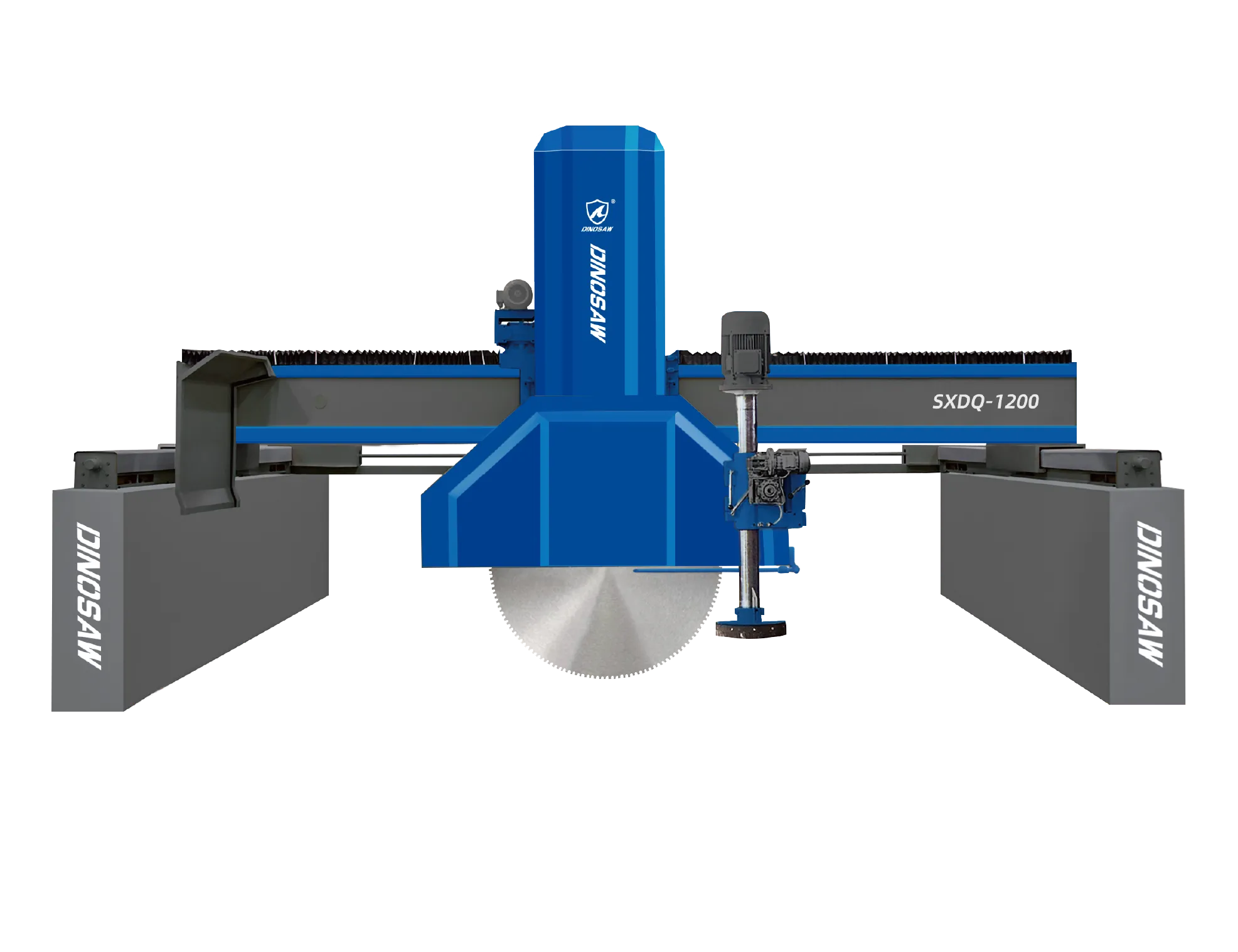
Structural Integrity: The Stone Block Cutter with Horizontal Blade relies on a heavy‑duty bridge structure (approx. 9–9.5 tons) that provides the rigidity needed to handle high loads when cutting hard materials like granite, minimizing vibration and ensuring accuracy.
Have a technical question about integrating this machine?Speak with our engineers for detailed specifications.
Understanding the engineering behind a dual-blade stone cutter reveals how it delivers superior efficiency and precision over traditional methods. This is not just about adding a second blade; it’s about a fully integrated system where mechanical, electrical, and control components work in harmony. This article breaks down the technical principles of the Stone Block Cutter with Horizontal Blade, from its core architecture to the function of each key component.
System Architecture for a Horizontal Blade Stone Block Cutter
At its core, the machine operates on a feedback loop controlled by a Programmable Logic Controller (PLC). The PLC is the brain, receiving inputs from the operator and sensors, and sending commands to the motors and hydraulic systems to execute the cutting process.
This content is only supported in a AnyGen Docs
The process follows a logical sequence: the operator sets the desired slab thickness and number of cuts on the Human-Machine Interface (HMI). The PLC then calculates the required movements and activates the blade motors and the trolley feed. Throughout the cut, sensors monitor blade load and position, feeding data back to the PLC, which can adjust feed rates to prevent motor overload and ensure dimensional accuracy. This closed-loop control is fundamental to the machine's reliability and precision.
Anatomy of an Automated Stone Block Cutting Machine
Each component is designed to contribute to the machine's overall performance, from its rigid structure to its powerful drive systems. The machine must adhere to stringent safety and quality standards, such as the ISO 9001:2015 framework for quality management and the CE Machinery Directive 2006/42/EC, which governs essential health and safety requirements.
Vertical Blade Assembly
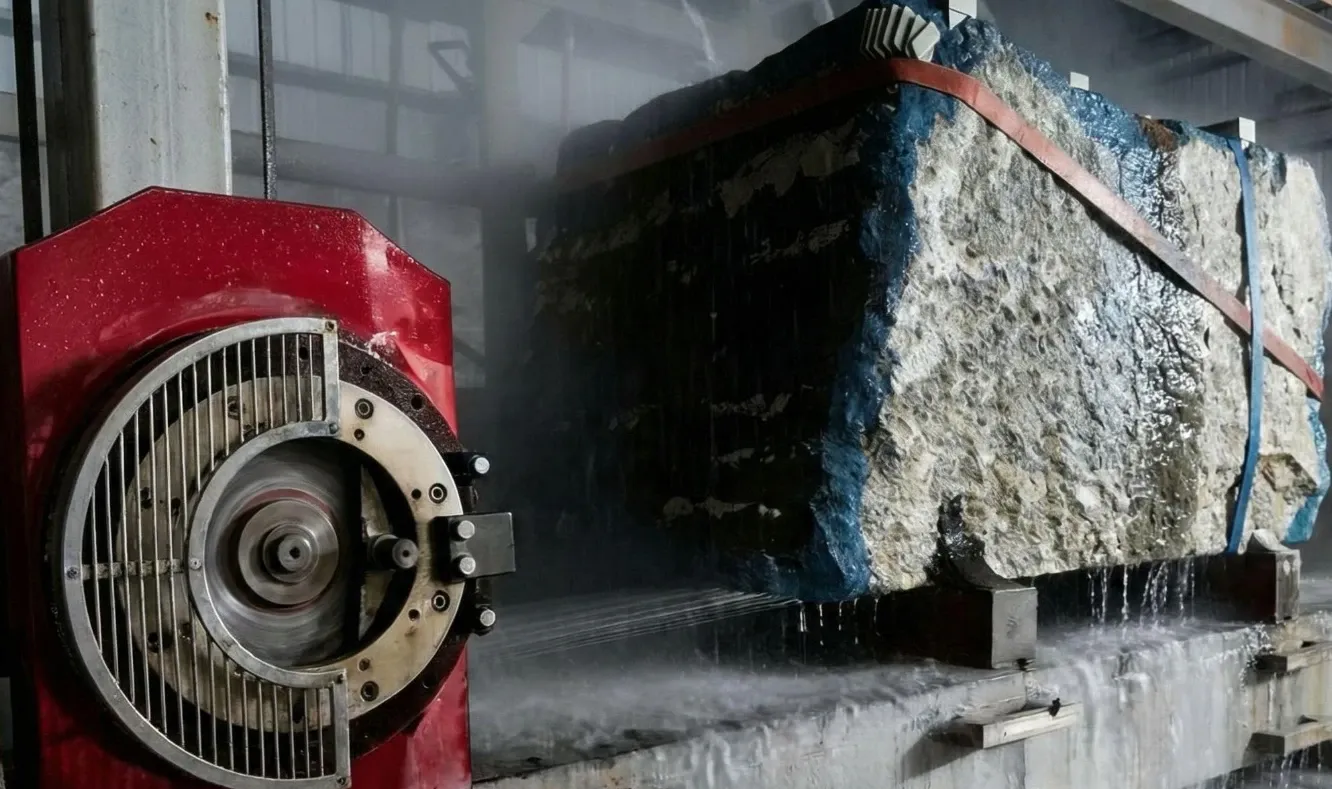
This is the primary cutting tool. Its large diameter and powerful motor are designed to slice through the full height of a stone block.
Blade Diameter:Ø1200mm or Ø1600mm
Main Motor Power:55kW or 75kW
Max Vertical Travel:1350mm
Horizontal Blade Assembly
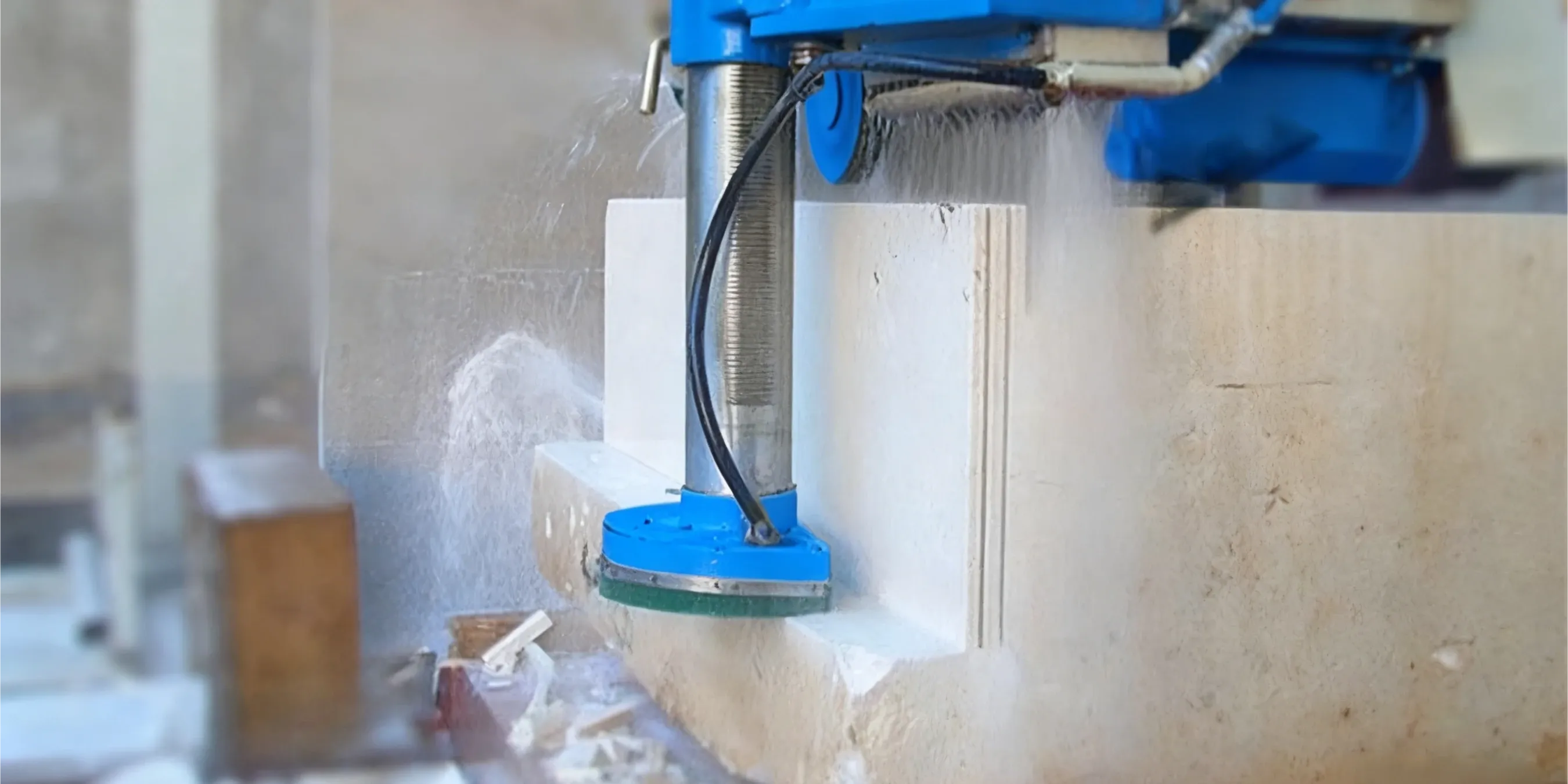
Working in sync with the vertical blade, this smaller blade performs the bottom cut to cleanly separate the slab from the block.
Blade Diameter:Ø400mm - Ø600mm
Motor Power:11kW
Bridge & Beam Structure
The massive frame provides the rigidity necessary to prevent vibration and deflection during cutting, which is critical for maintaining accuracy.
Machine Weight:9,000 - 9,500 kg
Overall Dimensions:7500×4350×6500 mm
PLC Control System
The brain of the machine, it allows for the programming of complex cutting sequences and automates the entire process for consistent, repeatable results. It enables a higher level of workflow automation.
Trolley System
This motorized worktable securely holds the stone block and precisely advances it forward for each subsequent cut, based on the PLC's instructions.
Max Cutting Size:3800mm (L) x 2100mm (W)
Cooling System
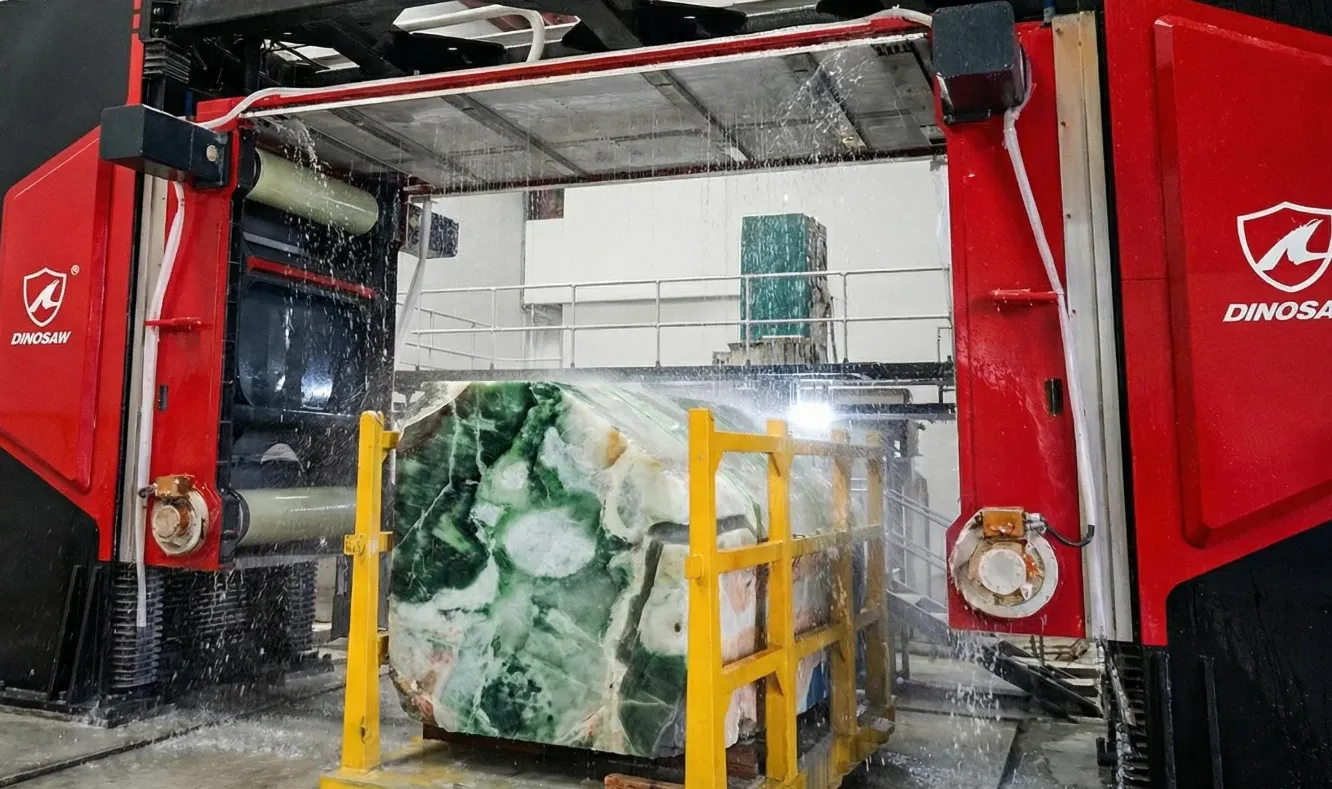
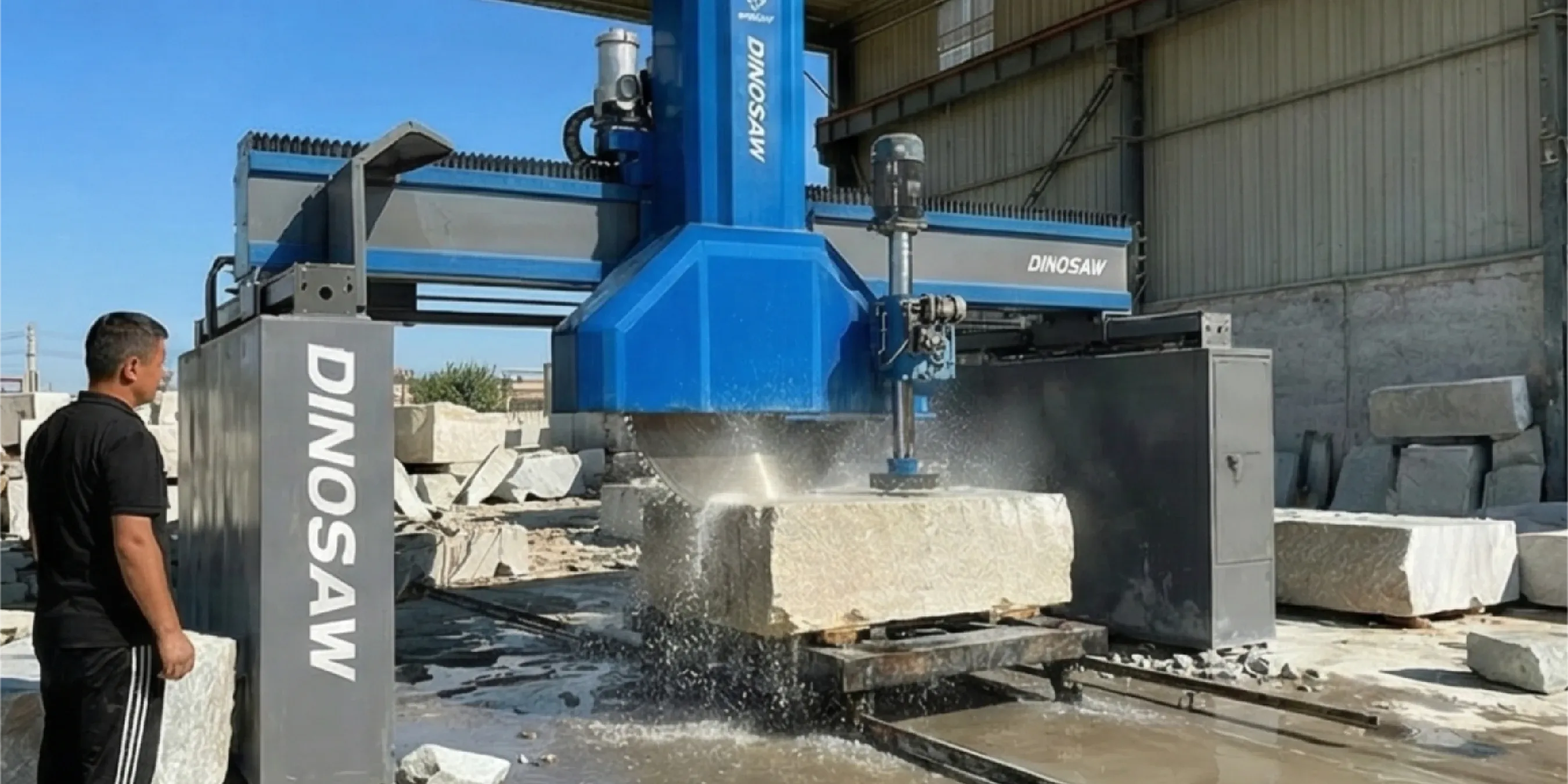
A high-volume water pump floods the blades and cutting area to cool the diamond segments and suppress harmful silica dust, a requirement under regulations like OSHA 1926.1153.
Water Consumption:Approx. 20 m³/h
Failure Modes and Engineered Mitigations
Reliable design anticipates potential failures and integrates solutions. Here’s how the machine addresses common technical challenges:
Potential Failure
Engineered Mitigation
Blade Deflection or Vibration
The massive, reinforced bridge beam and guide rails provide extreme rigidity, minimizing flex under load. The PLC also monitors motor current to detect and prevent blade binding.
Motor Overload
The PLC system uses current transformers to monitor the load on the main motor in real-time. If the load exceeds a preset threshold (e.g., due to a hard spot in the stone), it automatically slows the feed rate to prevent damage.
Inconsistent Slab Thickness
High-precision encoders on the trolley and blade lift systems provide accurate positional feedback to the PLC. This ensures the trolley advances the exact programmed distance for each cut.
Typical Working Parameters
Optimal performance requires adjusting parameters based on the material. While exact values depend on specific stone properties and diamond segment choice, these qualitative guidelines provide a starting point. Proper blade and segment selection is key.
Material
Feed Rate
Blade Speed
Cooling Strategy
Hard Granite / Quartzite
Low
Lower RPM range to maximize torque
Maximum continuous flow
Marble / Soft Limestone
Medium to High
Higher RPM range for a smoother finish
Ample, consistent flow
Abrasive Sandstone
Medium
Moderate RPM to balance speed and tool life
Ensure full blade wetting to remove slurry
Technical FAQ for Stone Block Cutting Machines
How does a PLC-controlled stone cutter synchronize the vertical and horizontal blades?
Synchronization is achieved through software logic and positional encoders.
Context:The horizontal blade must activate only after the vertical blade has reached the correct depth to avoid collision and ensure a clean cut for dimensional slab cutting.
Benefits:The PLC program defines a strict sequence. It reads the vertical position from an encoder and will not send the 'start' command to the horizontal blade's motor until the pre-programmed depth is confirmed. This prevents machine damage and ensures process integrity.
Next Step:To understand how this improves safety and efficiency, review the case studies in our Applications Guide.
What is the inverter's function in a modern slab cutting machine?
It provides precise speed control for the main blade motor.
Context:Different stone types (e.g., granite vs. marble) and blade diameters require different rotational speeds (RPM) for optimal cutting. A fixed-speed motor is inefficient.
Benefits:The inverter (Variable Frequency Drive) allows the PLC to adjust the motor's speed dynamically. This enables soft starts to reduce electrical load, and allows the operator to fine-tune blade speed to match the stone's hardness, improving cut quality and extending blade life.
Next Step:Explore how parameter tuning impacts results in the Operator's Guide blog post.
Why is weight important for a block trimming machine's precision?
The substantial mass (9+ tons) provides the necessary inertia and vibration damping.
Context:Cutting hard stone like granite generates immense forces and vibrations that can cause a lighter machine frame to flex or chatter, leading to inaccurate cuts.
Benefits:The heavy, cast-iron and steel construction acts as a stable platform, absorbing vibrations. This structural rigidity is essential for maintaining the blade's path and achieving consistent tolerances (e.g., ±2mm) for dimensional slab cutting.
Can the control system of a tombstone cutting machine integrate with factory ERP/MES?
Yes, modern PLC systems are designed for connectivity and CNC stone cutting automation.
Context:For smart factories (Industry 4.0), production data like cycle times, material usage, and machine status needs to be shared with higher-level management systems.
Benefits:The PLC can typically be configured to output data over standard industrial protocols (like OPC UA or Modbus TCP/IP). This allows for real-time production monitoring, automated order tracking, and better overall equipment effectiveness (OEE) analysis.
Next Step:If you have specific integration requirements for your stone fabrication equipment, contact our technical team to discuss custom interface options.
What is the purpose of the hydraulic system in the machine?
It provides smooth and powerful control for blade movement.
Context:Moving the heavy blade assembly up and down requires significant force, but it must be done smoothly to avoid jarring the stone or the machine.
Benefits:Hydraulics are ideal for this application as they can generate high force in a compact space and provide very smooth, controllable motion. This is critical for gently lowering the blade into the cut and for maintaining consistent pressure, which improves cut quality, especially in fragile materials like marble.
How does the cooling system's water flow rate (20 m³/h) support cutting performance?
High water flow is critical for thermal management and slurry removal.
Context:Cutting stone generates immense heat at the point of contact between the diamond segments and the material. It also creates a thick slurry of stone particles.
Benefits:A high flow rate (1) effectively cools the blade, preventing the diamond segments from overheating and losing their cutting ability, and (2) powerfully flushes the cutting kerf, removing slurry that would otherwise increase friction and slow down the cut.




 中文
中文 Italian
 Türkçe
 Português
 Español
 Deutsch
 العربية
 Tiếng Việt
 Français
 Русский






 Nov 23, 20256 MIN READ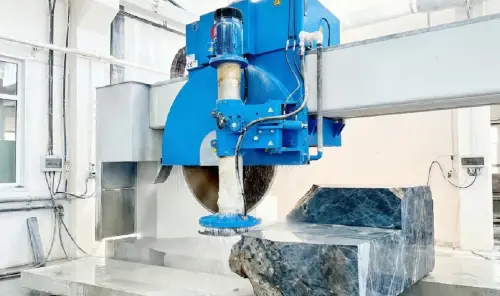
 English